In 2026, a rolloff dumpster rental averages about $650 nationally, with most standard rentals falling between $300 and $800. Another widely cited 2026 estimate puts the average near $385, with most homeowners paying $294 to $480, because service levels, debris, location, and included weight allowances vary so widely.
You may be asking this from a driveway, a commercial site, or the edge of a busy renovation project. The container has arrived, the crew is ready to load, and the quote looks manageable. Then the final invoice includes extra tonnage, additional rental days, or an access charge that wasn't obvious during the phone call.
That difference doesn't mean every dumpster company is inflating prices. It usually means the advertised rate covers a specific package, while your project has different needs. A light household cleanout and a concrete demolition may use containers with similar dimensions, but they put very different pressure on the hauler's truck, transfer station, and landfill bill.
This guide treats the question as a job-costing problem rather than a size-shopping exercise. You'll see how a quote is assembled, why debris density can matter more than available volume, how typical 2026 ranges compare, and how to ask for an apples-to-apples bid. You'll also find a practical comparison between general debris and concrete washout, where a specialized containment rental can be the cleaner and more economical choice.
Introduction to Rolloff Dumpster Rental Costs
A renovation crew once loaded a medium rolloff with drywall, cabinets, flooring, and masonry. The container still had room at the top, so the crew expected the low base quote to hold. The final invoice rose after the hauler weighed the dense material and applied a disposal overage.
The problem was the way the load had been measured. The crew estimated space, while the hauler priced a combination of space, weight, time, and local disposal costs. A container can look half empty yet carry a heavy load, much like a truck with unused bed space that is already near its payload limit.
A rolloff rental usually covers more than the steel container. The package commonly includes delivery, pickup, a short rental window, and a standard tonnage allowance, as described in the Angi guide to roll-off dumpster costs. The total can change when debris exceeds that allowance, the container remains on site longer, or difficult access requires extra handling.
Why online prices look inconsistent
Different published benchmarks can diverge because they may combine different markets, container sizes, rental periods, disposal assumptions, and service levels. A quote based on light household debris is not directly comparable with one that includes heavier material or a larger tonnage allowance. The figures may describe different rental packages rather than a disagreement about the same job.
Practical rule: Treat an advertised dumpster price as the opening line of a job estimate, not the guaranteed total.
Start with the debris, not the container size. General renovation waste may use available volume efficiently, while concrete, brick, soil, and other dense materials can reach the weight allowance first. Concrete washout also deserves separate attention because it may require specialized containment instead of being treated like ordinary mixed debris.
Before accepting a quote, ask what the debris allowance covers, how overage is calculated, how long the rental lasts, and whether access or disposal conditions add charges. Those answers make competing bids easier to compare and help keep the final invoice aligned with the project budget.
How Rolloff Dumpster Pricing Really Works
A contractor can receive two very different dumpster prices for what sounds like the same job. That usually reflects different container mixes, rental periods, disposal assumptions, or included tonnage, not necessarily a pricing error. One quote may fit light household debris, while another is built for heavier material or a longer stay.
Rolloff companies generally use one of two pricing structures. A bundled flat rate combines delivery, pickup, a defined rental period, and an included weight allowance. A base-plus-charge model starts with the container service, then adds fees for extra days, excess tonnage, difficult access, or special disposal conditions.
The bundled model works like a truck rental with mileage included. The quoted amount covers a defined amount of use. A dumpster applies the same idea to debris weight instead of driving distance. Stay within the included tonnage and the price may hold. Exceed it, and an overage charge applies.
Read the quote in four passes
Begin with the container and service terms. Confirm that the price covers the requested size and whether billing is per rental period, per empty, or by the day. Size affects the base rate because larger units require more steel, hauling capacity, and disposal handling.
Next, check the rental window. A short stay can make a quote look inexpensive, but a delayed demolition or inspection may leave the container on site longer. Ask whether extra days are billed daily or trigger a new service charge.
Then locate the included weight allowance. The Haul Away Costs guide says many standard rentals include one to three tons, while larger containers may include four to ten tons, depending on size. It also reports overage charges commonly quoted at about $40 to $100 per ton, with some metro areas higher. These figures matter most for concrete, brick, soil, asphalt, and other dense debris, which can reach the weight limit before the container looks full.
Finally, ask what the quote excludes. Delivery distance, blocked pickup access, street placement requirements, prohibited materials, and unusual disposal categories can change the invoice. Concrete washout may require specialized containment, so do not price it like ordinary mixed renovation debris.
Flat rate versus daily pricing
A flat rate provides a clearer ceiling when the rental period and weight allowance match the project. Daily pricing can suit an uncertain schedule, but it requires closer tracking. The label matters less than the complete calculation.
Ask the dispatcher to state the full price in one sentence: container size, rental duration, included tonnage, overage rate, delivery and pickup terms, and every known surcharge. If one item is missing, the quote is not ready for a fair comparison.
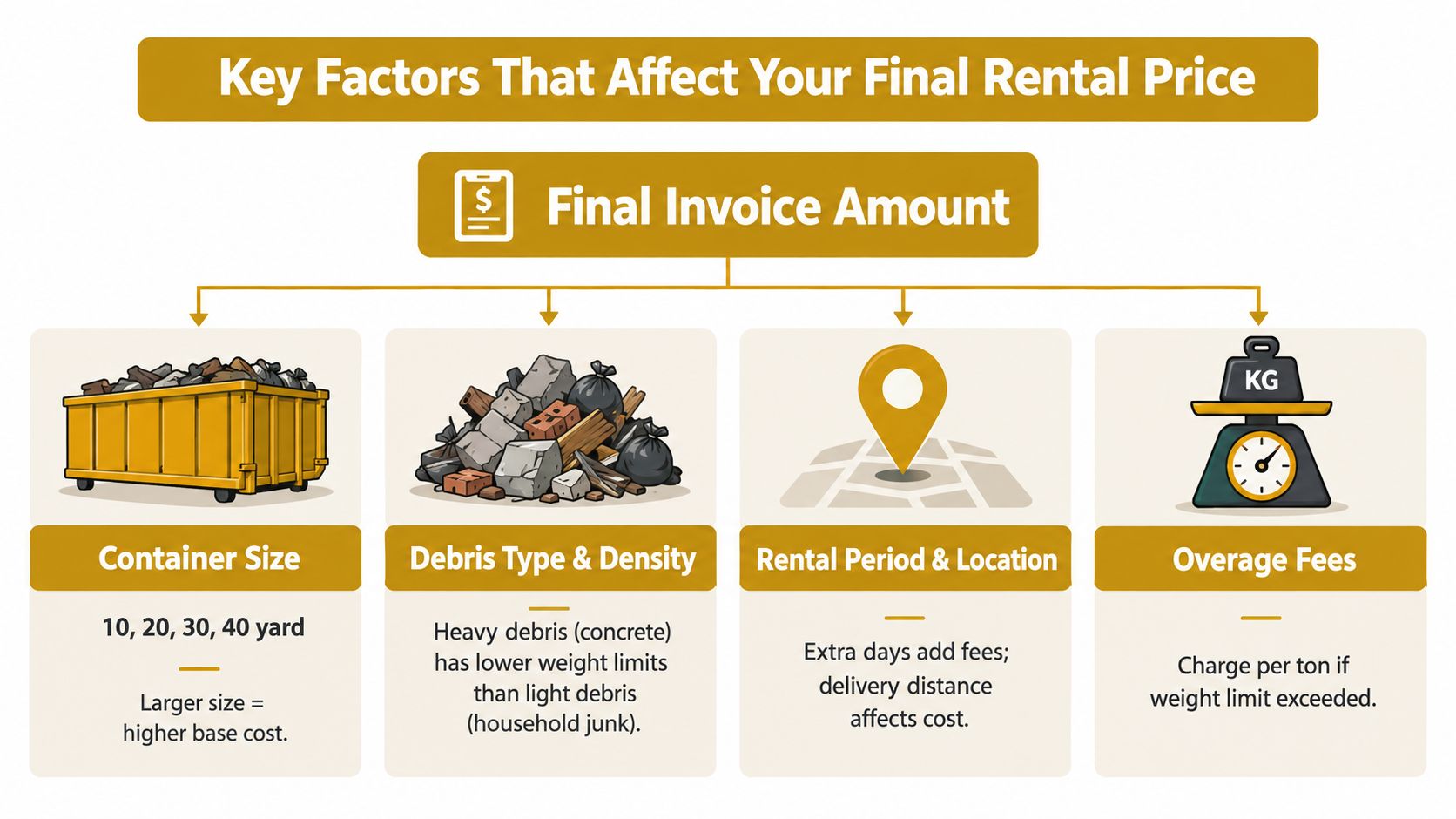
Key Factors That Affect Your Final Rental Price
A dumpster quote can look reasonable until the material, access, or disposal terms change the calculation. Treat the price like a job estimate with separate line items. Identify each one before booking, and the final invoice is easier to predict.
Container size
A 10-yard container usually has a lower base price than a 40-yard unit because it holds less material and needs less hauling capacity. The smaller box may be the better choice for a limited load, especially when the debris is dense and the included weight allowance fits the job.
A larger container is not automatically the cheaper option. Extra space can encourage a crew to add heavy material until the load reaches its weight limit. For a small concrete or soil project, a smaller container with a suitable allowance can cost less than a large box carrying unused air.
Debris type and density
Volume and weight work like two separate measuring cups. Cardboard fills the volume cup quickly but may add little weight. Concrete, brick, dirt, asphalt, and roofing material can fill the weight cup while the container still appears only partly full.
The Rolloff Amigo pricing guide shows why container size alone does not explain a quote. Its examples place 20-yard pricing around $450 to $672 and 40-yard pricing at about $891 to more than $1,500, with the result varying by market and waste profile.
Concrete washout deserves separate attention. Its dense, wet material can create disposal and containment requirements that do not apply to ordinary mixed renovation debris. Describe the material precisely, rather than giving the hauler only an estimated cubic-yard volume.
Rental duration and location
A longer rental can add daily or extension charges. The job address also affects landfill fees, transfer-station costs, fuel, taxes, and travel distance. Two projects using the same container can therefore receive different quotes.
Give the company the exact address and expected rental period. A rural delivery, narrow approach, or location outside the hauler's usual service area may change the total.
Permits and access
Private-property placement may follow different rules from street placement. A municipality, property owner, or homeowners association can require approval or specific positioning. The truck also needs enough room to deliver and retrieve the container safely.
A blocked driveway, low branch, closed gate, soft ground, or parked vehicle can prevent pickup. That may lead to a failed-trip or rescheduling charge even when the container price itself was correct.
Overage fees
Overage is the gap between the included disposal allowance and the actual load. It works like a prepaid amount in the rental. Once the debris exceeds that allowance, additional disposal costs may be added to the invoice.
Heavy material can make a half-full dumpster more expensive than a full container of light debris.
Ask whether the load is weighed, how mixed debris is classified, and whether the overage rate applies to each added ton or another billing increment. Have the answer written into the quote.
Typical Price Ranges by Size and Debris Type
A container's size tells you how much material can fit. The debris type and weight allowance often determine how much disposal will cost. A 10-yard unit filled with light household cleanout may stay within its allowance, while the same unit loaded with broken concrete can reach that limit before it looks full.
The ranges below are planning guides, not guaranteed bids. Providers may package delivery, pickup, rental time, disposal, and tonnage differently. The two market benchmarks mentioned earlier also diverge because they may reflect different container mixes, service areas, and included weight assumptions.
| Container Size | Typical Price Range | Included Weight Allowance | Cost Impact for Heavy Debris |
|---|---|---|---|
| 10-yard | Low-to-mid hundreds | Varies by provider and package | Can reach the allowance quickly, even before the container is full |
| 20-yard | About $450 to $672 in one 2026 guide; national estimates near $430 to $475 | Often depends on the quote and debris class | Dense loads may trigger overage while usable volume remains |
| 30-yard | Commonly within the broader $300 to $800 weekly market range | Larger units may include more tonnage | More capacity does not remove weight risk |
| 40-yard | About $891 to more than $1,500, depending on market and waste profile | Larger containers may include four to ten tons | Suitable for volume, but heavy material can make the unit uneconomical |
Match the container to the waste stream
Furniture, packaging, drywall, wood, and general renovation debris usually create a volume problem first. A larger container can reduce the chance of paying for another haul when the material is bulky but relatively light.
Dirt, brick, concrete, and roofing require a weight discussion before choosing a size. The Rolloff Amigo guide explains how the same container size can produce different costs based on debris category and tonnage limits. A hauler may suggest a smaller unit, a heavy-material rate, or a separate disposal route.
Concrete washout deserves separate attention because wet cement residue is dense and may require containment or handling procedures that general debris does not. A container that works for drywall and wood may therefore be a poor choice for washout, even if both jobs appear to need similar capacity.
Ask each provider to list the container size, debris classification, included tonnage, rental period, and overage rate. A quote that says only “20-yard dumpster” leaves important cost assumptions unstated. A quote with those details gives you a clearer basis for comparison and reduces the chance of an overage surprise.
Real World Cost Examples for Common Jobs
A renovation crew and a concrete crew may rent similar-looking rolloffs, yet their bills can follow different rules. Renovation debris usually fills the container before it becomes especially heavy. Concrete washout can reach a weight or handling limit while substantial space remains.

Example one with general renovation debris
A crew removes cabinets, drywall, flooring, trim, and packaging from a renovation. It requests a 20-yard container and receives a bundled quote covering delivery, pickup, a defined rental window, and two tons of included weight.
The crew loads bulky items in stages and spreads dense pieces across the container rather than building one heavy mound. The project manager checks the pickup date and removes prohibited materials before collection. If the debris stays within the allowance and the container leaves on time, the quoted base amount should cover the main disposal cost.
Adding masonry or roofing changes the calculation. A container can look comfortably below its rim and still exceed its weight allowance. Overage charges are often quoted at $40 to $100 per ton, with some metro areas charging more, according to Haul Away Costs.
Example two with concrete washout
After pumping and finishing, a concrete crew has wet washout slurry to manage. The material is dense, and a general rolloff may have plenty of visible capacity while approaching a weight limit. It also may not be accepted under the same rules as dry renovation debris.
Before booking, the estimator asks whether the hauler accepts liquid or slurry, how it classifies the material, what weight allowance applies, and whether the site requires dedicated containment. A lower container price can lose its advantage if the load triggers overage, special handling, cleanup, or another haul.
The two jobs should be priced by waste stream, not container label alone. General debris service handles a volume problem. Concrete washout calls for a containment solution suited to wet concrete waste. A useful quote checklist includes container size, debris classification, included tonnage, rental period, overage rate, and any handling or cleanup charges. These details explain why cost benchmarks can differ, since providers may price different container mixes, weight allowances, and included services.
How to Get Accurate Quotes and Save Money
A reliable quote starts with the waste stream, not the container label. Before calling, gather the job address, placement surface, expected start and pickup dates, access details, and a plain description of the debris. Separate light materials from dense loads instead of describing everything as “construction trash.”
Use this sequence when contacting providers:
Describe the material precisely. Identify drywall, wood, roofing, dirt, brick, concrete, slurry, appliances, or mixed household items. These details help the hauler apply the correct disposal rules and assess weight risk.
Ask for the allowance in writing. Confirm the included tons, whether the allowance changes by container size or debris type, and the overage rate. A weight allowance without a stated excess-charge rate leaves a major gap in the budget.
Request the complete time window. Confirm the rental start date, when extra-day charges begin, and whether pickup can accommodate inspections or weather delays.
Confirm delivery and retrieval conditions. Explain driveway width, gates, slopes, overhead obstructions, ground conditions, and whether the container will sit on private property or a public right-of-way.
Compare total packages. Record the base price, included tonnage, extra-day fee, overage rate, delivery and pickup terms, permit responsibilities, and prohibited-item rules in one worksheet.
Price benchmarks can diverge because providers may use different container mixes, included tonnage, debris assumptions, and service packages. Comparing the line items shows whether a lower advertised rate covers the same job.
Savings come from controlling the variables
Choose enough volume for the debris, while treating weight allowance like a payload limit on a truck. Extra space does not permit unlimited weight. Separate concrete, dirt, brick, and roofing when the provider offers a better disposal path. Keeping heavy material apart from light debris can make the final invoice easier to predict.
Prepare the site before delivery. Clear the placement area, protect the surface if required, and coordinate the truck route with the crew. Break down bulky items, spread weight across the floor, keep debris below the fill line, and follow the hauler's loading instructions.
Quote checklist: Size, debris type, included tons, overage rate, rental dates, extra-day fee, delivery terms, pickup conditions, permits, and prohibited items should appear in your notes before you approve the order.
When a Specialized Washout Rental Is the Smarter Choice
Concrete washout needs separate planning because slurry combines water, cement, and fine solids. It can spread across the site, reach drainage paths, and create cleanup or compliance problems. A general rolloff handles hauled waste well, but it may not provide controlled liquid containment.
A dedicated washout pan or container gives crews a defined place to clean pumps, chutes, tools, and finishing equipment. The pricing question therefore changes. Instead of asking only whether a standard box is large enough, price the containment method, delivery, pickup, disposal process, and expected rental period.
Compare the right cost categories
A general rolloff quote may include a weight allowance without covering the containment features or disposal process needed for slurry. A washout rental may show a daily rate, while delivery, rough terrain, express scheduling, or other site conditions appear as separate charges. Compare the full package, not the headline rate.
Published rental benchmarks can differ because providers use different container mixes, included tonnage assumptions, debris categories, and service packages. That explains why two otherwise credible estimates may not match. For washout work, the more useful question is which services and capacity limits are included in your quote.
Reborn Rentals lists specialized washout options with upfront daily pricing starting at $25 per day, along with products designed for substantial liquid and load capacity. Its catalog includes a 72' x 72' x 24' option described at approximately 18.25 tons and about 441 gallons, plus a 72' x 72' x 14' option with approximately 310 gallons, according to the provided publisher information.
A small retrofit may need a compact pan for a short rental period. A major pour or pumping operation may require a larger unit and confirmed truck access. Ask how the provider handles terrain, placement, pickup, and disposal before concrete work begins.
Use the compliance signal
Specialized containment fits wet, concrete-heavy material and sites where runoff could create problems. It also deserves consideration where a project has SWPPP requirements, a sensitive drainage area, limited cleanup access, or repeated washout activity.
The least expensive steel box on a quote may become costly if slurry causes overage, emergency cleanup, or a second service response. A purpose-built unit places containment closer to the source and makes the disposal plan easier to confirm.
Reborn Rentals provides specialized concrete washout pans and containers with clear daily pricing, delivery coordination, and support for contractors managing slurry containment. Visit Reborn Rentals to review available washout options, confirm site logistics, and choose a cleaner alternative to treating concrete washout like ordinary rolloff debris.