The truck is loaded, the driver is waiting, and the only route off the site runs through a strip of wet soil at the gate. Someone drops a few loads of stone there, the truck rolls over it, and the crew assumes the entrance is ready. Then an inspector finds mud on the public road, sees ruts at the edge of the pad, or notices that the stone has disappeared into the subgrade. The work stops while the entrance gets rebuilt.
Good tracking pad construction isn't just a matter of dumping rock where tires pass. The pad has to carry the site's heaviest traffic, keep sediment from reaching the roadway, and remain stable when water moves across the entrance. The details that usually decide whether it works are easy to measure, but they're also easy to miss.
Why Tracking Pads Matter Before Any Truck Leaves the Site
A dump truck reaches the gate after overnight rain. Its tires leave the stone, cross a soft shoulder, and carry mud onto the public road. The entrance may look covered, yet an inspector can still find an undersized route, contaminated aggregate, or runoff cutting across the pad. Those failures usually begin before the first production load arrives.
A stabilized construction entrance is a stormwater control at the edge of a disturbed site. It reduces mud and sediment track-out before tires reach pavement. It is not a truck turnaround, and it cannot work alone. Its location, grade, drainage, and maintenance must fit the project's broader SWPPP and sediment-control layout.
Build for the traffic the gate will actually carry
Start with the heaviest vehicle and its real path through the gate. The stone must cover the full travel width, including turning movements, rather than only the straight tire lines. A pad that narrows at the fence or ends before the wheels reach pavement leaves the weak soil exposed exactly where trucks steer.
Weak or saturated subgrade creates a separate failure. Without geotextile underlayment, native soil can pump upward into the stone, while the stone sinks under repeated loads. The result is rutting, contaminated aggregate, and a surface that no longer drains. Check the soil before delivery, not after the pad has settled.
Water needs a route around the entrance. Rain flowing diagonally across the pad can loosen sediment and push it toward the road. Grade the approach so runoff does not use the entrance as a channel, and provide diversion or other protection where drainage converges at the gate.
The EPA concrete washout guidance presents containment as a planned environmental control. The same discipline applies here. Choose a defined location, install materials suited to the subgrade and traffic, keep runoff from bypassing the control, and inspect the entrance after storms and heavy truck movements.
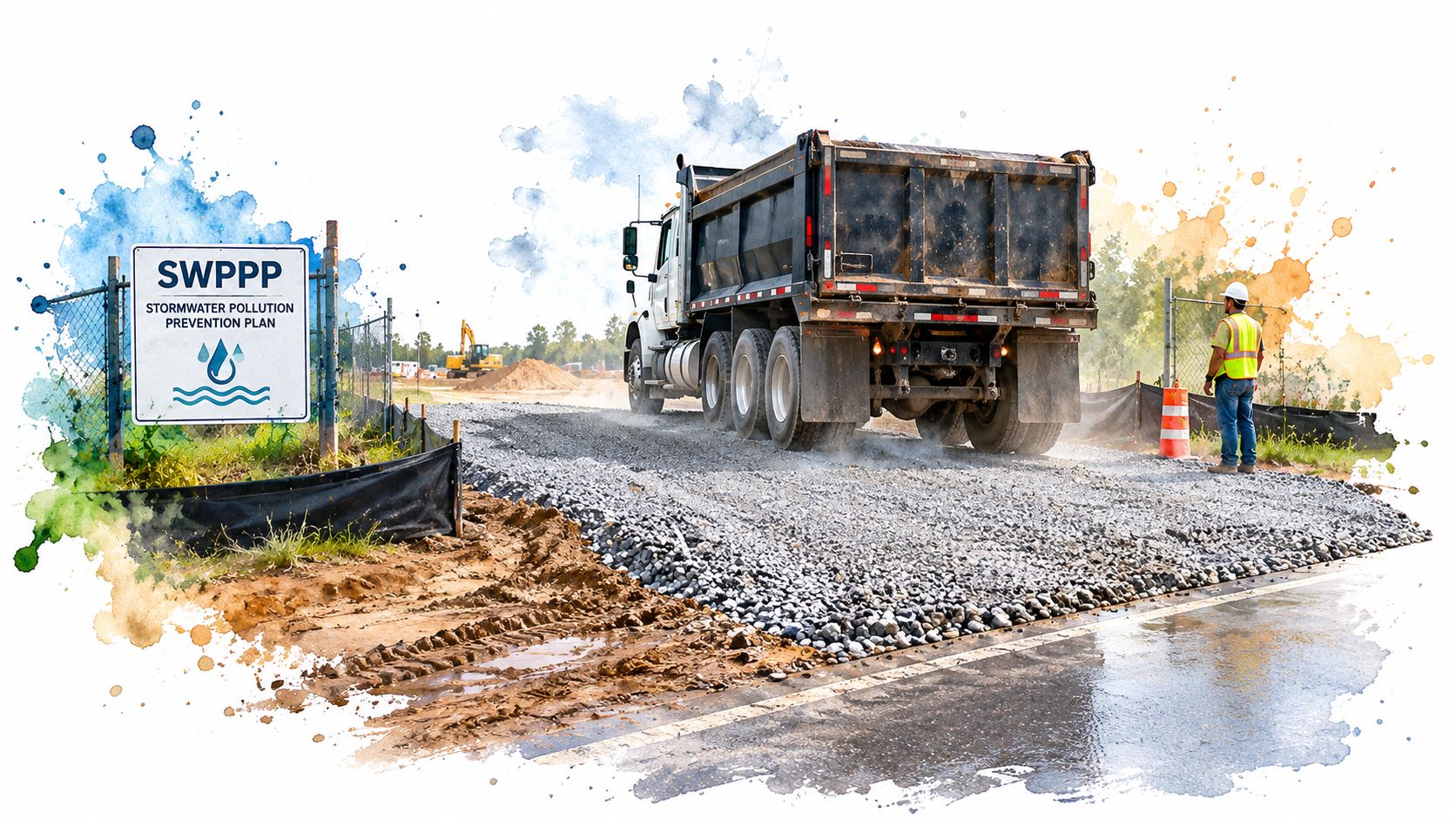
The pad belongs in the initial site setup, before any traffic leaves the site, consistent with U.S. DOT vehicle-tracking pad guidance. Complete it before excavation spoils, concrete deliveries, or utility work establish regular truck traffic.
Field rule: If a truck can leave the site, the stabilized exit needs to be ready first.
A functioning entrance prevents more than visible mud. It reduces road cleanup, displaced stone, ruts, inspection corrections, and schedule disruption. Keep the pad connected to the internal haul route and clearly designated before suppliers and subcontractors start using the gate.
Design Specs That Pass Inspection Every Time
A loaded dump truck swings across the gate, catches the pad's edge, and leaves two muddy tracks on the roadway. The stone may look deep enough from the cab, yet the entrance can still fail inspection if its width, length, drainage, or support does not match actual site traffic.
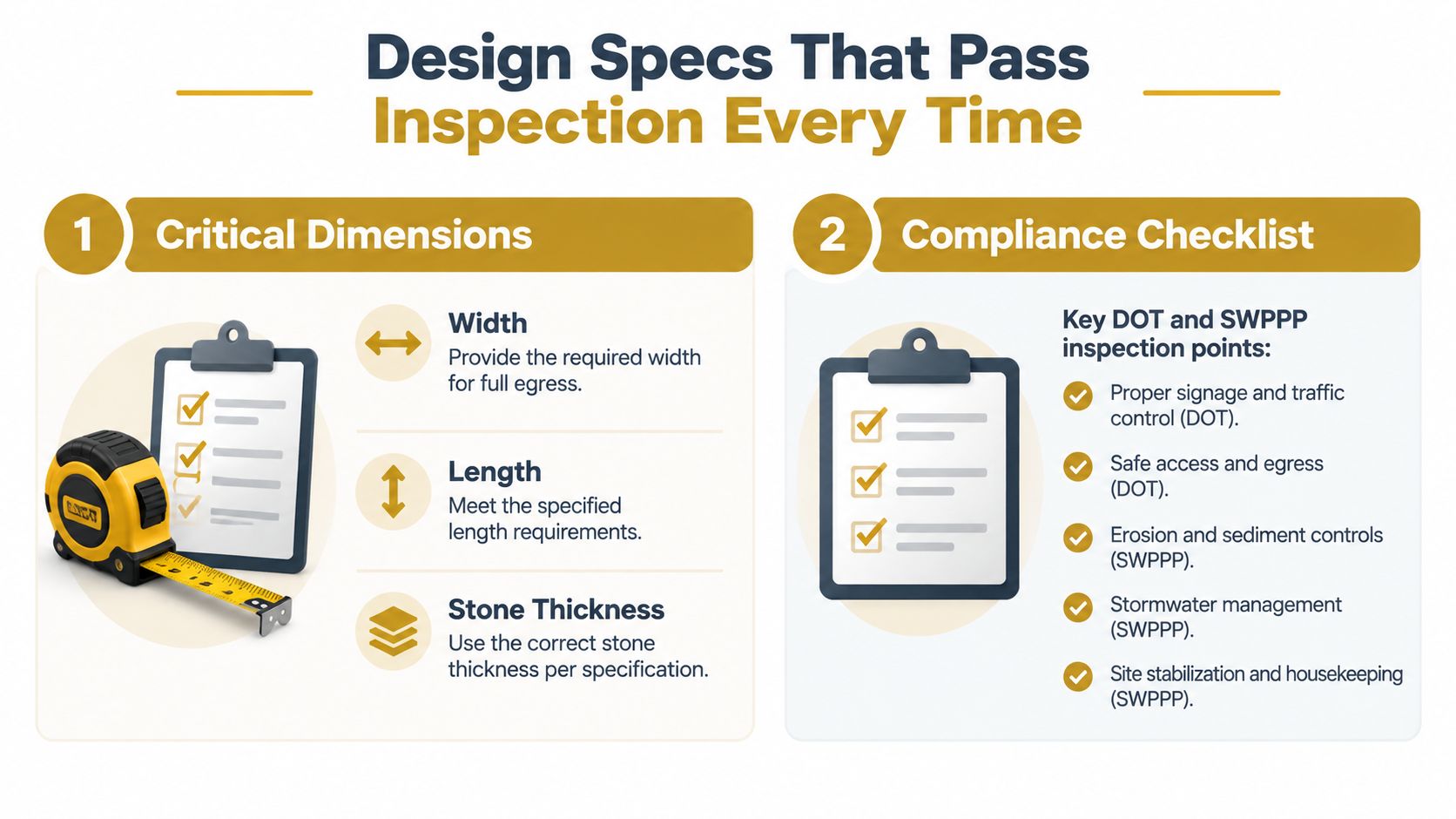
Set the dimensions before ordering stone. Use the approved plans and local erosion-control requirements as the controlling documents, then verify the layout in the field. A commonly used baseline calls for 3 to 6 inch clear or washed stone, installed at least 12 inches thick, across the full egress width and extending at least 50 feet. Saturated soil or a high water table may require geotextile beneath the stone so native soil does not migrate into the aggregate.
Measure the entrance in the field
Use a tape, level, and marked stakes before delivery. Check each item against the design:
- Full egress width: Cover the route used by the widest expected vehicle, including the turning line at the gate. Mud beside the stone means the entrance is undersized.
- Traffic length: Use the commonly cited 50-foot extension as a baseline, then account for loaded trucks, turning movements, and wet approaches. A busy site may need a longer or wider pad.
- Stone thickness: Provide at least 12 inches where the baseline applies. Check the placed section, not the truck ticket or loose pile height.
- Stone type: Use clear or washed stone within the specified 3 to 6 inch range when that is the approved detail. The rough surface helps dislodge soil without creating a fine, muddy layer.
- Drainage clearance: Keep runoff from turning the pad into a channel. Divert water around the entrance or provide an approved conveyance beneath it.
Colorado uses a more prescriptive entrance detail. Its construction specifications call for an aggregate pad at least 12 feet wide and 70 feet long, while a prefabricated pad can be 12 feet wide and 35 feet long under that guidance. The document also addresses fractured aggregate, separation layers, excavation, and base preparation. Treat those dimensions as project-specific requirements, not a universal substitute for the approved plans.
Do not let a minimum become the design
A tape-measure pass does not prove the pad will handle real truck traffic. Loaded vehicles can stop on the edge, swing through the turn, or follow the same wheel paths until the stone pumps into weak subgrade. On soft ground, place the specified geotextile before aggregate. Where runoff converges at the gate, redirect it so water does not scour the pad or carry sediment onto the road.
Before requesting inspection, confirm that the pad reaches stable ground inside the site, not only the public road. Check both sides of the entrance for bypass tracks, verify the approach does not force tires around the stone, and photograph the finished width and thickness for the project record. If the access route changes, extend or relocate the control rather than sending drivers across an abandoned line.
Choosing Stone Geotextile and Prefabricated Options
A pad can meet the listed dimensions and still fail after the first loaded truck. The deciding factors are how the stone reacts to turning tires, whether weak soil is separated from the base, and where stormwater crosses the entrance.
Aggregate is the working surface
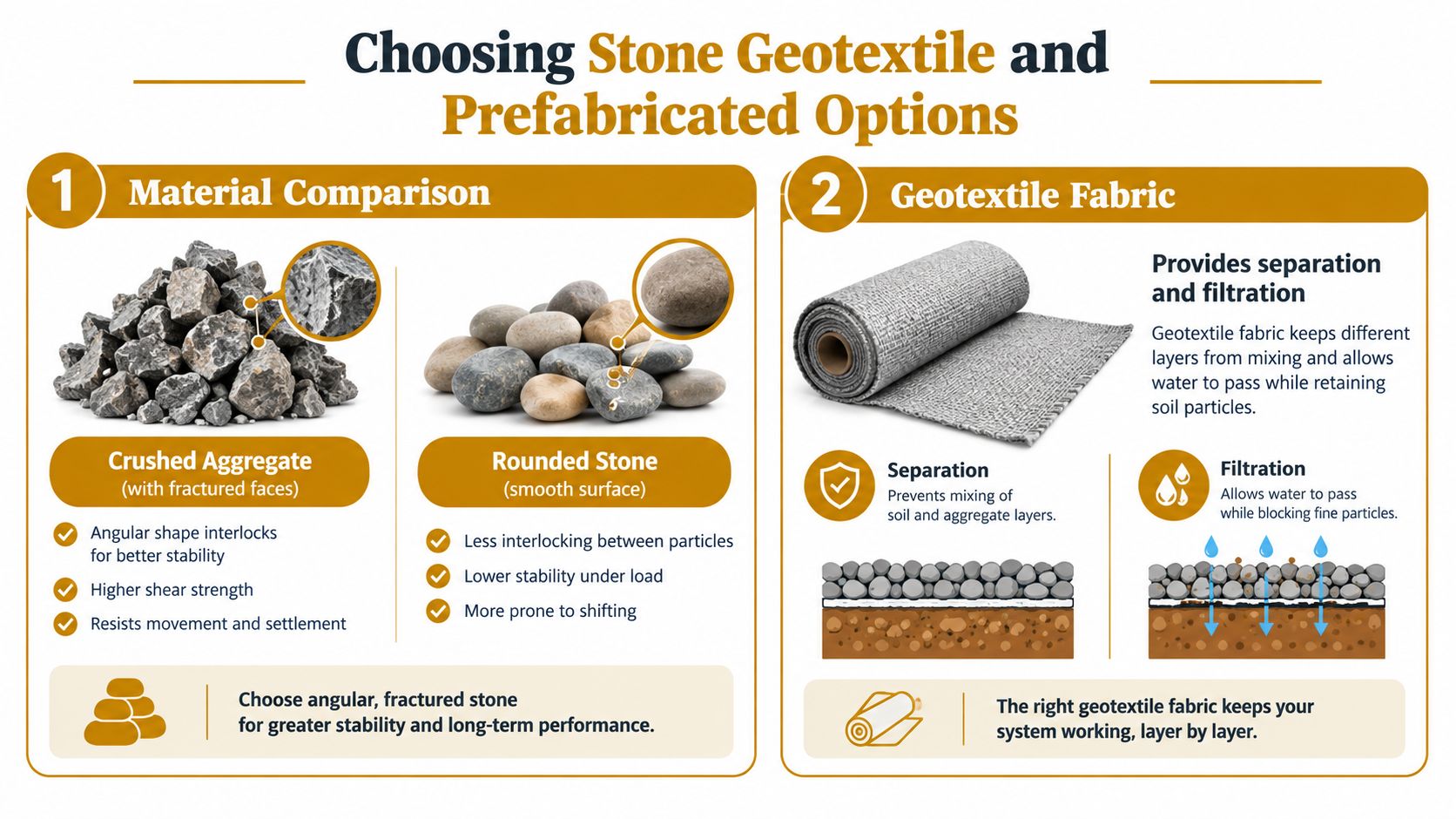
Use crushed natural aggregate with fractured faces so the particles lock under traffic instead of rolling. Colorado DOT's construction specifications require crushed natural aggregate with at least two fractured faces and set gradation requirements for tracking pads.
Rounded river stone may arrive clean and uniform, but turning tires move it out of the wheel paths. The result is bare subgrade, ruts, and loose rock pushed toward the roadway. Match the approved angular material to the project requirements. Do not substitute whatever stone is easiest to obtain.
Size the surface for the trucks that will use the entrance. A narrow pad can pass a visual check while loaded vehicles swing onto the shoulder or create bypass tracks. Include the turning area and the point where tires leave the public road, not just the straight approach.
Geotextile keeps the pad from disappearing
Firm, stable soil may support aggregate directly when the plans allow that section. Weak, wet, or saturated soil needs separation so the stone does not mix with native material. Geotextile helps distribute wheel loads, restrict soil migration, and preserve the void space that lets the aggregate remain functional.
Install the fabric across the complete traffic area, including edges and turning zones. A gap beside the pad, a fold beneath equipment, or fabric placed only over the visibly muddy patch creates a failure point. On weak ground, the layer belongs beneath the full aggregate section. If water is running toward the gate, divert it around the pad first. Saturated fabric and moving stone will not correct a drainage problem.
Material decision: If a loaded truck can push the stone into the soil, use a separation layer or revise the foundation detail.
Compare the two practical systems
| Option | Works well when | Main risk |
|---|---|---|
| Aggregate pad | The entrance has continuing heavy traffic and room for excavation and placement | It requires grading, stone handling, and periodic restoration |
| Aggregate over geotextile | The subgrade is weak, wet, or prone to pumping | Exposed or poorly installed fabric can tear or fold |
| Prefabricated tracking system | The site is tight, temporary, or difficult to excavate | It still needs correct vehicle alignment and drainage |
| Rounded stone | Seldom suitable where tire scrubbing and stability matter | It shifts, rolls, and leaves unsupported wheel paths |
Prefabricated systems can reduce excavation where access is restricted, but they still require a planned traffic line. Confirm the approved vehicle type, surface conditions, maintenance method, and acceptance criteria before delivery. A system suited to pneumatic tires may not be rated for tracked equipment.
Choose the system that contains expected loads, handles wet conditions, and gives inspectors a clear, continuous control at the entrance. A tidy first-day appearance does not prove the pad will remain stable.
Site Preparation and Installation Without Shortcuts
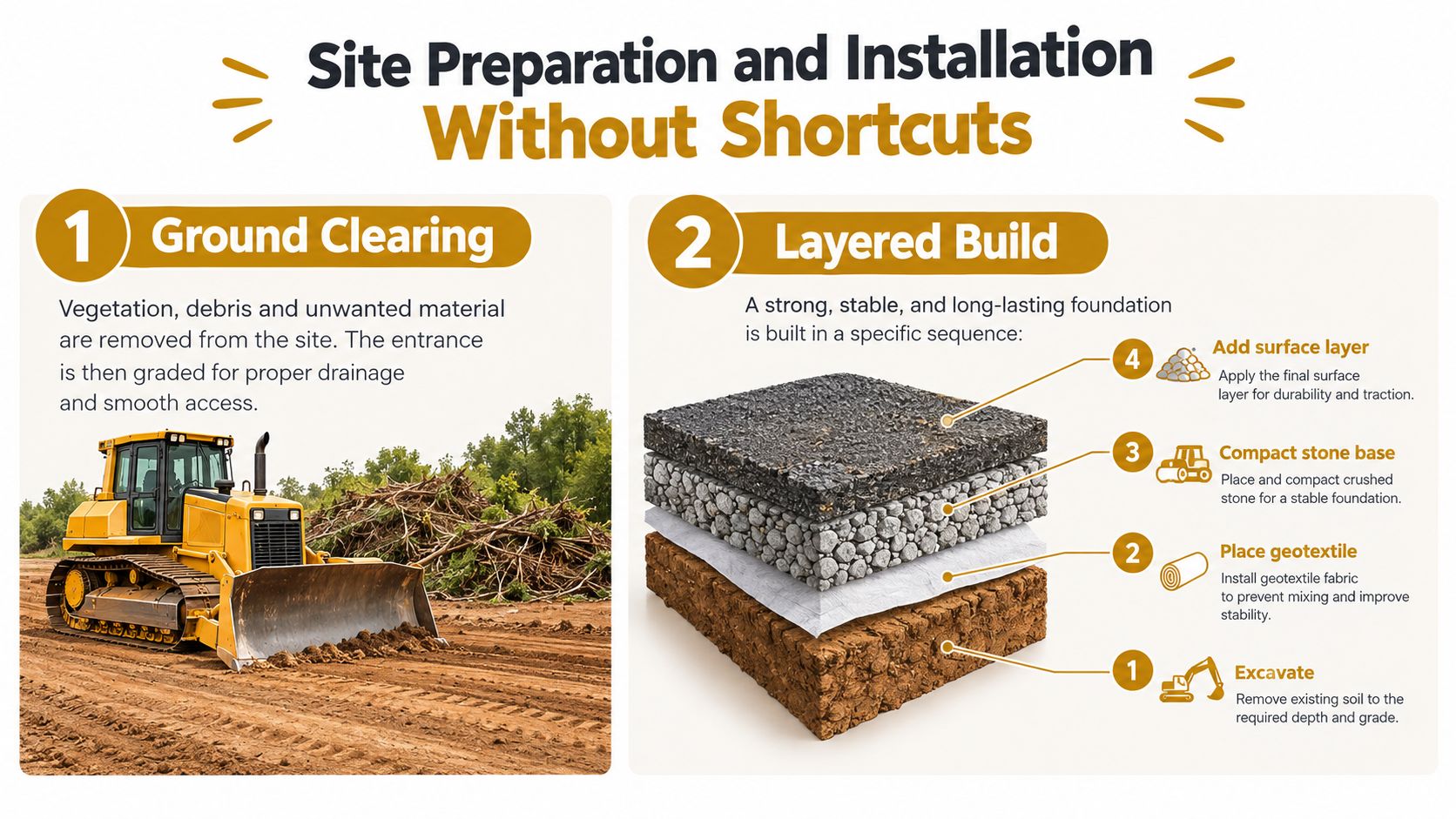
A pad can pass a dimension check and still fail on the first wet delivery day. The usual causes are weak soil under the entrance, water trapped below the stone, or a route sized only for a passenger vehicle. Build the section in order: clear the entrance, shape the grade, prepare the foundation, then place the aggregate.
Prepare the route before placing fabric
Stake the full footprint first. Include turning space and the wheel path from the public road to the gate, not only the straight approach. Remove vegetation, loose topsoil, and organic material. Grade the route so loaded trucks do not climb an abrupt lip, cut around the pad, or track mud along its edge.
Excavate where the approved design requires it. The Colorado DOT 2023 construction specifications describe a section using 6 inches of excavation, Class 2 geotextile, and a 6-inch aggregate layer for the specified entrance detail. That example shows the practical issue: weak ground needs a prepared section, not a cosmetic layer of rock. Confirm the project detail before setting elevations.
On weak or pumping soil, extend the geotextile across the entire prepared footprint, including the areas where trucks turn. Keep the subgrade shaped so water does not collect beneath the entrance. If the site is saturated, do not bury standing water under fabric. Remove unsuitable material or improve the foundation according to project requirements, then cover it.
Lay the separation layer cleanly
Roll the geotextile flat across the prepared area. Remove folds, overlap and secure seams as specified, and anchor the edges so the first stone placement cannot drag the fabric out of position. Repair tears before covering the fabric. An exposed strip at the entrance edge can become a failure point under turning tires.
Place aggregate from the stable end where possible, using equipment movement that limits turning on exposed fabric. Dumping one large mound and pushing it thin can fold the fabric and leave thin spots. Spread the stone uniformly, then check the finished section with stakes or grade marks. Verify thickness throughout the traffic lane, not only at the center.
Build for the equipment that will use it
Loaded dump trucks, concrete trucks, lowboys, and service vehicles apply different loads. Size and align the pad for the heaviest expected vehicle, including its turning movement. Watch the first loaded passes. Immediate rutting points to foundation support, drainage, or section thickness problems, not poor driving.
Protect the completed entrance while work continues. Keep excavators and tracked equipment off the pad edges, and direct subcontractors through the designated access point instead of allowing informal exits through the site perimeter.
Drainage Sediment Control and Daily Maintenance
A tracking pad can meet its stone dimensions and still fail at the road if runoff crosses it. The aggregate surface is not a treatment channel. Flowing water can loosen fines from the approach, carry them through the pad, and leave sediment on public pavement.
Surface water must be diverted away from the pad or conveyed beneath or around it. Crews often miss this inspection point because the entrance looks finished from the road. Walk the site during rain, or immediately afterward, and follow the actual flow path.
Separate vehicle control from water control
Use grading, swales, berms, culverts, or other approved measures to keep uphill runoff out of the tire path. A raised stone pad can act like a dam if drainage is ignored. Blocked ditches may force water around the edges, undercut the foundation, or send sediment straight toward the pavement.
Check the pad connection to the rest of the sediment-control system. Inlet protection, perimeter controls, sediment traps, and street-cleaning procedures should support the entrance as one working system. If sediment is already reaching the road, adding more stone without stopping the source will not correct the problem.
Water should pass around the entrance or beneath it by design, never across it by accident.
Inspect the surface as an operating control
Assign a person to inspect the entrance at the start of each workday, after significant rain, and whenever traffic or site grading changes. Look for:
- Rutting: Deep wheel paths indicate that the section or subgrade needs correction.
- Sediment filling: Fine material in the voids reduces the stone's cleaning action.
- Edge bypass: Mud beside the pad shows that the width or traffic routing is not working.
- Road track-out: Soil on the pavement requires prompt removal under the site's procedures.
- Drainage failure: Concentrated flow, ponding, or erosion near the pad must be corrected before the next load leaves.
Replace displaced aggregate when the working surface becomes thin. Remove accumulated sediment once it clogs the stone. Covering contaminated material with clean rock only hides the failure and reduces available void space. Clean the public road using the method required by the project and local authority, then document conditions before and after corrective work.
The 75% capacity trigger used in some concrete washout guidance provides a useful maintenance reference, though it applies to washout facilities rather than tracking pads. The Delaware stormwater handbook recommends inspection and removal of hardened material when a washout facility reaches that capacity. For a tracking pad, act before the voids are mostly filled and the stone no longer cleans tires effectively.
Costs Scheduling Mistakes and When to Use Alternatives
A tracking pad can pass its first inspection and still fail once loaded trucks use it. The cost is then measured in emergency stone, road cleaning, delayed deliveries, and a gate that must be rebuilt while production continues. Price the entrance for the traffic and ground conditions it will handle.
Include the complete installed section in the estimate:
- Stone volume: Width, length, and thickness set the aggregate quantity. Allow for placement, settlement, repairs, and later restoration instead of pricing only the visible surface.
- Geotextile: Weak or saturated subgrades may need separation fabric. Include excavation, placement, overlap, anchoring, and protection while stone is placed.
- Earthwork: Clearing, excavation, grading, drainage crossings, and edge shaping can cost more than the rock at a difficult entrance.
- Maintenance: Reserve material and labor for sediment removal, rut correction, displaced stone, and public-road cleaning. These are operating costs for the BMP.
- Traffic changes: A gate designed for pickups may later serve loaded concrete, dump, or delivery trucks. Recheck width, length, thickness, and subgrade support before heavier traffic begins.
A pad that crosses weak soil without geotextile often loses aggregate into the subgrade. That failure consumes material without creating a stronger driving surface. Divert runoff around the entrance or convey it beneath the pad, because water crossing the stone can carry sediment through the control and erode the edges.
Scheduling affects whether the design performs. Install the entrance before site traffic starts, reserve equipment for subgrade preparation, and coordinate aggregate delivery with a weather window that allows the crew to shape and inspect the foundation. Opening a freshly placed pad to loaded trucks during rain can disturb the stone, soften the base, and create corrections before the entrance is ready.
Mistakes that cause avoidable corrections
The same inspection problems appear repeatedly:
- The pad is narrower than the actual exit path. Turning trucks bypass the stone and leave mud along the edges.
- The entrance is too short for the traffic. Tires reach pavement before enough soil falls away.
- Geotextile is omitted on weak soil. Aggregate mixes with the subgrade and disappears into the entrance.
- Runoff crosses the pad. Flow carries sediment through the control and can cut channels at the sides.
- Rounded stone replaces specified crushed aggregate. The surface shifts under turning and braking loads.
- Maintenance begins after an inspection notice. Filled voids reduce tire-cleaning action, while track-out has already reached the road.
Temporary or prefabricated systems can suit restricted excavation areas, tight work zones, or projects where access will move. Confirm that the system is rated for the expected vehicles, covers the full travel path, and is protected from uncontrolled water. Ongoing heavy truck traffic on weak ground usually calls for a prepared aggregate section rather than a quick surface treatment.
Go-live checklist
Before opening the gate, confirm:
- The entrance is installed before outbound traffic.
- The width covers the full egress and turning route.
- The length and thickness match the approved design.
- The stone is crushed and suitable for the expected traffic.
- Geotextile is installed wherever the subgrade needs separation.
- Water is diverted around or conveyed beneath the pad.
- Drivers and subcontractors know which entrance to use.
- Inspection and road-cleaning duties are assigned.
- Replacement material and repair equipment are available without delaying work.
For projects that also need compliant concrete washout, Reborn Rentals provides washout pans and containers with delivery, upfront daily pricing, and options for confirming specifications and logistics before the pour. Visit Reborn Rentals to coordinate a ready-to-deploy washout setup alongside site access controls.