Table of Contents
- Key Takeaways
- Matching Pan Capacity to Your Pour Before You Dig
- The Math: Labor, Machine Time, and Disposal Costs
- Honest Trade-Off Comparison: Watertight Steel vs. In-Ground Pit
- The Compliance Problem: Liner Failures and Illicit Discharge
- When an In-Ground Dug Pit Makes Sense
- Why Front Range Turnkey Service Wins on the Jobsite
- Frequently Asked Questions
Key Takeaways
- Digging an on-site pit pulls your backhoe or skid steer operator off production work for excavating, lining, backfilling, and deconstructing.
- A rented 310-gallon steel pan costs $26 per day or $140 per week, with a flat $300 swap-and-haul fee inside the C-470 loop, eliminating equipment downtime.
- Plastic poly sheeting tears easily under rocky Colorado subgrades and falling aggregate, turning a temporary pit into an illicit discharge that violates stormwater permits.
- The right pan profile matches your discharge method: 14-inch walls let mixer chutes and pumps dump straight in, while 24-inch walls handle high-volume pours.
Matching Pan Capacity to Your Pour Before You Dig
Before you commit iron and man-hours to carving a hole in the ground, assess your discharge setup and volume. When concrete crews build an in-ground pit, they usually over-excavate to avoid slurry overflowing. That extra excavation creates more soil disturbance, consumes valuable laydown yard space, and leaves you with hundreds of pounds of contaminated dirt to remediate later.
A dedicated steel container matches your equipment footprint to the exact placement method you use on site. Choosing the right container depends on how your trucks and pumps discharge:
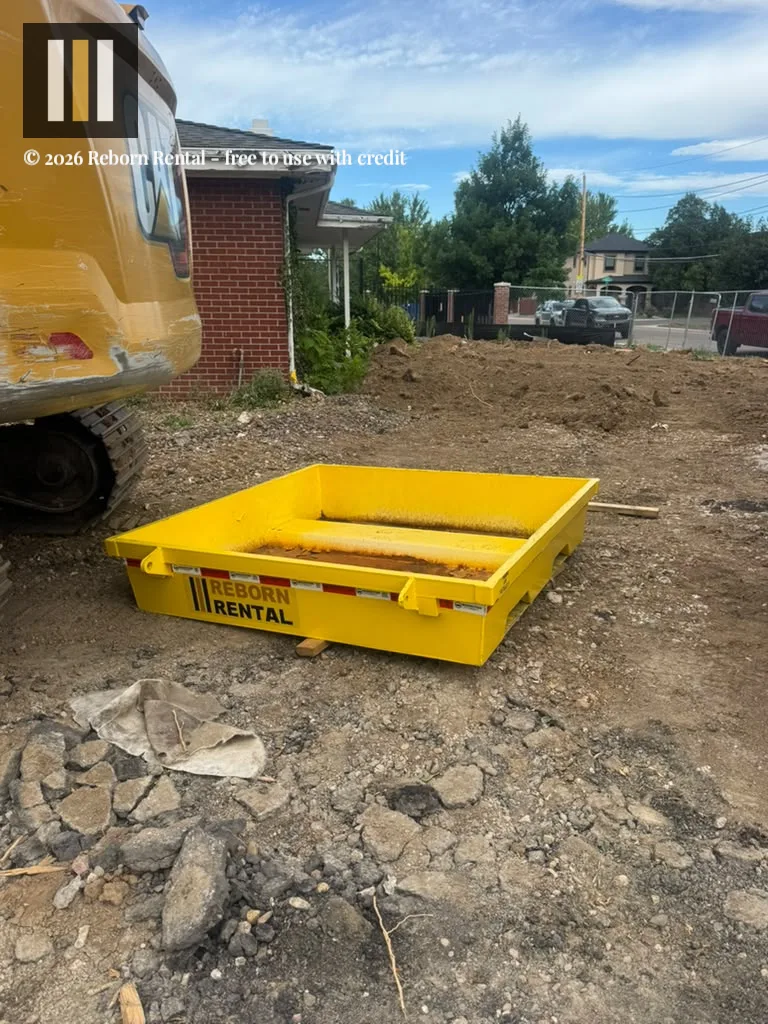
- Pump trucks and rear-discharge ready-mix trucks: The 310-gallon Small washout pan measures 72 inches by 72 inches with a low 14-inch wall height. Because the rim is only 14 inches off the ground, mixer chutes and pump hoppers can back up and discharge straight into the container. You do not need to build earthen approach ramps, excavate drop zones, or mess with chute extensions.
- High-volume, multi-day, or multi-sub pours: The 441-gallon Large washout pan keeps the same 72-by-72-inch footprint but features 24-inch side walls. This deeper profile gives you extra capacity for commercial slabs, continuous foundation pours, and sites where several ready-mix trucks wash out before a swap is required.
The Math: Labor, Machine Time, and Disposal Costs
Contractors often view an excavated pit as free because the earth and machines are already on site. When you calculate the true machine hours, labor rates, materials, and final removal, digging a pit is rarely the cheap option.
Building a compliant in-ground pit requires several distinct operational steps:
- Excavation: A backhoe, mini-excavator, or skid steer must dig a pit roughly 10 feet by 10 feet and 3 feet deep. Operator and machine time costs an average of $120 to $160 per hour. Digging and shaping berms takes roughly 1.5 hours: $180 to $240.
- Lining and anchoring: Field crews must clear rocks, lay out continuous 10-mil or 6-mil polyethylene plastic sheeting without tears, overlap the seams, and anchor the edges with sandbags, straw wattles, or dirt berms. Two laborers spending 45 minutes at a loaded labor rate of $45 per hour plus plastic and sandbags: $110 to $140.
- Deconstruction and remediation: Once the washout dries, your machine must dig out the hardened slurry without tearing the liner and spreading slurry into the subgrade. The crew folds the plastic, breaks up the concrete chunk, loads it into a truck or roll-off, backfills the hole, and compacts the base course. This takes 2 to 3 hours of operator and laborer time: $280 to $420.
- Disposal: Mixed plastic sheeting, dried slurry, and contaminated soil must be hauled to a facility that accepts mixed construction waste. Disposal fees and haul time: $150 to $250.
Total cost for a single dug pit: $720 to $1,050. If rainy weather delays drying, or if slurry saturates the soil beneath a torn liner, that number increases.
By comparison, renting a 310-gallon watertight steel pan costs $26 per day or $140 per week. Delivery and pickup via a dedicated pan swap and waste removal service costs a flat $300 inside the C-470 loop. Your total investment for a week-long pour is $440. You save hundreds of dollars, eliminate machine wear, and keep your operators focused on grading, placing, and finishing.
Honest Trade-Off Comparison: Watertight Steel vs. In-Ground Pit
Here is how dedicated steel pans stack up against field-dug pits on jobsite realities like setup speed, relocation ease, and compliance risk.
| Evaluation Factor | Watertight Steel Washout Pan | On-Site Dug Washout Pit |
|---|---|---|
| Setup Time | Zero jobsite labor. Pan drops directly into place via flatbed crane or telehandler. | 2 to 3 hours of machine excavation, soil clearing, and manual poly-lining. |
| Direct Cost (1 Week) | $140 rental ($26/day) + $300 flat swap inside C-470. Total: $440. | $720 to $1,050 in operator time, labor, poly sheeting, and final backfill. |
| Footprint on Site | Compact 6 ft × 6 ft footprint. Easy to place in tight access points. | Large 10 ft × 10 ft to 15 ft × 15 ft footprint including berms and safety buffers. |
| Mobility | Can be picked up and relocated across phases using forks or rigging eyes. | Fixed location. Must be completely backfilled and re-dug if phasing changes. |
| Environmental Risk | Watertight solid steel. Zero soil contact; no puncture risk. | High risk of aggregate punctures, seam failures, and subsurface leaching. |
| Demobilization | Swap truck winches pan aboard and hauls waste off site in under 15 minutes. | Lengthy cleanup: breaking concrete, pulling plastic, backfilling, and re-compacting. |
The Compliance Problem: Liner Failures and Illicit Discharge
Concrete washout water has a pH level between 12 and 13, making it as caustic as liquid drain cleaner. Under the Clean Water Act, environmental regulators and local municipal stormwater inspectors view uncontained washout as a severe threat to groundwater and local watersheds.
In Colorado, the Department of Public Health and Environment (CDPHE) requires contractors to implement structural Best Management Practices (BMPs) to prevent concrete slurry from escaping into storm sewers or open ground. When your crew builds a temporary pit, they line it with plastic sheeting over raw earth. Front Range soils frequently contain sharp aggregate, shale fragments, and discarded tie wire. The moment a ready-mix driver dumps heavy slurry and aggregate down the chute, or a pump operator cleans out a line, the impact can puncture the liner.
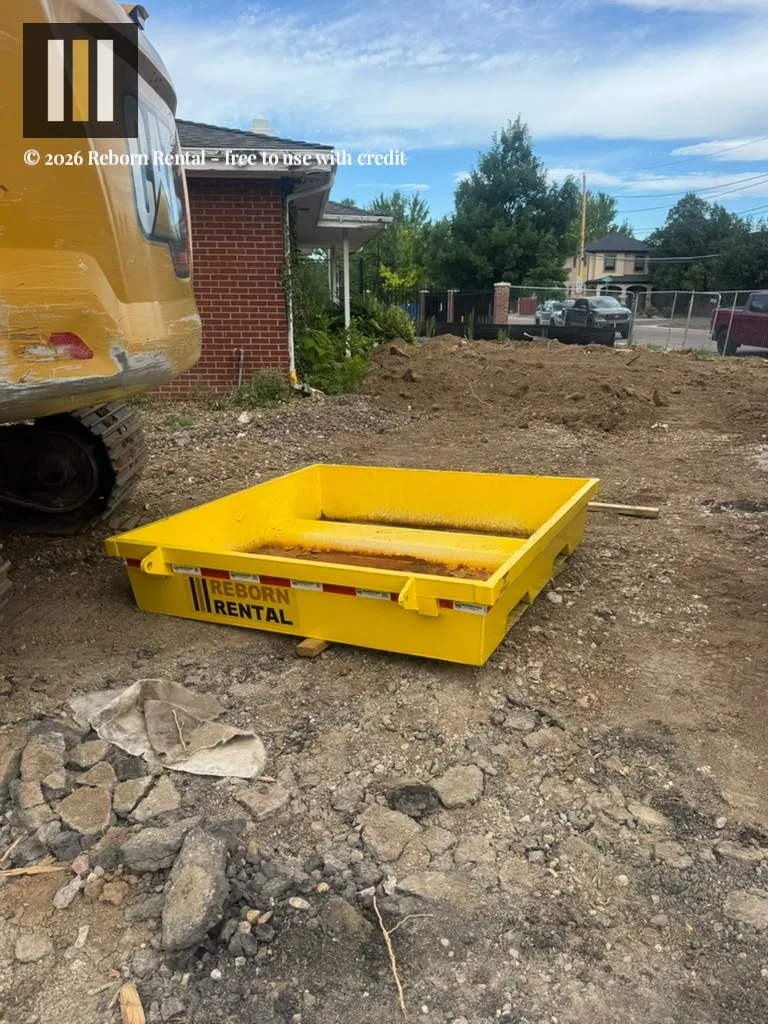
Once the liner is breached, unmonitored infiltration begins. Slurry leaches downward through the subgrade, contaminating soil and migrating toward storm inlets or groundwater tables. Under municipal stormwater permits, this constitutes an illicit discharge. Regulators can issue immediate stop-work orders and levy per-day fines until the site is remediated. Remediating a breached pit requires digging out cubic yards of alkaline-contaminated earth, testing soil pH, and trucking the contaminated material to an engineered disposal facility.
A heavy-gauge, leak-proof steel pan eliminates this risk entirely. It isolates the high-pH slurry from the ground. When your inspector walks the perimeter during a routine audit, a clean steel container shows proactive compliance without question.
When an In-Ground Dug Pit Makes Sense
To be fair, there are limited situations where an excavated pit may make practical sense over a steel pan:
- Massive, remote acreage with zero truck access: If you are pouring bridge footings or wind turbine pads miles away from paved roads where a flatbed delivery truck cannot safely travel, an in-ground pit constructed with heavy-gauge, multi-layer industrial liners and perimeter fencing may be your only logistical option.
- Multi-month mass-fill projects with dedicated on-site crushing: On large highway or civil works projects where millions of square yards of earth are already disturbed, and the site has an on-site concrete crushing and recycling plant, large engineered pits managed by permanent environmental crews can handle continuous bulk washing.
For standard commercial builds, residential subdivisions, urban infill, and Front Range flatwork, digging a pit ties up valuable equipment and introduces unnecessary site liability.
Why Front Range Turnkey Service Wins on the Jobsite
When pours are running, you cannot afford to wait on a regional equipment yard that takes days to process an order or ties you into months of auto-renewing vendor contracts. Reborn Rental operates locally across the Colorado Front Range, serving Lakewood, Denver, Aurora, Arvada, Westminster, Thornton, Centennial, Littleton, Broomfield, Longmont, Boulder, Fort Collins, Greeley, Colorado Springs, and surrounding corridors.
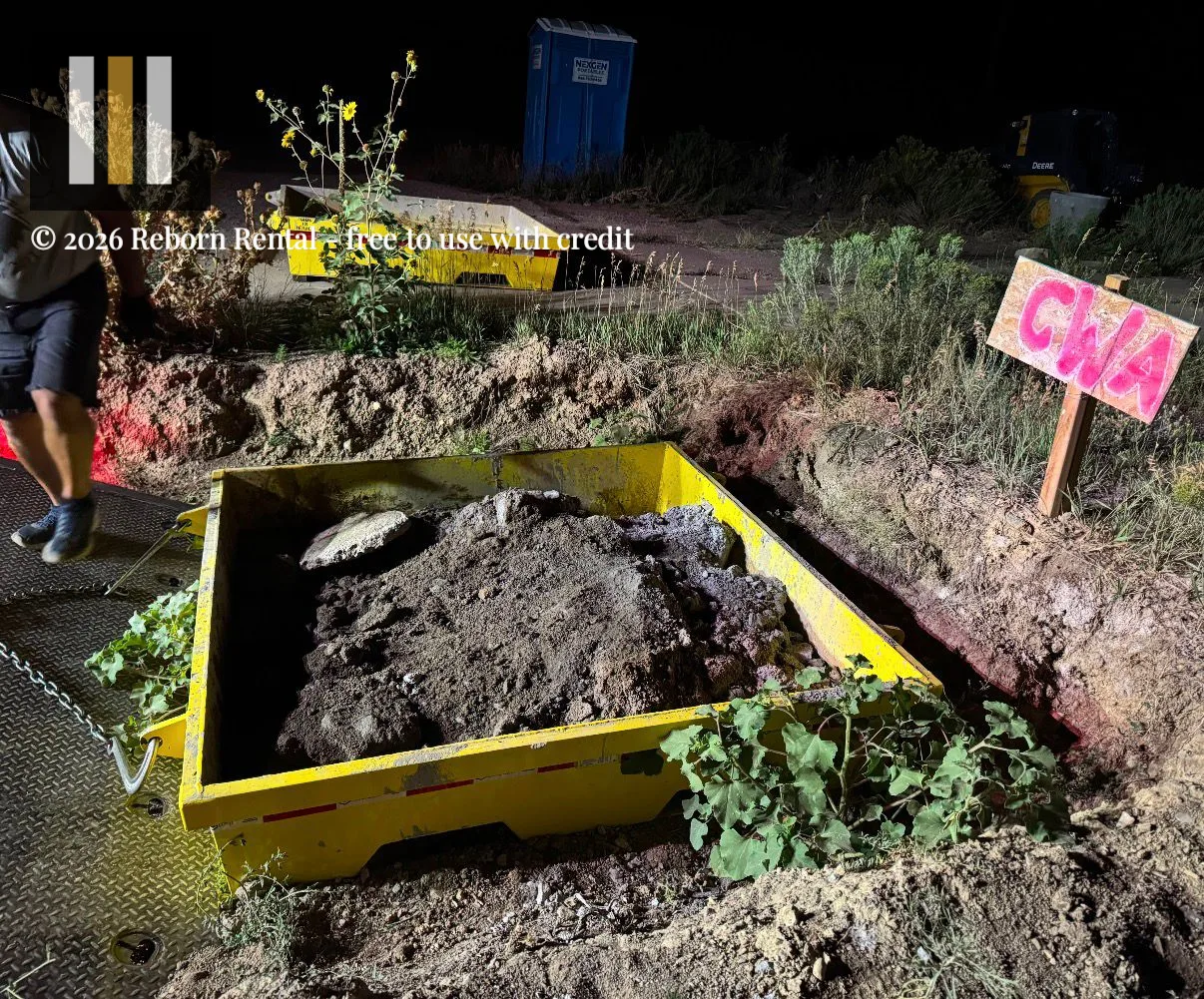
We run on a straightforward drop, use, and swap model with transparent rates. There are no long-term contracts. Rent by the day, the week, or 4-week blocks. When your pan reaches capacity, call us for a swap. We drop an empty unit and haul the full one away, keeping your crew pouring without interruption.
Review our straightforward pricing structure:
- Small 310-Pan (14-inch rim): $26/day | $140/week | $532 per 4 weeks
- Large 441-Pan (24-inch rim): $29/day | $175/week | $588 per 4 weeks
- Swap-and-haul service: Flat $300 per pan within the C-470 loop; $8.99 per mile beyond C-470; custom long-haul quotes for moves over 200 miles via email
- After-hours flexibility: Standard operating hours are Monday through Friday, 9:00 am to 6:00 pm Mountain time. If you need weekend or off-hours self pickup or drop-off, advance arrangements are available for a $35 fee. View our fees and surcharges for full terms.
Ready to switch? Get a live quote — no contract, swap on demand. Call (720) 734-9337 to reserve your washout pan today.
Frequently Asked Questions
Does renting a steel washout pan cost less than digging and maintaining an in-ground pit?
Yes. When you account for machine operator hours, equipment fuel, plastic liners, sandbags, and the labor required to break up slurry and backfill the excavation, a dug pit typically costs between $720 and $1,050. Renting a 310-gallon steel pan costs $140 per week with a flat $300 swap inside C-470, saving you money while keeping your iron working on productive tasks.
How do torn plastic pit liners create stormwater compliance violations on Colorado jobsites?
Concrete wash water has an alkaline pH of 12 or higher. When ready-mix chutes drop aggregate and water into a pit lined with thin polyethylene, sharp rocks and debris can puncture the liner. Liquid slurry seeps into the subgrade, contaminating surrounding soil and groundwater. Under Colorado stormwater regulations, uncontained slurry entering the soil or municipal storm drainage constitutes an illicit discharge, exposing the jobsite to stop-work notices and fines.
Which pan size replaces an on-site washout pit for standard commercial pours?
For pump trucks and standard chute cleanouts, the 310-gallon Small pan is the ideal direct replacement. Its 14-inch rim height allows ready-mix chutes and pump truck hoppers to discharge directly into the container without ramps. For continuous high-volume placements, foundation slabs, or jobs with multiple trades, the 441-gallon Large pan provides 24 inches of depth to hold higher slurry volumes between swaps. Check our frequently asked questions for more jobsite sizing details.
How far do you deliver from Denver?
We deliver throughout the Front Range. Delivery is a flat $300 inside the C-470 loop, $8.99 per mile beyond C-470, and custom-quoted as long-haul for distances over 200 miles.
Can I self-pick-up or self-drop-off on a weekend or outside working hours?
Yes, with advance notice — $35 after-hours fee.
What payment methods do you accept?
Cards, Klarna, Apple Pay, Google Pay, and ACH. No cash.
What is your cancellation policy?
Free up to 5 business days before; after that, 50% of the reservation (excluding delivery).