If you're a contractor in Seattle trying to figure out concrete disposal, here’s the most important thing to know: recycling isn't just a suggestion, it's a core part of the process. Getting it right starts with one simple step: keeping clean concrete rubble separate from all the other job site trash. Nail this, and you're on your way to saving money and avoiding major headaches.
Your Quick Guide to Disposing of Concrete in Seattle
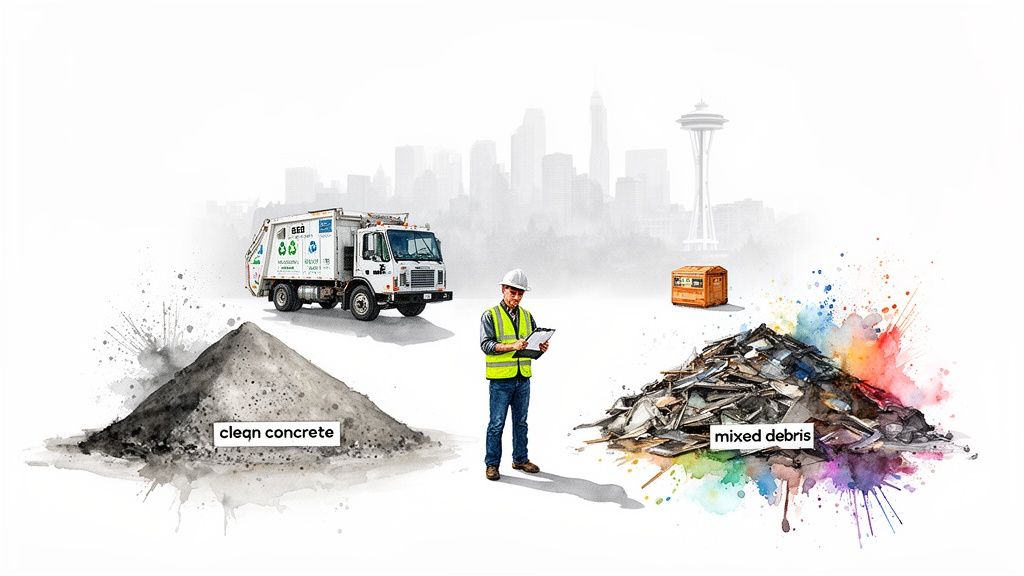
On any Seattle job site, managing concrete waste is about more than just getting it off your property. One wrong move—like letting slurry wash into a storm drain or mixing clean concrete with wood and drywall—can bring on heavy fines or even a stop-work order.
Success comes down to knowing your options before the first truck even arrives.
Seattle Concrete Disposal Options at a Glance
For any busy contractor, making the right call on disposal is key to keeping your project on time and on budget. It’s a strategic choice. Do you want to pay less and help meet local green building goals, or risk bigger bills and penalties down the line?
Think of it this way: clean concrete is a resource with value. Contaminated concrete is just expensive trash. Your bottom line depends on which one you create.
This quick-reference table breaks down the main ways to handle solid concrete rubble and liquid washout in the Seattle area. Use it to figure out the smartest approach for your specific job, whether it's a small patio pour or a massive commercial foundation.
| Disposal Method | Best For | Key Considerations | Compliance Factor |
|---|---|---|---|
| Recycling Facility | Clean, separated concrete and asphalt rubble from demolition or tear-outs. | Lower tipping fees, but the material must be pure—no wood, plastic, or too much dirt. | High. This is the preferred method that aligns with King County's C&D diversion goals. |
| Landfill / Transfer Station | Mixed construction debris or concrete that's too contaminated to be recycled. | Expect significantly higher disposal costs. This option also uses up limited landfill space. | Low. This should always be your last resort, as it works directly against city recycling targets. |
| On-Site Washout System | Capturing all the toxic liquid slurry from chutes, pumps, tools, and finishing work. | Prevents water pollution and requires a proper containment unit, like those from Reborn Rentals. | Mandatory. This is non-negotiable for avoiding fines under the Clean Water Act and local rules. |
As you can see, planning ahead is everything. By sorting your materials and containing your washout properly from the start, you protect your project, your budget, and the local environment.
Navigating Seattle's Concrete Disposal Regulations
If you think Seattle's concrete disposal rules are just another checklist to tick off, you're setting your project up for some expensive surprises. These regulations aren't just bureaucratic red tape; they're serious business, tied directly to the city and King County's goals to slash the amount of waste heading to our landfills.
Every truckload of clean concrete you recycle is one less truckload taking up valuable (and costly) landfill space. When you get it right, you're not just a contractor—you're a crucial part of the city's sustainability plan. Get it wrong, and you're looking at project delays and fines that can blow your budget out of the water.
Clean Versus Contaminated Concrete
Your entire disposal strategy hinges on one simple question: is your concrete clean or contaminated? The answer determines where it can go and how much you'll pay.
Clean Concrete: This is just concrete. No rebar, no mesh, no plastic sheeting, no wood scraps, no trash. It's pure, broken concrete rubble, the gold standard for recycling facilities.
Contaminated Concrete: This is concrete mixed with literally anything else. A few stray 2x4s, some leftover drywall, or even too much dirt can get your entire load rejected from a recycler, forcing you to landfill it at a much higher price.
One of the most common mistakes we see on-site is letting liquid washout ruin a perfectly good pile of clean concrete. That gray slurry from hosing down a chute might seem harmless, but it can instantly turn a valuable asset into a costly pile of trash.
The Role of Concrete Washout
Seattle's environmental watchdogs are laser-focused on protecting our waterways, and that’s where concrete washout becomes a major compliance issue. The liquid slurry from washing out trucks, pumps, and tools is a nasty brew. It's highly alkaline and loaded with heavy metals.
If that high-pH slurry hits a storm drain, it's a straight shot to places like the Duwamish River or Puget Sound. It’s incredibly toxic to fish and aquatic life, making it a serious violation of the Clean Water Act and local ordinances. Fines from the Department of Ecology for this kind of pollution are no joke.
This is why every drop of concrete washout must be captured on-site in a 100% leak-proof containment system. It's not a suggestion; it's a non-negotiable requirement for any job that involves pouring concrete. Failing to contain your washout is the fastest way to earn a stop-work order and a painful penalty.
Properly managing both your solid rubble and your liquid washout is the key to compliant and profitable concrete disposal in Seattle.
Comparing Concrete Recycling and Landfill Disposal Costs
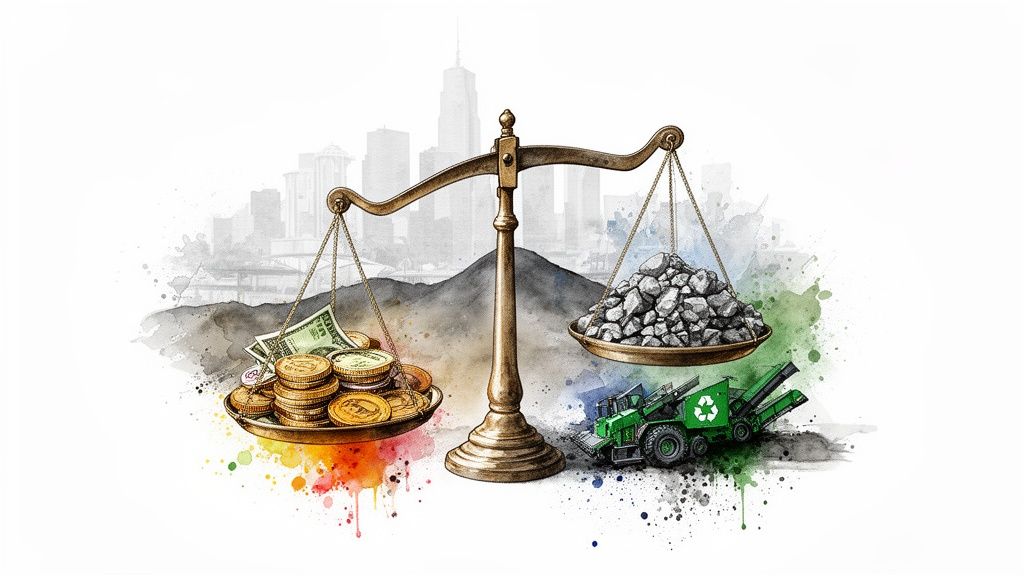
On any job site, every single choice you make hits the budget. Deciding what to do with your broken concrete in Seattle isn't just about being green—it's a massive financial lever you can pull to protect your profits.
Think of it like sorting cans and bottles at home to shrink your garbage bill, only the savings here are on a commercial scale. Every ton of clean concrete you keep out of a landfill is money straight back into your project's pocket. The numbers don't lie.
The Financial Case for Concrete Recycling
In the Seattle area, the cost gap between recycling clean concrete and dumping it is huge. Recycling facilities are built for one thing: turning your old concrete into valuable new material, like crushed aggregate for road base or backfill.
Because they can sell that new product, their intake fees—or tipping fees—are incredibly low. You'll typically pay somewhere around $20 to $40 per ton to drop off clean, separated concrete. That low fee is your reward for keeping your materials sorted on-site.
But sending that same concrete to a King County landfill? That’s a whole different financial ballgame.
The High Price of Landfill Disposal
Landfills aren’t in the business of making new materials. They're in the storage business, and their space is extremely limited and expensive.
The moment your concrete gets mixed with other job site debris like wood, plastic, or drywall, it’s considered contaminated. Recycling is off the table. Your only choice left is a trip to a landfill or transfer station, and that's where the costs explode.
For that mixed construction and demolition (C&D) waste, you’re looking at fees of $150 per ton or even higher. It’s a staggering jump that can turn a minor line item into a major budget-buster.
Choosing to recycle is a direct investment in your project's profitability. The cost difference between a $30/ton recycling fee and a $150/ton landfill fee adds up quickly, especially on large-scale demolition or construction jobs.
This cost difference is exactly why Seattle and King County push so hard for waste diversion. Washington state produces about 6 million tons of demolition debris every year. While big projects like the Lander Hall teardown successfully crushed 7,600 tons of concrete into reusable aggregate, the city is still falling short.
Seattle's C&D diversion rate was only 68.6% in 2024—far from the city's 80% goal. A lot of the 829,450 tons that went through King County transfer stations last year was concrete that could have, and should have, been recycled. You can discover more about Seattle's challenges with construction debris on KUOW.org.
Ultimately, handling your concrete the right way doesn't just save you a pile of cash. It brands your company as a smart, efficient, and responsible operator in a competitive market.
Why Concrete Washout Containment Is Not Optional
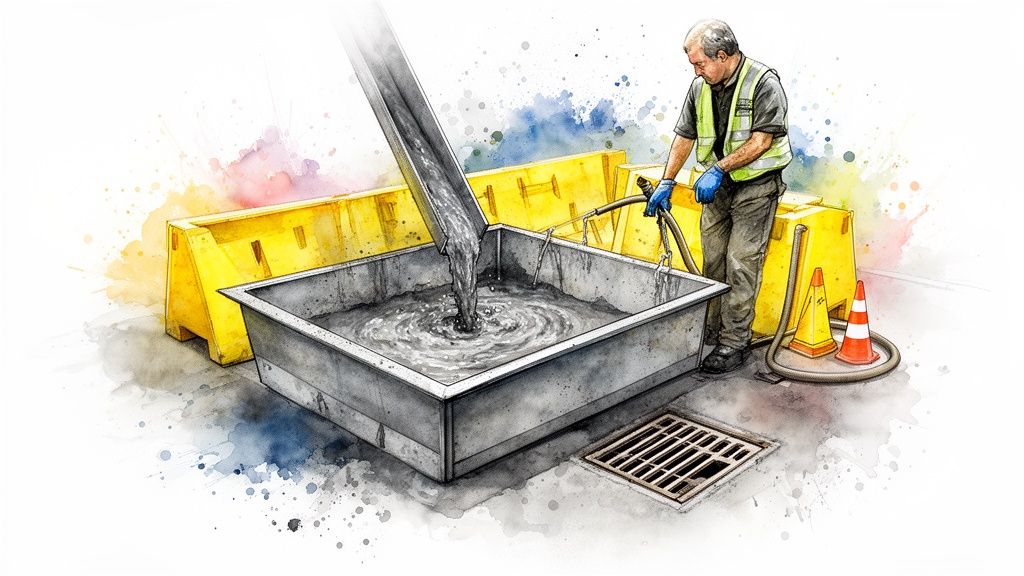
Everyone worries about hauling away broken concrete, but the most hazardous—and often overlooked—part of concrete disposal in Seattle is the liquid slurry left behind. This watery mix, known as concrete washout, is what you get every time you rinse chutes, pumps, hoses, and tools. Too many contractors treat it like a minor cleanup chore, but that's a mistake that can cost you dearly.
That slurry isn't just dirty water. It’s a toxic soup. Thanks to the cement, it has a dangerously high pH, often between 12 and 13. To give you some perspective, that's on par with drain cleaner or oven cleaner.
The Environmental Threat of Washout
When this highly alkaline slurry escapes a job site, it doesn’t just soak into the dirt and disappear. If it seeps into the ground, it poisons the soil and makes it impossible for anything to grow. The real disaster, though, happens when it finds its way into Seattle’s storm drain system.
Remember, storm drains in our city aren't treatment plants. They are direct pipelines to vital local waterways like Lake Washington, the Duwamish River, and Puget Sound.
The consequences are immediate and brutal. A pH level above 9.5 is lethal to most aquatic life. The caustic slurry essentially burns fish gills, suffocates entire ecosystems, and leaches heavy metals into the water. This isn't just a minor slip-up—it’s a serious violation.
This is exactly why agencies like the Washington State Department of Ecology and the City of Seattle have a zero-tolerance policy for uncontained washout. Even a small spill can cause a massive fish kill and lead to crippling fines under the Clean Water Act.
Containment Is the Only Solution
The only way to sidestep these risks is with a dedicated containment system. Forget about trying to get by with some flimsy plastic sheeting and a hastily dug pit—that's just a recipe for failure. Leaks are practically guaranteed, and the environmental damage is just as severe.
A professional-grade steel washout pan acts as a designated quarantine zone on your site. Think of it as a secure holding cell for hazardous liquids. It’s engineered to be completely leak-proof, safely capturing every last drop of slurry from your equipment and tools. This simple addition transforms a major liability into a manageable, compliant process.
For any concrete job in Seattle, proper washout containment isn't a perk or an optional upgrade. It's a fundamental requirement for running a responsible, legal, and profitable business. If you ignore it, you’re not just risking fines—you're gambling with the health of our local environment and your company's good name.
Choosing the Right Washout Solution for Your Project
Picking the right washout containment system is more than just checking a box on a compliance form. It's one of those site decisions that can quietly save your project from a world of hurt. The solution you choose directly impacts your site's safety, your crew's efficiency, and whether you’ll sail through inspections for concrete disposal in Seattle.
Think of it like trying to hold water in a paper bag versus a steel bucket. A makeshift dirt pit lined with plastic might seem like a cheap, fast fix, but it’s just asking for trouble. We’ve all seen them—prone to rips, leaks, and overflows, they create the exact environmental hazard you’re trying to prevent.
From Failure-Prone Pits to Professional Pans
It only takes one tear in that flimsy plastic liner to send toxic slurry seeping into the ground. That single mistake can trigger expensive cleanup orders and hefty fines. These DIY pits simply don't have the backbone to handle the weight and volume of slurry from multiple truck washouts.
This is where professional-grade gear, like the heavy-duty steel pans from Reborn Rentals, proves its worth. They're built for this specific, messy job and offer some serious advantages:
- Durability: Forged from industrial-grade steel, they are puncture-proof and ready for the daily grind of a construction site.
- Large Capacity: With options to handle anything from a small residential pour to a massive commercial foundation, you won't have to worry about messy overflows.
- Guaranteed Containment: The leak-proof design means every single drop of hazardous slurry is captured, keeping your site clean and compliant.
Investing in a durable, reusable steel pan is a proactive move. It prevents the costly spills and environmental damage that flimsy, failure-prone pits practically guarantee. It's a small upfront cost that protects you from enormous potential liabilities down the road.
Estimating Your Washout Capacity Needs
Getting the size of your washout container right is critical. Go too small, and you risk a dangerous overflow. Go too big, and you're just wasting space and money. A solid rule of thumb is to plan for about one cubic yard of washout capacity for every 50 yards of concrete poured.
This simple formula helps you match your equipment to the scale of your pour, ensuring you have the containment you need without overdoing it. And proper slurry capture is more than just a site-level best practice—it plugs into Seattle's larger waste management goals.
In 2024, the city's construction and demolition debris diversion rate was 68.6%, which fell short of the 80% target. Uncontrolled washout contaminates soil and water, which makes recycling that material much harder and undermines these critical city-wide objectives. You can read the full analysis of Seattle's waste metrics to see the bigger picture.
When you choose the right washout solution, you aren't just protecting your site—you’re doing your part to build a more responsible construction industry.
Your Step-By-Step Plan for Compliant Concrete Disposal
Getting concrete disposal right isn’t a single, one-off task—it's a workflow. A solid plan from day one is what separates a smooth, profitable job from a chaotic mess of fines and delays.
Think of it like a pilot's pre-flight checklist. They don’t wait until they’re hurtling down the runway to figure out their route. You shouldn't either. Mapping out your concrete disposal strategy beforehand prevents those costly, in-the-moment mistakes that can derail a project.
Step 1: Plan Before You Pour
Don't even think about ordering that first concrete truck until your disposal plan is locked in. This means knowing exactly where your clean rubble is going and having your washout containment already secured.
Scrambling for a solution when your site is covered in debris is a recipe for expensive, frantic decisions. Plan ahead.
Step 2: Segregate Your Solid Waste
This is critical. From the moment demolition starts, you need to keep your waste streams separate. Set up a clearly marked area for clean concrete only.
Drill it into your crew: no wood, no plastic, no trash. This one simple habit is the key to unlocking the cheapest recycling options for concrete disposal in Seattle. Contaminated loads will get rejected or hit you with higher fees.
Step 3: Deploy Your Washout System
Your washout container needs to be on-site and ready before that first pour. Find a spot that’s easy for trucks and pump operators to get to, but keep it far away from storm drains, creeks, or any other sensitive areas.
Make sure it's the right size for the job. An undersized container is just an overflow waiting to happen, and that’s a ticketable offense.
This little graphic breaks down the decision process into three simple stages.
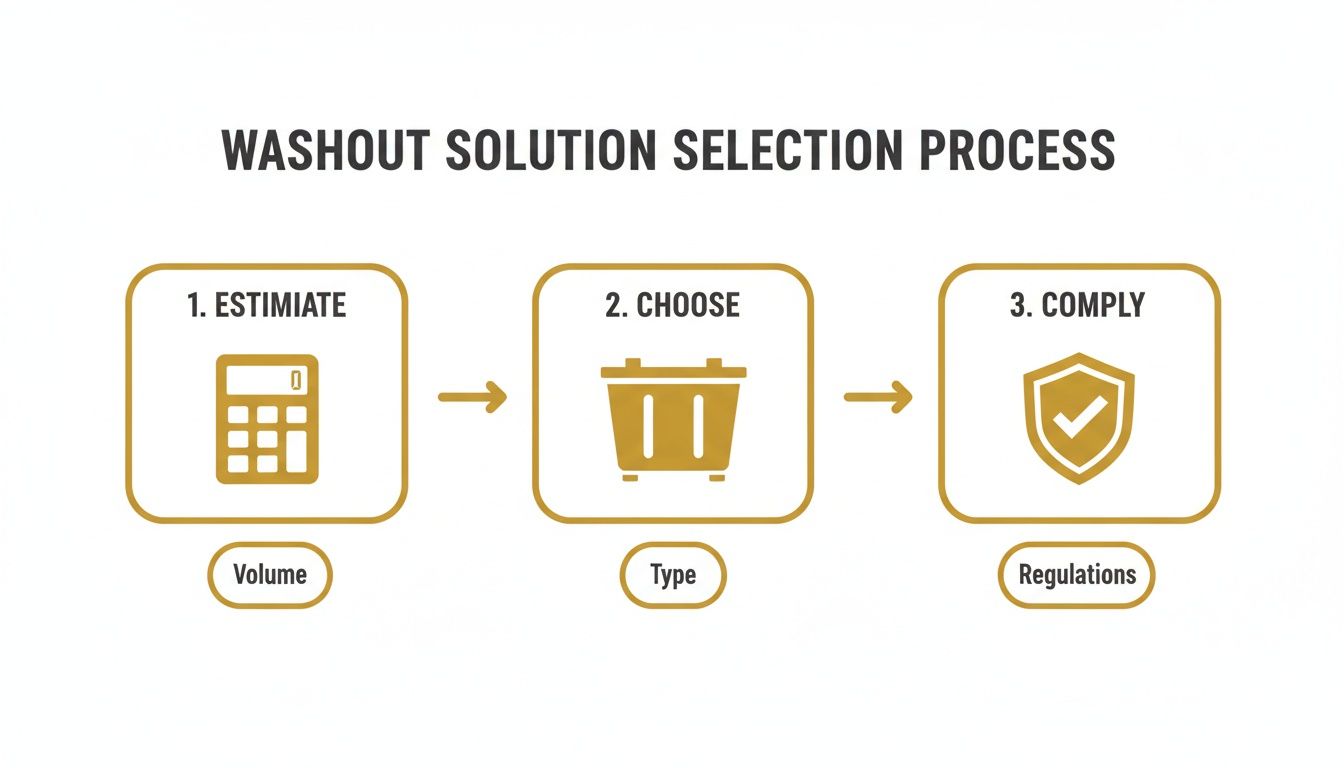
It all comes down to estimating your needs correctly and choosing a professional, leak-proof system that won't fail you.
Step 4: Manage Washout Throughout the Job
You can't just set it and forget it. Actively manage the washout process every day. Make sure every single person on site—your crew, your subs, everyone—knows to use the designated washout for cleaning all their tools, chutes, and equipment.
Consistent use of the washout system is non-negotiable. It transforms a major environmental risk into a controlled, manageable part of your daily operations, protecting you from violations under the Clean Water Act.
Step 5: Arrange for Final Disposal
When the job's done, you'll have two piles of waste to deal with. First, call for a truck to haul your clean concrete rubble off to a local recycler.
Second, get in touch with your washout service provider, like Reborn Rentals, to schedule a pickup. We’ll handle the compliant removal and disposal of the slurry and hardened solids inside. That’s the final step that closes the loop on your waste plan, leaving you with a clean site and zero compliance headaches.
Your Top Concrete Disposal Questions Answered
When you're running a job site in Seattle, the last thing you want are headaches over waste disposal. Getting it wrong can cost you time and money. Here are straight answers to the questions we hear most often from contractors on the ground.
How Much Does It Really Cost to Dispose of Concrete in Seattle?
This one comes down to how you sort your materials on site, and the price difference is huge.
If you keep your concrete clean and separate, taking it to a designated recycling facility is your cheapest option by a mile. You're typically looking at around $20 to $40 per ton.
But if that same concrete gets mixed in with other job site garbage, it has to be treated as mixed construction debris. The cost for that? It jumps to over $150 per ton. A little bit of sorting saves a massive amount on your disposal fees.
Can I Just Toss Broken Concrete in a Regular Dumpster?
Definitely not. In Seattle and across King County, it's illegal to put concrete in a standard garbage bin or a mixed-waste construction dumpster. Regulators classify it as specific construction and demolition (C&D) debris.
Every piece of concrete rubble has to be hauled to a permitted C&D facility, ideally one that recycles it. Trying to sneak it into the regular waste stream is a surefire way to get hit with some hefty fines from the city.
What’s the Big Deal if I Don’t Use a Concrete Washout?
Skipping a proper washout is like playing Russian roulette with your project. That gray, watery slurry from rinsing your chutes and tools is highly toxic. Its high pH can scorch the earth and poison local waterways if it finds its way into a storm drain, which is a direct violation of the Clean Water Act.
The consequences aren't just a slap on the wrist. A single spill can get your project shut down with a stop-work order, force you into expensive site cleanup, and bring down serious fines from agencies like the Department of Ecology. It’s a risk no professional can afford to take.
Handling your concrete waste the right way is non-negotiable for keeping your project compliant and profitable. For a rock-solid, leak-proof solution to contain every drop of washout slurry, Reborn Rentals has you covered. Get a quote and schedule your washout pan delivery today at https://www.rebornrental.com.
Produced via the Outrank app