The easiest and most reliable way to dispose of concrete washout is to use a dedicated, leak-proof containment system, keep it at least 50 feet away from storm drains, open ditches, and waterbodies, then let the water evaporate so the hardened solids can be recycled. In practice, that process is simplest when a professional rental service handles the containment and pickup, because it removes a lot of the compliance burden from the crew.
You know the moment. The pour is done, the truck is about to roll, the finishers are wrapping up, and somebody looks around at the gray slurry, the chute residue, the splatter on tools, and the leftover wash water and asks, “Where do you want this?”
That question sounds small. It isn't.
Concrete washout is one of those end-of-pour tasks that can either stay controlled or turn into a jobsite problem fast. If the crew improvises, the site gets messy, the wrong area gets contaminated, and the superintendent ends up dealing with a preventable issue instead of closing out the work. If the plan is solid before the first truck arrives, washout becomes just another managed site operation.
A lot of contractors ask what's the easiest way to dispose of concrete washout as if “easy” means whatever takes the fewest minutes right now. On a real job, easy means something else. It means the method that gives you the least resistance with inspectors, the least chance of a spill, the least extra labor, and the fewest headaches after the pour is over.
The End-of-Pour Problem Every Contractor Faces
At the end of a concrete placement, nobody wants to spend another hour figuring out slurry, rinse water, and leftover material. The crew wants to clean tools, the pump operator wants to finish up, and the truck driver wants a clear answer on washout. That's when bad decisions happen.
A new foreman often thinks washout is just cleanup. A seasoned one knows it's site control.
If there's no designated spot, people start inventing one. They look for a corner of the lot, an unused patch of dirt, or a spot near the curb that seems out of the way. That shortcut creates two problems at once. First, the material isn't contained. Second, the person in charge now owns every consequence that comes with it.
What the job really looks like
On most sites, washout isn't one thing. It's several streams of mess that all need direction:
- Truck and chute residue: Leftover slurry and rinse water after discharge.
- Pump and tool cleanup: Hoses, buckets, screeds, shovels, and wheelbarrows all carry cementitious material.
- Small-batch leftovers: Mortar, patch mix, or partial buckets from punch work.
- Rain exposure: If washout is left open and undersized, weather turns a contained mess into runoff.
That's why the issue keeps showing up on jobs of every size. Big commercial pours deal with more volume. Small renovation jobs deal with tighter sites and fewer staging options. The pressure is different, but the decision is the same. You need a controlled place for the material from the start.
Field rule: If the washout plan depends on the crew “being careful,” it isn't a plan.
The cleanest sites usually don't have crews working harder. They have crews working with a simple system. Everyone knows where the washout goes, who uses it, and what happens when it's full.
That's the standard worth aiming for.
Understanding the Risks of Improper Washout Disposal
A bad washout decision usually shows up after the crew thinks the hard part is over. The pour is done, everyone is cleaning up, and somebody dumps slurry where it seems harmless for five minutes. Then rain hits, the runoff moves, or an inspector sees it. What looked like a small shortcut turns into a site problem, a paperwork problem, and sometimes a client problem.

What can go wrong on site
Concrete washout is alkaline, messy, and hard to control once it gets loose. Risk starts the moment it leaves a contained area. After that, crews are no longer managing cleanup. They are chasing spread.
On active jobs, the failure points are usually predictable:
- Runoff to drains or low areas: Rinse water follows grade fast, especially near curb lines, inlets, and paved access points.
- Dumping on exposed soil: Ground that looks absorbent can still carry residue, stain the site, or let material migrate beyond the washout spot.
- Undersized containment: A pit or container that fills too early forces the crew to improvise late in the day.
- Weather exposure: Open washout areas collect rain, lose capacity, and overflow at the worst time.
- Damaged liners or weak setups: A torn liner, soft edge, or poorly placed pit can fail without much warning.
I have seen jobs lose more time on cleanup and explaining a preventable mess than they ever would have spent setting up proper containment from the start.
The cost goes beyond cleanup
Improper disposal creates environmental exposure, but that is only part of the headache. It also hits production. Labor gets pulled from finish work or prep for the next pour. Supervisors stop managing the schedule and start managing a mistake. If the washout reaches paved areas, drains, or neighboring property, the conversation gets more expensive.
Clients notice this fast. So do inspectors and GCs.
The practical problem is that many do-it-yourself disposal approaches only work if conditions stay favorable. You need enough space, the right placement, enough capacity, and a crew that makes the right call every time. On a real job site, that is a weak system. Easy should mean easy to keep compliant, easy to monitor, and easy to close out without leftover liability.
That is why the simplest answer is rarely the one with the lowest setup effort. The easiest method is the one that removes judgment calls, contains the material from the start, and keeps disposal from turning into one more thing the field team has to babysit.
Common Concrete Washout Disposal Methods
By the end of a pour, crews usually default to one of four disposal methods. The difference is not just effort. It is how much risk, cleanup, and follow-up the site inherits after the trucks leave.
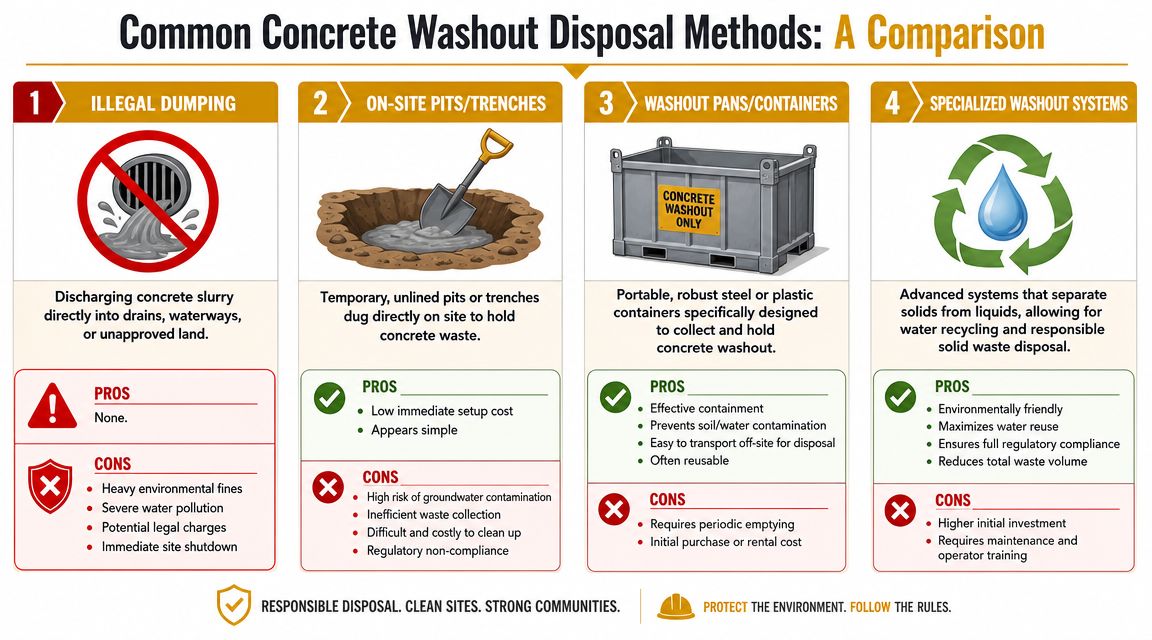
Some methods look easy for ten minutes and create two days of headaches.
The methods from worst to best
Here is the field-level comparison:
| Method | What it looks like on site | What works | What doesn't |
|---|---|---|---|
| Illegal dumping | Washout into drains, ditches, or open ground | Nothing | No containment, high exposure, obvious compliance problem |
| Makeshift pit or trench | Dug area, sometimes lined, sometimes not | Fast to start if space allows | Easy to misplace, vulnerable to rain and overflow, final cleanup stays on your crew |
| Dedicated washout pan or container | Portable containment unit for slurry and solids | Controlled, reusable, easier to monitor | Requires scheduling, placement, and removal |
| Specialized service-based system | Container plus service, removal, and recycling workflow | Lowest field labor, cleaner closeout, clearer chain of responsibility | Higher direct cost than a DIY setup |
Illegal dumping does not belong in a serious plan. It creates an immediate compliance problem and puts the whole job at risk over something that should have been controlled from the start.
The method that traps a lot of crews is the pit or trench. On paper, it looks cheap. On site, somebody still has to pick the location, keep trucks off soft edges, watch capacity, deal with stormwater, and break out or remove the hardened waste later. That is not simple. That is shifting disposal work onto the field team.
A dedicated washout pan is a better operating method because it defines where the material goes and keeps it in one place. The trade-off is that someone still needs to order it, place it where trucks can reach it without creating traffic problems, and make sure pickup happens before it becomes one more leftover item at closeout.
The service-based option is usually the easiest in the way that matters to a superintendent or foreman. The container shows up ready to use. The waste stays contained. Removal is part of the plan. Instead of asking the crew to manage disposal as a side job, the site treats it as a handled service with a clear end point.
That distinction matters.
A quick side-by-side view makes the trade-offs obvious:
Illegal dumping
- Labor: Low in the moment
- Risk: Extreme
- Cleanup: Usually worse later
- Compliance: No
DIY pit
- Labor: Moderate upfront, plus cleanup later
- Risk: Tied to siting, weather, and how well the pit is built
- Cleanup: Your crew owns it
- Compliance: Possible, but easy to get wrong
Containment container
- Labor: Low once installed
- Risk: Controlled
- Cleanup: Predictable
- Compliance: Easier to maintain
Rental and service model
- Labor: Lowest for the field crew
- Risk: Reduced through containment and scheduled removal
- Cleanup: Built into the process
- Compliance: Easier to document and close out
A disposal method is only easy if it stays easy after the pour.
That is why the primary comparison is not pit versus pan. It is self-managed disposal versus a system that removes judgment calls, contains the mess, and gives the project a cleaner path to compliance and closeout.
Why Containment Is the Simplest Compliant Solution
The easiest washout plan is the one that keeps the crew out of trouble at 4:30 p.m., after the pour is done, the trucks are leaving, and nobody wants one more loose end. That usually means one thing. Put the washout in containment from the start.
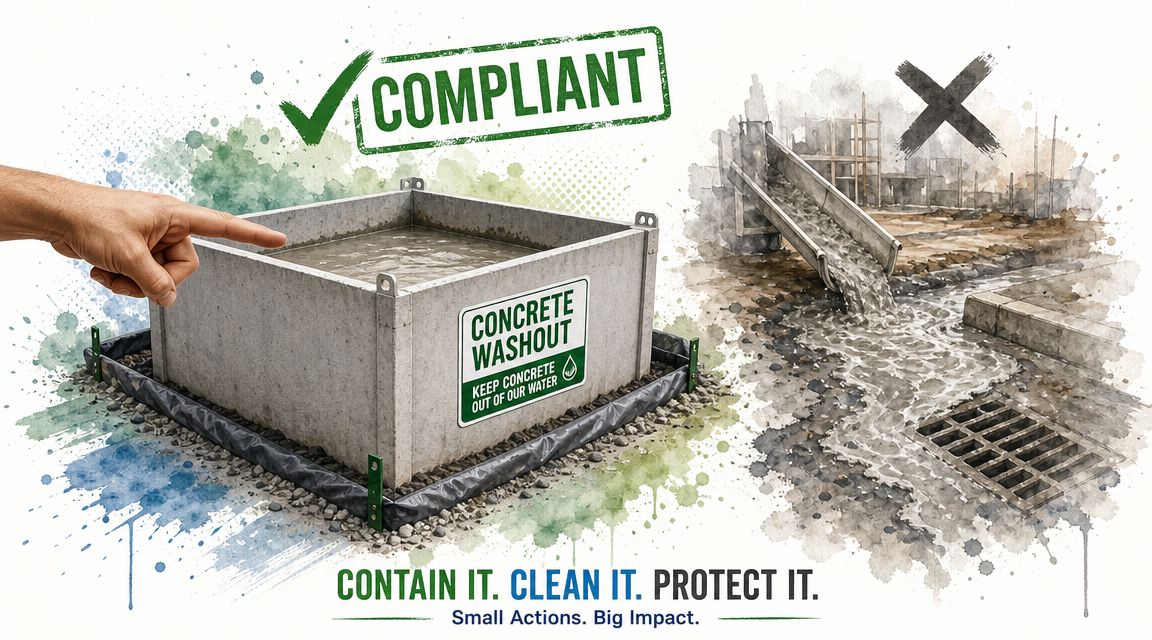
Containment is the simplest compliant solution because it turns a messy field task into a controlled process. The wash water and slurry go to one designated spot. The material stays off the ground, out of storm drains, and out of the crew's way. The supervisor has a setup that is easier to monitor, easier to explain, and easier to defend if questions come up later.
That matters more than people admit.
On paper, several disposal methods can be called compliant if they are built, placed, and managed correctly. In the field, the simplest method is the one with the fewest judgment calls. Open-ground washout areas and improvised pits leave more room for bad placement, overflow, track-out, and weather problems. A leak-proof container cuts down those failure points.
Why containment holds up on real jobs
Crews do not need another process that depends on perfect habits. They need something clear.
A contained washout setup gives them that:
- One marked location: Drivers and laborers know exactly where washout goes.
- Defined boundaries: Slurry, rinse water, and solids stay inside a unit built for that purpose.
- Better site control: The material is not spreading across soil, rock, or pavement where cleanup gets expensive.
- Cleaner end stage: Once the water is gone and the solids harden, removal is more predictable.
- A clearer disposal path: Hardened concrete waste is easier to route into the proper recycling or disposal channel.
That is what "easy" should mean on a job site. Less confusion. Less exposure. Fewer chances for a small cleanup task to become a compliance problem.
What contractors are really buying with containment
Containment saves labor, but the bigger win is reducing friction in the job. The foreman is not assigning laborers to build and babysit a pit. The superintendent is not dealing with washout damage near curb lines or in drainage areas. The project team is not arguing at closeout about who owns a half-dried mess in the corner of the site.
It also creates a cleaner handoff between the field and whoever handles final removal. That chain matters. If the washout stays contained from the first truck to final pickup, there is less chance of spills, rehandling, or last-minute scrambling.
Practical rule: If a washout method depends on the crew doing everything right under time pressure, it is not the easiest method.
Containment works because it simplifies decisions. Use a leak-proof container, place it where the pour team can reach it without crossing active traffic, keep all washout in that unit, and remove the hardened material through an organized disposal or recycling process. That is the path of least resistance for compliance, liability, and project management.
How Washout Rentals Eliminate On-Site Headaches
Once you accept that containment is the right method, the next question is who should manage it. On many jobs, the easiest answer is not the crew.
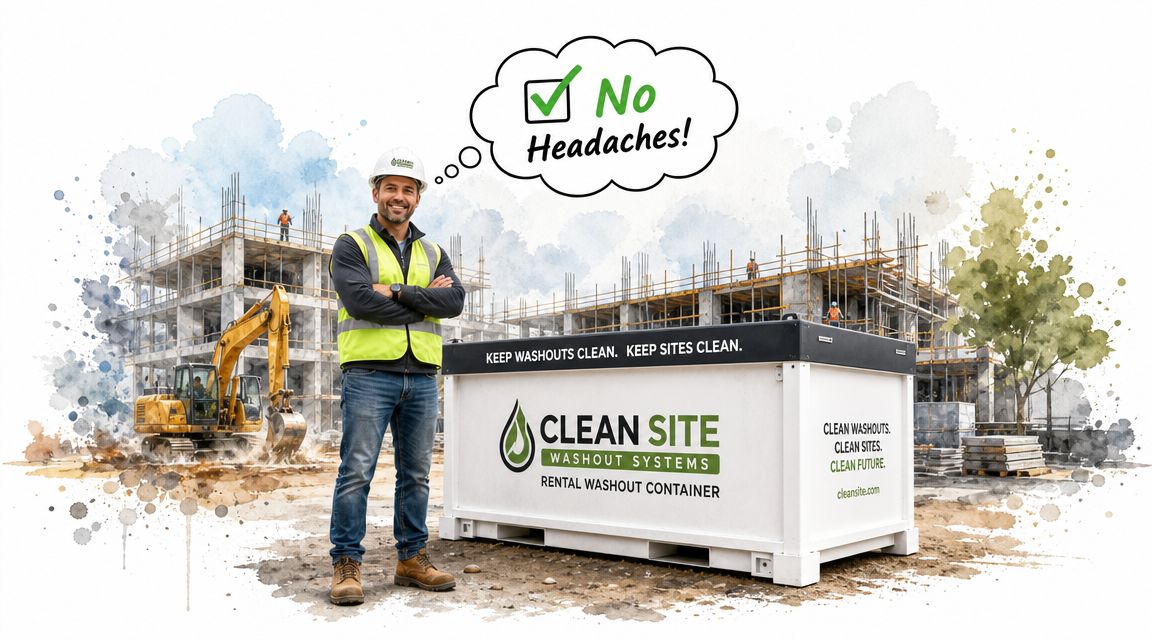
The operational choice between DIY disposal and a rental service comes down to total cost and risk management. While DIY can look cheaper at first glance, professional services handle containment, transport, and recycling of hardened material, shifting much of the compliance burden away from the contractor and reducing on-site labor and liability, as discussed in ChemREADY's overview of concrete and washout water handling.
What the rental workflow looks like
A good washout rental process is straightforward:
Delivery to the site
The container arrives before the pour or before the cleanup phase starts.Correct placement
The pan or container gets staged where trucks and crews can reach it without crossing active traffic paths or creating spill points.Use during the job
Drivers, finishers, and laborers all use the same designated containment area.Pickup and downstream handling
After the material has been managed on site, the provider handles removal and the next step in disposal or recycling.
That's simpler than assigning labor to build a pit, monitor it, protect it from overflow, and then deal with the hardened waste afterward.
What your crew stops worrying about
A rental service removes a surprising amount of site friction:
- No digging: Nobody burns time cutting a pit or trench.
- No liner failures: You're not betting the job on plastic staying intact.
- No ad hoc disposal plan: The process is established before the pour starts.
- No arguing at cleanup time: The crew already knows where everything goes.
For contractors who want a straightforward ordering process, Reborn Rentals offers washout containment rentals with delivery scheduling and clear equipment options through its concrete washout rental service. That's one example of how a service model turns washout from a field improvisation into a logistics item.
The point isn't that every job needs the most elaborate system. It's that most jobs benefit when the site team stops owning every detail of washout disposal. Your finishers should be finishing. Your laborers should be supporting production. Your superintendent should be managing the project, not babysitting a mud pit.
Rental works because it turns washout into a scheduled service instead of a field problem.
That's usually the closest thing to “easy” you'll get on a concrete job.
Making the Smart Choice for Your Next Project
The easiest way to dispose of concrete washout isn't the method that looks cheapest at the end of the pour. It's the method that creates the fewest problems before, during, and after cleanup.
Illegal dumping is out. Makeshift pits can work only under tight conditions, and they still leave the crew with setup, monitoring, and closeout work. Leak-proof containment is the cleaner path because it controls the material from the start. A rental service takes that one step further by offloading the labor, transport coordination, and much of the compliance management that contractors would otherwise carry themselves.
If you want fewer surprises, decide on washout before the first truck arrives. Assign a location. Use proper containment. If the site is tight, the schedule is busy, or the project has little tolerance for risk, outsource it.
That's the smart answer to what's the easiest way to dispose of concrete washout. Not the fastest shortcut. The method with the least friction, the least liability, and the least chance of turning a finished pour into tomorrow's problem.
If you want to take washout planning off your crew's plate, Reborn Rentals provides concrete washout containment rentals that help contractors keep slurry controlled, sites cleaner, and disposal logistics easier to manage from start to finish.