You're finishing a pour, the pump is breaking down, and someone notices gray water moving where it shouldn't. It isn't a dramatic tanker rollover. It's the kind of small, ordinary job-site mistake that happens when crews are moving fast. A little washout escapes the containment area, finds slope, and heads toward a storm drain.
That's usually the moment a supervisor learns an expensive insurance lesson. The first call goes to the general liability carrier. The answer often comes back the same way: pollution is excluded, or coverage is at least disputed. By then, the site still needs emergency response, the owner wants answers, and the regulator doesn't care that the release started as “just slurry.”
For contractors, concrete crews, and site consultants, that's where environmental liability coverage stops being an abstract insurance term and becomes a field issue. It's the policy built for the messes that don't fit neatly inside a basic GL form.
What Happens When Washout Spills into a Storm Drain
A washout spill usually starts with a routine shortcut. The chute gets rinsed outside the berm. The washout pan sits where runoff naturally collects. Rain hits before the crew secures the area. Then gray water reaches a catch basin, and a small field mistake turns into an environmental incident.
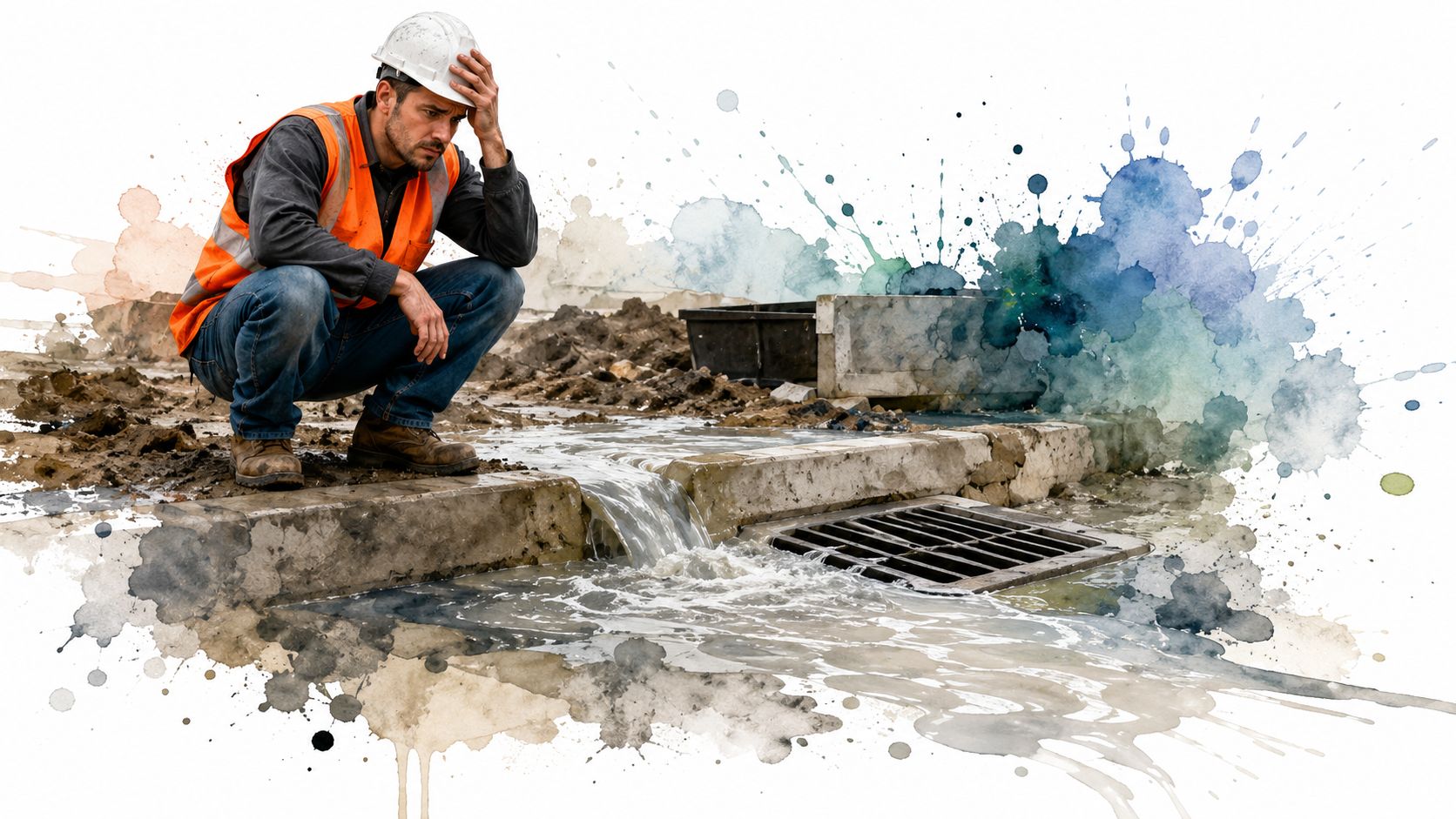
Once slurry enters a storm drain, the problem leaves your work zone. Public infrastructure may be involved. The discharge can travel off site. Now the job is not just cleanup. It is containment, documentation, notice, and explaining to an owner, inspector, or municipality what happened and what you are doing about it.
On site, the sequence is familiar. A laborer grabs absorbents or tries to block the inlet. The superintendent starts photos and calls the project manager. Someone asks whether the concrete sub, the GC, or the hauler owns the problem. Meanwhile, response costs are already running.
The first bad surprise is usually insurance-related.
Field teams often assume a general liability policy will respond because the release was accidental and happened during normal operations. That assumption causes trouble. If the claim is treated as pollution, coverage under standard GL is often limited, excluded, or disputed. The crew still has to deal with emergency response, possible sampling, disposal, and third-party complaints while that coverage question gets sorted out.
For contractors and site consultants, the pain usually shows up in four places:
- Immediate response costs for containment, vacuuming, cleanup, and disposal
- Regulatory scrutiny if the discharge reaches a drain system, creek, street, or adjacent parcel
- Project disruption if the owner or municipality stops work until the site is stabilized
- Contract friction over who failed to control the washout and who pays
Crews read this risk wrong because it does not look like a classic safety event. Nobody sees a fall, a trench collapse, or a struck-by near miss. They see cloudy water and assume it is a housekeeping issue. On a concrete job, that is a costly mistake. Slurry, wash water, fuel, and other job-site contaminants can create a claim that is technical, document-heavy, and expensive long before anyone gets to the final cleanup bill.
That is why a concrete slurry spill into a storm drain matters so much on ordinary work. The release may be small. The consequences rarely are.
What Environmental Liability Coverage Actually Is
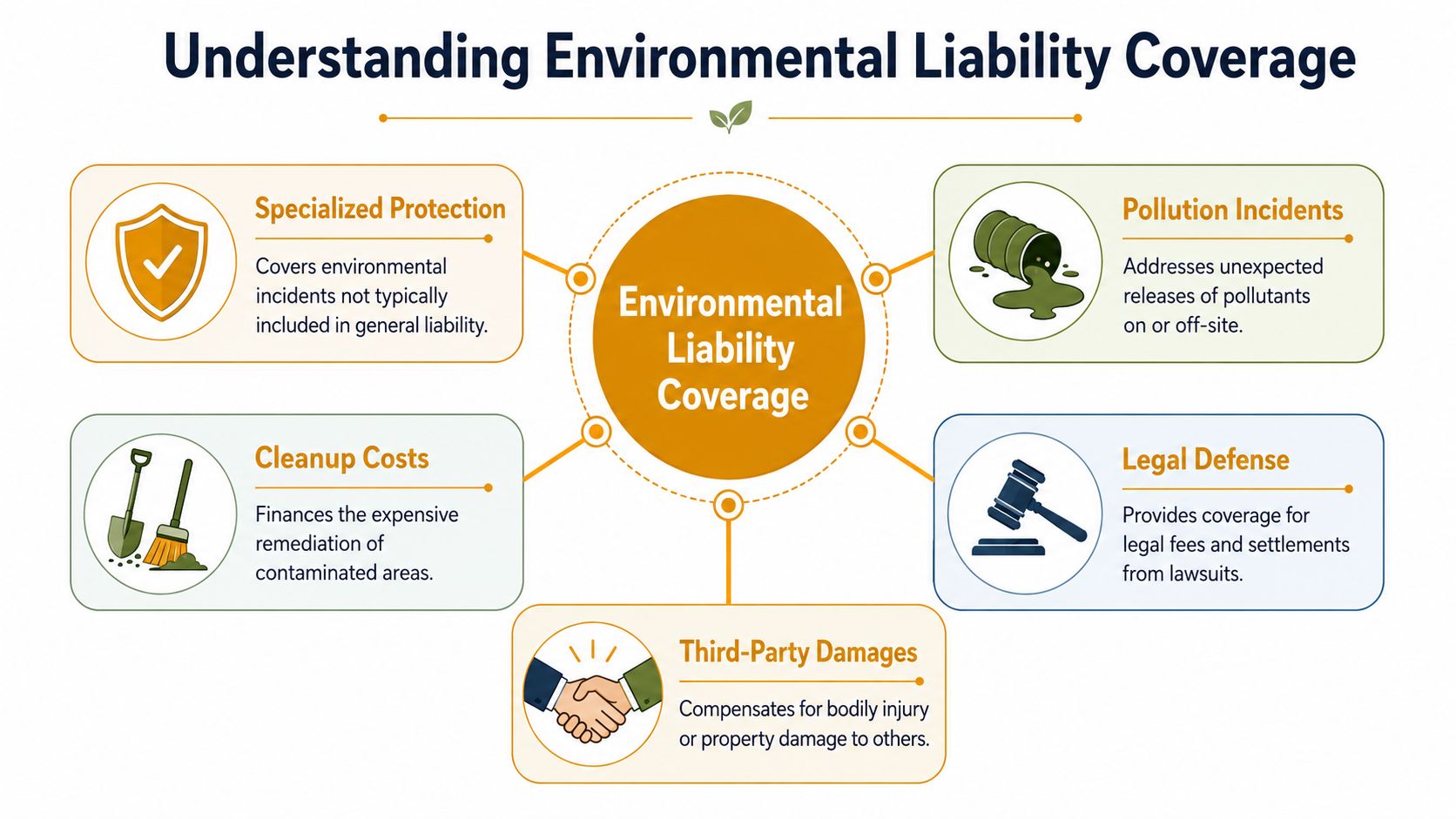
Environmental liability coverage is the policy built for pollution claims that standard liability insurance often leaves unresolved. On a construction site, that usually means the policy intended to respond when slurry, wash water, fuel, solvents, or disturbed contaminants create cleanup costs, third-party claims, or both.
For contractors, the key point is simple. A release can start as a field problem and turn into an insurance problem within hours. Your GL policy may handle many routine injury and property damage claims, but pollution is often carved out, narrowed, or argued over. Environmental coverage fills that gap with language written for contamination events instead of ordinary accident claims.
What the policy is meant to pick up
You will usually hear this coverage called Pollution Legal Liability, Contractor's Pollution Liability, or Environmental Impairment Liability. The label matters less than the grant of coverage. What matters on the job is whether the policy responds to the kind of release your crews can cause.
AIG describes environmental forms as covering items such as on-site and off-site cleanup costs, third-party bodily injury and property damage, business interruption, and emergency expenses, as outlined on AIG's environmental risk solutions page.
That matters because one incident often triggers several cost buckets at the same time. A concrete washout failure can lead to emergency pumping, contaminated soil removal, municipal response, a neighbor's damage claim, and a shutdown while the site is stabilized. Environmental coverage is built for that chain of costs.
Typical covered exposures can include:
- Cleanup on your site when impacted soil, water, or surfaces have to be removed or treated
- Cleanup off your site when material migrates beyond the work area
- Third-party claims for alleged bodily injury or property damage
- Emergency response costs for containment, vacuum trucks, disposal, and consultant support
- Business interruption or delay-related loss under forms that include it
How it differs from ordinary liability coverage
This policy line exists because pollution exclusions became standard in many commercial policies over time, and insurers developed separate forms to address those exposures. As noted earlier, environmental liability insurance is commonly written on a claims-made basis and is intended to address statutory cleanup obligations along with third-party claims tied to pollution conditions.
That claims-made structure matters in construction. If the discharge happened during the project but the claim shows up later, the policy period, reporting terms, and any retroactive date can matter as much as the release itself. Site supervisors do not need to memorize insurance language, but they do need to understand that timing is part of coverage.
Sudden spills and slow-developing conditions
Contractors often picture pollution claims as major tank failures or headline-making spills. A lot of real claims are smaller and more ordinary. Washout escapes. Saw-cut slurry reaches a catch basin. A slow hydraulic leak impacts soil near stored material. Excavation exposes contamination that nobody expected to find.
Good environmental coverage may respond to sudden releases, gradual conditions, or both, depending on the wording. That is why policy language matters more than the title at the top of the proposal. Two quotes can both say "pollution coverage" and still answer very differently when the claim involves slurry, mold, lead, asbestos, or migrated contamination.
On a busy job, that difference is not technical trivia. It is the difference between a covered cleanup and a dispute while the meter is running.
Who Needs This Coverage Most on the Job Site
The short answer is this: if your work can create, move, disturb, store, contain, or document a pollutant, you need to pay attention. On construction projects, liability doesn't stay politely with the property owner. It follows activity, contracts, and decision-making.
Crews with direct hands-on exposure
Concrete subcontractors sit high on this list. Washout, slurry, saw-cut wastewater, curing compounds, fuel at support equipment, and rinse water all create exposure points. Zurich notes that for operations involving concrete slurry or wastewater, environmental liability insurance is critical because it covers pollution cleaning costs, bodily injury, and property damage that standard GL policies deny, as explained on Zurich's pollution liability coverage page.
General contractors need it too, even when they don't self-perform. The GC controls site logistics, sequencing, staging, and subcontractor oversight. If a containment setup fails or a trade discharges where it shouldn't, the GC is often still in the claim conversation.
Site work and utility crews carry another version of the risk. They can expose buried contamination, hit unknown lines, spread impacted soil, or create runoff problems during dewatering and grading.
Roles that get overlooked
SWPPP consultants, environmental consultants, and site inspectors often assume the operational liability sits only with the contractor. That's too comfortable a view. If a consultant signs off on controls that fail in practice, or if documentation around runoff management is weak, their role may be pulled into the dispute even if they never touched the material themselves.
Here's where people get into trouble:
- The concrete crew says the GC told them where to wash out.
- The GC says the subcontractor caused the release.
- The owner says the contract required compliant containment.
- The consultant says implementation in the field didn't match the plan.
Every one of those statements can be true enough to create a fight.
The worst assumption on a project
The most dangerous sentence on a polluted site is, “Someone else probably has that covered.”
If you're a contractor, subcontractor, pumping company, demo team, or consultant, you should review where your exposure starts and where the contract shifts responsibility back onto you. Environmental liability coverage is most valuable to the parties closest to the work because they're usually the first names pulled into the response.
First Party vs Third Party Coverage Explained
This distinction matters because contractors often buy a policy without being clear on what kind of loss they're trying to insure.
First-party coverage is about damage and cleanup tied to your own location or your own direct costs. Third-party coverage is about claims from other people after your pollution event affects them.
A job-site way to think about it
If a diesel tank leaks inside your laydown yard and you have to investigate, remove contaminated material, and clean your own site, that's a first-party problem.
If concrete slurry leaves your work area, runs onto a neighboring parcel, kills landscaping, or allegedly affects someone else's water or structures, that becomes a third-party problem.
Both can flow from the same incident. That's why the distinction isn't academic. It tells you whether the policy is paying to clean up your mess on your property, defend a claim from someone else, or both.
First-Party vs. Third-Party Environmental Coverage
| Coverage Type | Who Is Covered | What It Pays For | Example Scenario |
|---|---|---|---|
| First-party | The insured for its own affected site or direct cleanup obligation | Cleanup and remediation tied to the insured's own location, subject to policy terms | A leak contaminates the contractor's yard and the contractor must remove impacted material |
| Third-party | Other people or entities harmed by the pollution event, with the policy responding for the insured's liability | Bodily injury, property damage, defense, and related liability costs, subject to policy terms | Washout escapes the site and damages a neighboring property |
Why contractors need both lenses
A lot of field teams focus only on the neighbor claim because that's the most visible conflict. But first-party expense can hit just as hard. You may need emergency pumping, disposal, soil work, sampling, consultants, and temporary controls before a third party even files anything.
Don't ask only, “What if we damage the neighbor?” Also ask, “What if we have to clean up our own site before anyone else even gets involved?”
The practical move is to map your operation by loss path. Start where the material originates. Then ask three questions. Could it stay on site? Could it migrate? Could it force shutdown or delay? Those answers tell you which side of the coverage discussion deserves the most attention.
Understanding Policy Limits Exclusions and Endorsements
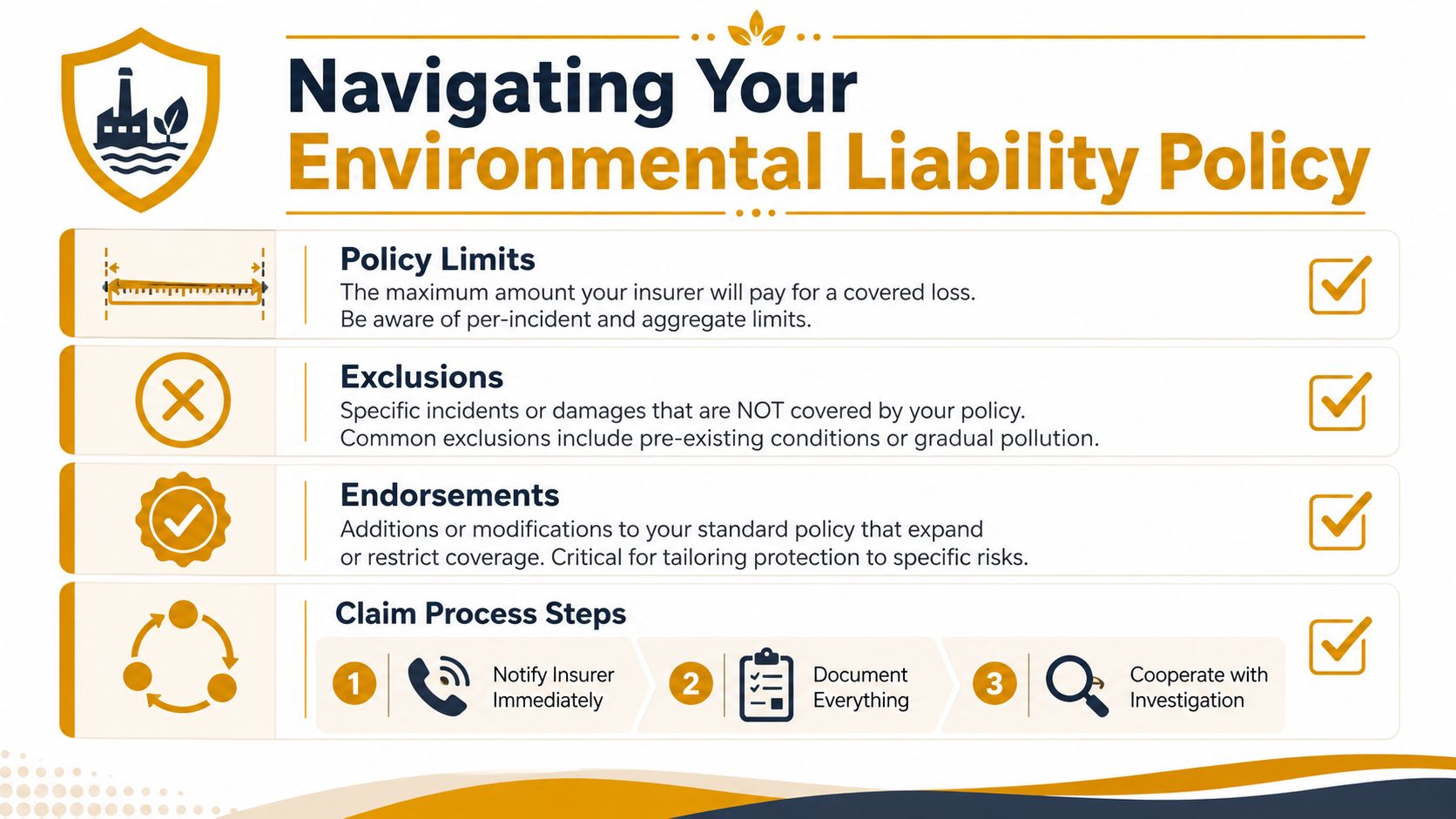
A policy can look solid on the certificate and still fail where you need it. The gap usually sits in one of three places: limits, exclusions, or endorsements.
Limits that match the real cleanup path
Supervisors don't buy policies, but they should understand what low limits feel like in the field. A release doesn't spend money in a straight line. You may burn through response costs before the legal fight even matures. That's why you need to know both the per-incident limit and the aggregate available across the policy period.
Ask the broker how the policy treats defense, emergency response, and cleanup. If those costs erode the same limit, the available protection may shrink faster than the site team expects.
Exclusions that hit construction work
The hardest part of environmental liability coverage is that the policy may exist, but the wording still narrows the claim. Dolden notes a common coverage gap for indoor or job-site generated pollution such as fumes, dust, or mold released during construction, and highlights that it's often unclear whether a standard GL or a specialized environmental policy will respond, which makes policy language critical, as discussed in Dolden's environmental liability analysis.
That matters on renovation and tenant improvement work, where the “pollution event” may not look like a classic spill at all.
Common pressure points include:
- Known conditions already identified before policy inception
- Specific materials such as asbestos or lead if the form carves them out
- Gradual conditions if the wording is tighter than the insured expects
- Indoor air issues tied to dust, fumes, mold, or Legionella-type allegations
- Contractor-created pollution that occurs during normal operations
Endorsements that close practical gaps
Most contractors shouldn't stop at the base form. They should ask about endorsements that fit how work really happens.
Some of the add-ons worth discussing are:
- Transportation pollution coverage when spills can happen while hauling material, waste, or equipment-related liquids
- Non-owned disposal site coverage when your waste goes to a third-party location and later creates a claim
- Premises pollution coverage for indoor contaminant issues linked to the site
- Business interruption features if a pollution event can shut operations down
The certificate tells you that a policy exists. The endorsements tell you whether it fits your job.
When reviewing a quote, don't stop at the schedule. Read the definitions of pollutant, cleanup costs, claim, discovery, and reporting obligations. Contractors lose coverage as often through bad assumptions about wording as through lack of insurance.
How Good Practices Reduce Your Risk and Costs
A slurry spill rarely becomes expensive because of the first mistake alone. It gets expensive when the washout area is undersized, nobody checks it before rain, the crew is unclear on who owns cleanup, and there is no record showing the site had controls in place. That chain matters to regulators, owners, and underwriters.
Insurance supports the balance sheet after a loss. Site discipline keeps a manageable incident from turning into a reportable claim, a shutdown, or a dispute over who pays for cleanup.

What actually helps
Underwriters price what they expect your crews will do in the field. A contractor with repeatable controls usually presents a better risk than a contractor relying on verbal instructions and a generic SWPPP binder in the trailer.
The biggest gains usually come from three habits:
Containment sized for the actual work
Washout containment has to match pour volume, truck traffic, slope, and weather exposure. A small pit set in the wrong spot can fail even if the plan technically called for washout containment.Crew-level training
Supervisors may understand the environmental plan. Claims still start with labor-level misses. Crews need clear direction on where washout goes, who inspects berms or bins, what to do before forecasted rain, and who gets called if slurry or wastewater starts moving off area.Records that show control, not just intent
Photos, inspection logs, disposal tickets, subcontractor coordination notes, and corrective action records can make the difference between a defensible incident and a messy one. If a drain gets hit, documentation helps show whether this was an isolated failure or a site that was being run loose.
What does not hold up in a claim review
Contractors often lean on assumptions that sound reasonable in a meeting and fall apart once a carrier, regulator, or owner starts asking for proof.
| Weak approach | Why it fails in a claim |
|---|---|
| “We've never had an issue before” | A clean loss run does not prove current controls are adequate |
| “The owner required a plan” | A written plan does not show the field followed it |
| “The crew knows better” | If training and enforcement are undocumented, you have little to show after the fact |
| “The GL policy should handle it” | Pollution losses are often disputed or excluded under standard GL forms |
The trade-off contractors need to see
Good controls cost time and money up front. So does replacing damaged containment, paying for extra inspections before a storm, or stopping a pour to fix a bad setup. But those costs are usually small compared with drain cleanup, hauled-off contaminated material, consultant fees, neighbor complaints, or a project delay while everyone sorts out responsibility.
I have seen the same basic spill play out two different ways. On one site, the crew had marked washout, daily checks, and photos. Cleanup stayed contained, the story was clear, and the job kept moving. On another, the containment area was improvised, the rain hit overnight, and nobody could show what had been inspected. The loss got harder to defend than it needed to be.
That is the field reality. Clean, organized sites tend to have fewer incidents, smaller incidents when they do happen, and better results when a claim is unavoidable.
Good insurance responds after a loss. Good site control limits how far the loss spreads.
Treat environmental controls the same way you treat traffic control, trench protection, or lockout procedures. They work best as part of daily operations, with ownership in the field, instead of a last-minute fix when someone notices runoff heading toward a storm drain.
Taking Action to Get the Right Coverage
The buying process is easier when you start from the field, not from the policy form. Don't ask for “pollution insurance” in the abstract. Build the request around how your crews work.
A contractor checklist
Map your exposure
List the materials and activities that can create a pollution event. Concrete washout, slurry, wastewater, fuels, coatings, dust, mold exposure during renovation, and off-site disposal should all be on the page. Include where those exposures happen: yard, truck, active site, roadway, or neighboring property.
Use a broker who handles environmental placements
This line is too specialized for guesswork. You need someone who can explain claims-made timing, cleanup wording, third-party triggers, and contractor-specific endorsements in plain English.
Bring proof of how you operate
Underwriters pay attention to controls. Show training records, spill response procedures, disposal arrangements, inspection habits, and how washout containment is handled on site. If your operation is disciplined, make it visible.
What to review before you bind
Don't approve a quote until you can answer these questions clearly:
- What exactly counts as a pollutant under this form
- Whether cleanup is covered on-site, off-site, or both
- How defense costs interact with the limit
- Which exclusions hit your normal operations
- Which endorsements are included and which are missing
- What reporting deadlines apply after an incident
The liabilities can become enormous. The NAIC warning cited in published research says carriers could face up to $200 billion in litigation claims plus $400 billion in cleanup costs in 2024, and the same research notes that compulsory environmental pollution liability insurance began piloting in China in 2013 and that by the first half of 2017 the number of enterprises involved had reached 34,339, underscoring how seriously major markets are treating this exposure. Those figures are discussed in the PMC-published research on environmental pollution liability insurance pricing and solvency.
Keep the policy current
Construction businesses drift. New scopes, new geographies, new disposal chains, new clients, new contractual requirements. A policy that fit last year's operations may not fit the work you're doing now. Review environmental liability coverage every year, and again whenever your scope changes in a meaningful way.
The contractors who manage this well don't wait for a denied claim to teach them what they bought.
If your crew needs a practical first line of defense before the insurance conversation even starts, Reborn Rentals helps contractors contain concrete washout responsibly with ready-to-deploy washout solutions, clear pricing, and job-site logistics support that make it easier to keep slurry where it belongs.