You're probably looking at a busted slab, curb demo, or leftover returned concrete and asking the same question every new project manager asks the first time they own disposal. Do we haul it off as waste, crush it on site, or send it to a recycler?
In Atlanta, that decision affects more than trucking. It affects schedule, SWPPP compliance, site cleanliness, and whether your load gets accepted as recyclable material or treated like a problem. Most crews learn this the expensive way. Concrete itself is recyclable. Contaminated concrete isn't.
The part many guides skip is the part that causes the most trouble on active jobs. If washout slurry gets loose on the ground, into mixed debris, or across a laydown area, you've already made recycling harder and compliance riskier. Clean recycling starts long before the truck reaches the gate.
Why Recycle Concrete on Your Atlanta Job Site
Atlanta jobs generate concrete waste in all the usual ways. Demo, pavement replacement, overpours, rejected sections, washout solids, and cleanup from structural work. If you treat all of it like landfill material, you're usually paying more than you need to and giving up usable value.
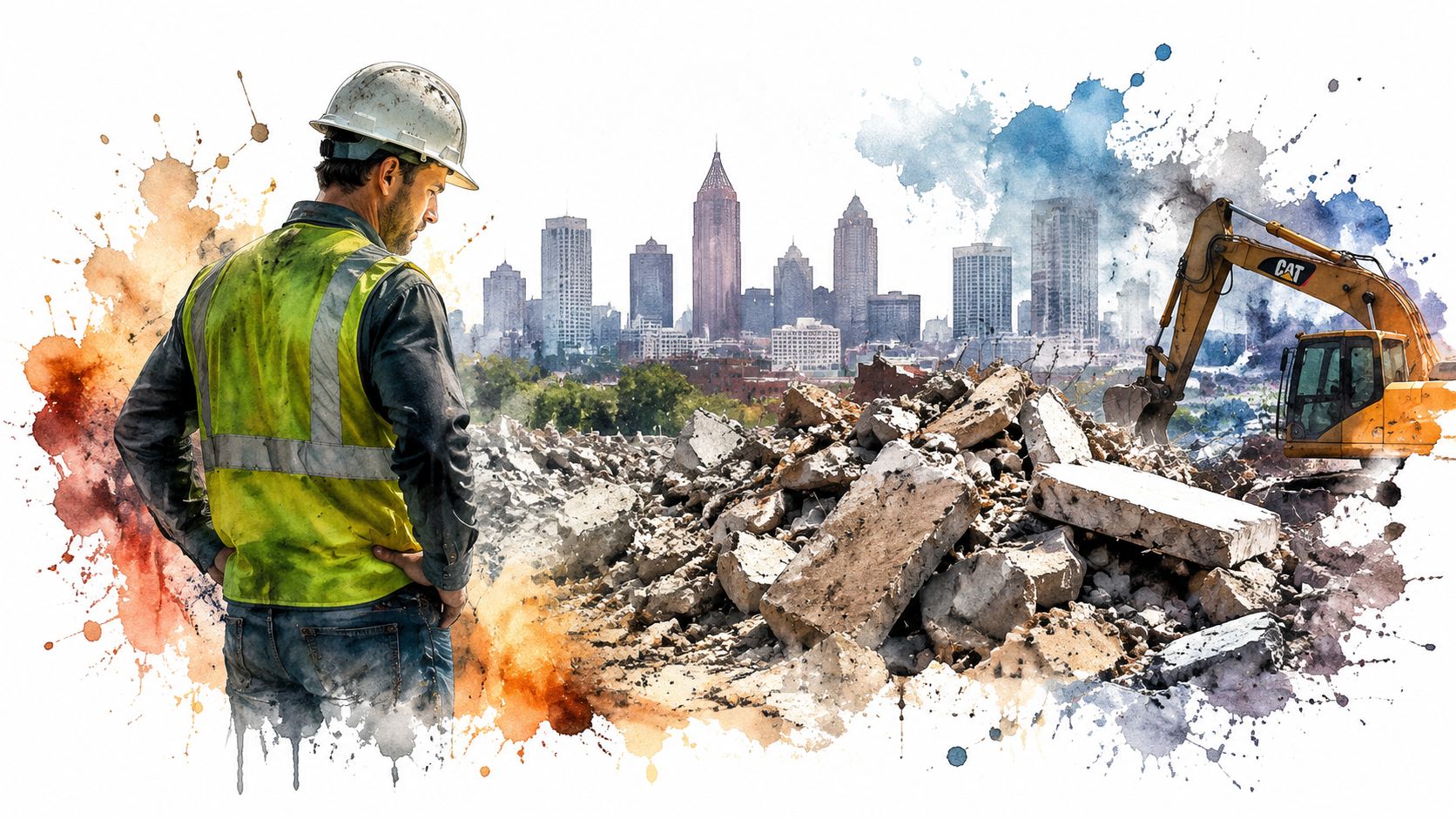
The scale of the waste stream is huge. The U.S. EPA's construction and demolition materials data says approximately 600 million tons of construction and demolition debris were generated in the United States in 2018, and the recycling process starts by separating material from contaminants like rebar, wood, and asphalt before crushing it into usable aggregate.
That matters on an Atlanta site because concrete isn't just heavy waste. It's feedstock. Once it's clean and sorted, recyclers can turn it into recycled concrete aggregate for base, fill, and other construction uses. One of the most practical field advantages is simple. You stop paying to move worthless mixed debris and start moving material that has a defined recycling path.
What recycling actually fixes on a job
A good concrete recycling plan helps with three things at once:
- Disposal control: Clean concrete loads are easier to route than mixed construction debris.
- Site operations: Separate stockpiles reduce clutter around demo and forming areas.
- Procurement pressure: Recycled material can sometimes come back into the job as usable aggregate instead of buying all virgin material.
Practical rule: If concrete touches trash, soil, drywall mud, or uncontrolled washout, the recycling conversation gets harder fast.
Why Atlanta crews care about this
Atlanta jobs don't have much room for sloppy material handling. Urban infill sites, occupied renovations, road work, and phased commercial jobs all run tight on access. The cleaner you keep your concrete stream, the easier it is to schedule haul-off, avoid gate delays, and keep inspectors out of your business.
That's why concrete recycling in Atlanta works best when the superintendent treats it as a site logistics issue first, not a disposal issue at the end.
Preparing Concrete Debris for Recycling
Most recycling problems start on site, not at the recycling yard. A recycler can crush concrete. They can't fix a load that your crew filled with trash, mud, untreated slurry, and random demo debris.
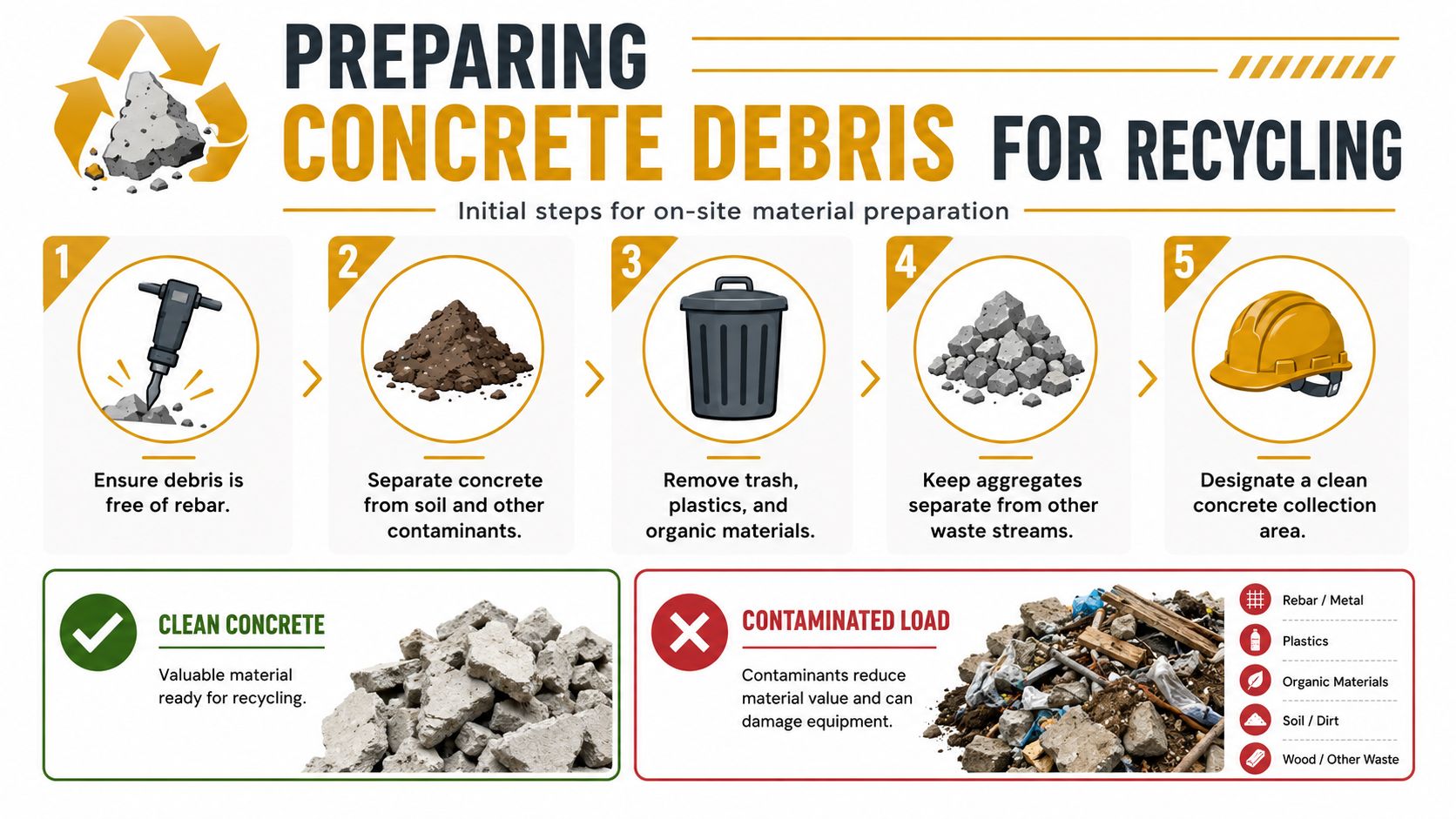
What a good load looks like
Clean concrete is broken concrete with minimal contamination. It may have embedded steel that can be removed during processing, but it shouldn't be mixed with general trash or other waste streams.
Good loads usually have:
- Concrete only: Slab, curb, wall, pavement, or footing concrete kept separate from mixed debris.
- Limited attached metal: Rebar can often be handled during processing because recyclers commonly remove metal with magnets during the recycling workflow.
- Controlled moisture and fines: Damp material isn't automatically a problem, but muddy, slurry-covered material creates avoidable issues.
Bad loads usually show up with wood forms, plastic wrap, joint sealant waste, insulation, soil, asphalt chunks, and food trash all mixed together. That load takes longer to unload, invites extra scrutiny, and can be rejected depending on facility rules.
Set the site up before demolition starts
A new project manager's mistake is waiting until demo day to decide where broken concrete goes. By then, operators are chasing production and laborers are tossing everything into the nearest box.
Use a simple field setup:
- Mark a clean concrete area with barricades or paint.
- Keep mixed C&D debris separate from the start.
- Assign one foreman or labor lead to police the pile during heavy demo.
- Stage buckets or boxes for metal, wood, and trash near the work, not across the site.
- Tell truck drivers and machine operators exactly which pile is recyclable concrete.
That last point matters more than people think. If an excavator operator scoops one mixed pile into multiple trucks, your recycling plan is gone in an hour.
Clean concrete is made by separation discipline, not by wishful thinking at the scale house.
What crews need to remove
The quickest way to improve recycling outcomes is to train labor to remove the obvious contaminants early.
- Rebar and mesh exposure: Break reinforced pieces so metal can be cut out or more easily processed later.
- Wood and form debris: Strip forms, stakes, and wood blocking before concrete enters the pile.
- Plastic and trash: Don't let cups, bags, sleeves, and packaging ride with the concrete.
- Soil and vegetation: Keep loaders from scraping dirt into the stockpile when cleaning the pad.
A field checklist that actually works
Use this kind of checklist in the morning huddle:
| Check | What the crew verifies |
|---|---|
| Stockpile location | Concrete pile is separate from mixed debris |
| Contaminant control | Wood, trash, and soil are being removed continuously |
| Reinforcement handling | Large rebar-heavy sections are staged for cutting or special handling |
| Truck loading | Haul trucks are pulling from the correct pile only |
| End-of-day cleanup | No washout or slurry is migrating into recyclable material |
Don't confuse all concrete waste with recyclable concrete
Returned concrete, demo rubble, and hardened washout solids can all be manageable streams. Loose slurry spread across soil is not the same thing. If the site treats every concrete-related material as one pile, contamination spreads fast.
That's why successful concrete recycling in Atlanta usually looks boring. Clean pile. Clear rules. Short hauling path. No guessing.
Navigating Atlanta's Concrete Recycling Facilities
When you're ready to move material, local facility rules matter more than generic recycling advice. Call ahead, confirm what they'll accept, and describe the load accurately. “Concrete” can mean a clean broken slab, or it can mean mixed demolition with block, dirt, wood, and bagged trash. Those aren't the same load.
One well-known local option is Metro Green Recycling in Atlanta, which operates at 4351 Pleasantdale Road and 2490 Marietta Road NW and accepts construction debris including concrete. The company states that it has diverted thousands of tons from disposal annually. For a project manager, the main takeaway is practical. Atlanta has real recycling infrastructure, but you still need to match your load to the facility's acceptance rules.
What to ask before the first truck leaves
Don't send a driver blind. Ask these questions before dispatch:
- Material type: Is the load clean concrete only, or mixed C&D with concrete in it?
- Contamination limits: Will they take concrete with attached rebar, block, or some asphalt residue?
- Access and equipment: Can your truck size get in and out without delay?
- Unload process: End dump, dump trailer, or loader-assisted unloading?
- Payment and ticketing: Who gets the weight ticket, and how should it be coded for project tracking?
Those calls save time because the wrong facility for the wrong load turns into double handling, reloading, and another haul.
Central facility versus on-site crushing
These are different tools for different jobs.
Central facility hauling works better when the job has limited space, moderate volume, or short-duration demo. You break it, load it, haul it, and keep the site moving. That's common on tighter commercial and renovation work in Atlanta.
On-site crushing fits larger concrete volumes, longer site durations, and projects that can reuse crushed material on the same job. It also reduces dependence on outbound trucking and inbound aggregate deliveries. The trade-off is operational complexity. You need room, sequencing, noise planning, and quality control.
How to prepare a load for drop-off
The fastest loads at the gate are the ones that were prepared like someone on site cared what happened next.
Use this drop-off standard:
- Keep paperwork clean: Job name, hauler, material type, and billing contact should match what the facility expects.
- Load consistently: Don't put one clean slab chunk on top of mixed debris and call it a concrete load.
- Avoid loose nuisance material: Windblown trash and muddy residue create friction at the gate.
- Send the right driver: The driver needs to know where they're going, how to unload, and what to do if the yard questions the load.
If a yard has to stop and inspect every bucket in your truck, you already lost money before the ticket prints.
What works in the Atlanta market
For most jobs, the best results come from matching the recycling method to the project conditions.
| Project condition | Better fit |
|---|---|
| Tight urban site | Haul to recycler |
| Large pavement or slab demo | Consider on-site crushing |
| Need recycled base back on job | Consider on-site crushing or local recycler supply |
| Short renovation scope | Haul clean concrete separately and keep logistics simple |
Concrete recycling in Atlanta isn't hard. The hard part is giving the recycler a load they can process efficiently.
Calculating the Costs and Savings of Recycling
If you want buy-in from ownership, the PM, and the field team, talk in hauling, handling, and replacement-cost terms. “Sustainability” won't move every decision. Saved trips, fewer disposal headaches, and less purchased aggregate usually will.
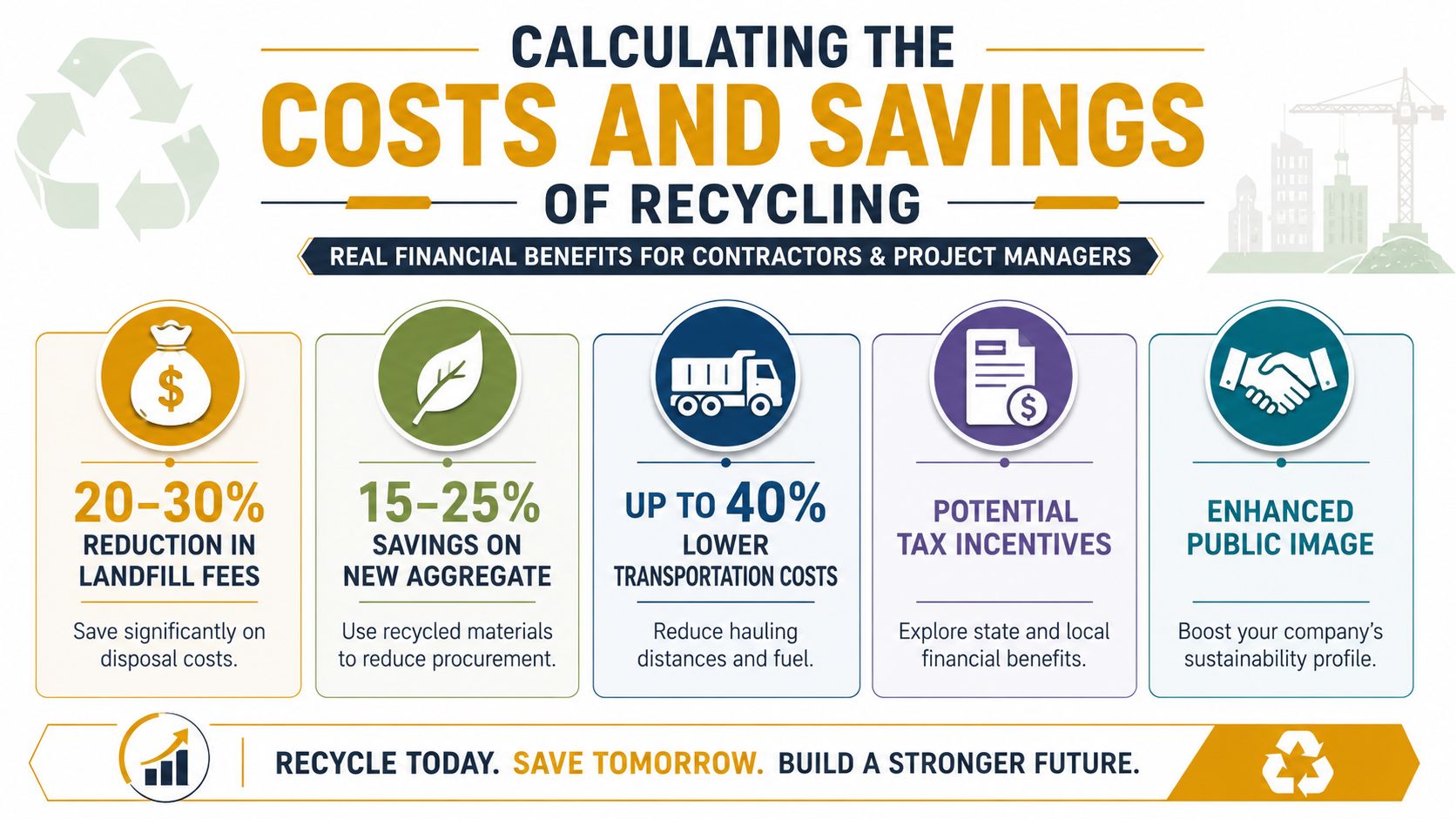
The strongest hard data in this space comes from the FHWA concrete pavement recycling report. It reports that the average monetary cost of recycling concrete pavement in Atlanta areas ranges from $3.54 to $10.82 per ton, with an annual average of $6.51 per ton. The same source notes that on-site recycling can reduce transport costs by up to 60% compared to off-site disposal.
The real cost equation
A project manager should price concrete disposal using four buckets:
- Breaking and loading
- Hauling
- Tipping or recycling cost
- Material replacement on the back end
A lot of teams only look at the gate rate. That's incomplete. A cheap disposal option with long wait times, long hauls, or return trips for imported aggregate may cost more across the full operation.
Where the savings usually show up
The biggest savings don't always come from the recycler's price sheet. They often show up in logistics.
- Shorter haul loops: Less truck time means less production drag.
- Fewer imported materials: If crushed concrete can serve as approved base or fill, you reduce virgin aggregate purchases.
- Less double handling: Clean separation on site avoids paying labor and equipment twice.
- Cleaner schedule control: A predictable recycling flow reduces the stop-and-start pattern that wrecks demo productivity.
A simple decision table for PMs
| Situation | Financial read |
|---|---|
| Small volume, long haul, no reuse on site | Run the trip cost carefully. Recycling may still make sense if the load is clean and local access is good. |
| Large volume, reusable as base | Recycling usually gets stronger because disposal and replacement costs start working in your favor. |
| Mixed contaminated debris | Savings erode fast because sorting, rehandling, and possible rejection eat the margin. |
| On-site crushing candidate | Strong option when volume is high and site logistics support it. |
Field math matters more than brochure math: A lower per-ton rate doesn't help if trucks sit, loaders rehandle mixed piles, or imported stone still has to come back in.
What does not work
Three cost mistakes show up over and over:
- Using mixed boxes for “concrete” and assuming someone else will sort it economically.
- Ignoring trucking rhythm and sending loads during peak access conflicts.
- Failing to plan reuse so crushed material leaves the site while new aggregate gets purchased later.
Concrete recycling in Atlanta pays off when the PM and superintendent treat it as one loop. Break it clean, move it efficiently, and reuse what the project can consume.
The Critical First Step Washout Containment
A pour day can get away from you fast. The trucks are queued, the pump is set, finishers are waiting, and somebody asks where chute washout goes. If that answer is vague, the recycling plan is already at risk.
Uncontrolled washout is one of the fastest ways to turn clean concrete into a disposal problem. High-pH water and slurry spread into soil, track across pavement, foul haul routes, and contaminate stockpiles that should have stayed clean for recycling. By the time the crew tries to clean it up, the damage is usually bigger than the pile they were trying to manage.
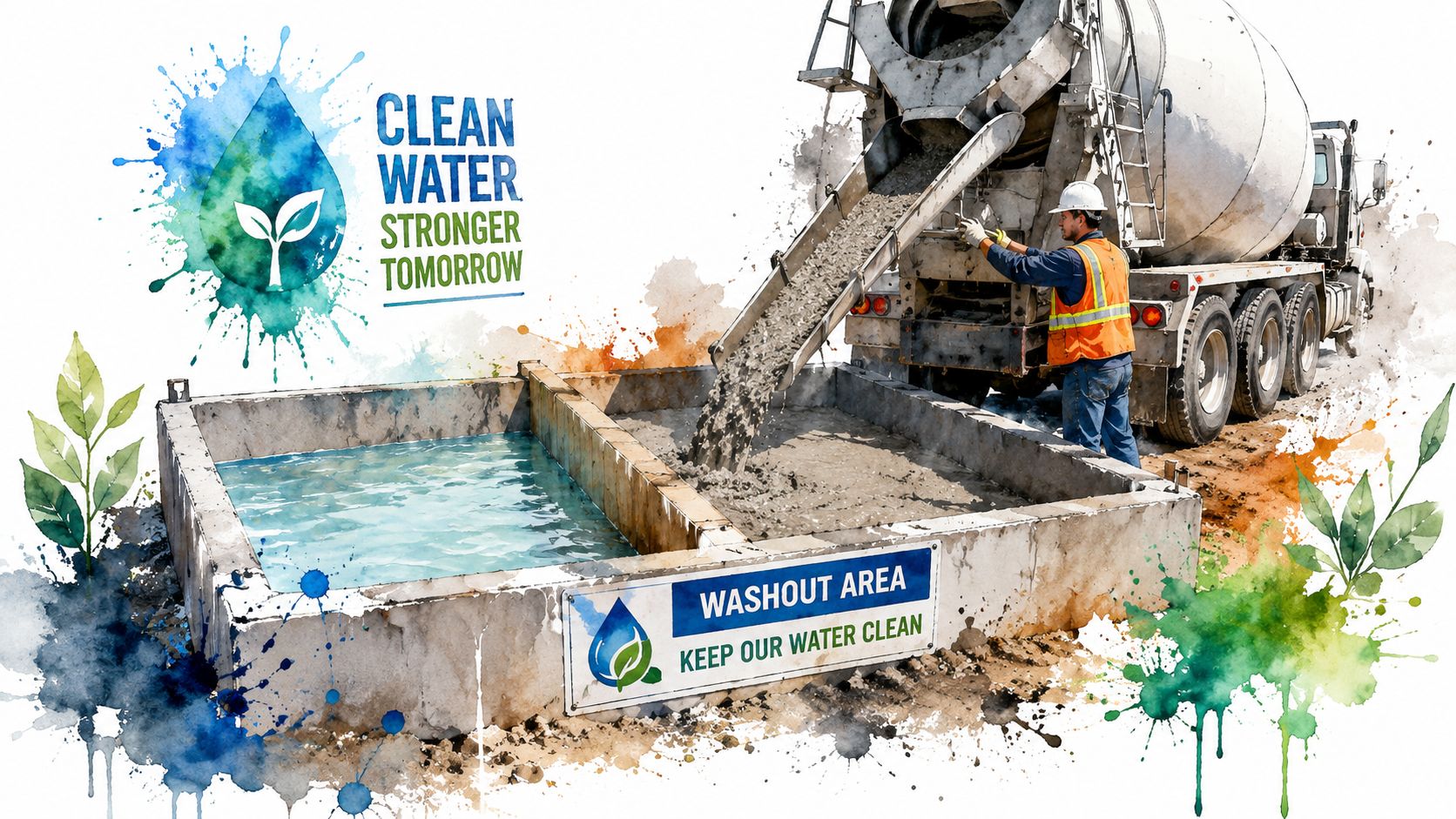
The enforcement side matters too. The Georgia Department of Natural Resources and EPD information portal is the cited basis for the verified point that Atlanta-area C&D enforcement has repeatedly included uncontained slurry and washout-related violations. On an active site, that means a simple pre-pour miss can become a stormwater problem, a cleanup cost, and an inspector conversation on the same day.
Why washout controls the whole recycling chain
Crews often treat washout as an environmental box to check. In the field, it is the gatekeeper for the rest of the concrete recycling process.
If truck chutes get rinsed onto grade, pump priming and cleanup run into bare soil, or hand tools get washed in whatever corner is open, the site loses control of the material stream. Clean broken concrete gets mixed with slurry fines. Access roads get messy. Stockpiles pick up contamination. Loads that should have gone out as recyclable concrete start looking like mixed debris.
That is why containment needs to be in place before the pour starts, not after the first truck asks for direction.
What a workable setup looks like on an Atlanta site
The setup does not have to be complicated. It has to be placed where crews will use it under schedule pressure.
A good washout area is:
- Close enough to the pour and pump operation to be practical
- Separated from inlets, drainage paths, and material stockpiles
- Marked so every driver and labor foreman can find it
- Sized for the number of trucks and expected cleanup volume
- Assigned in the pre-pour plan with one person responsible for closeout
On some jobs, a lined bermed area is enough if it is protected and maintained. On tighter commercial sites, a dedicated washout pan usually works better because it controls footprint, keeps traffic damage down, and makes pickup cleaner. Reborn Rentals is one supplier contractors use for temporary concrete washout containment pans.
Where jobs usually go wrong
These failures are predictable, which means they are preventable.
| Common mistake | What it causes |
|---|---|
| Washout area is too far from the work | Drivers and crews use the nearest open ground |
| No one gives clear directions before the pour | Multiple unofficial washout spots appear |
| Containment is too small for the truck count | Overflow reaches soil or pavement |
| Washout sits in an active traffic route | Equipment clips the setup and spreads slurry |
| No closeout plan after the pour | Hardened waste sits in place and complicates removal |
The trade-off is simple. Saving a little planning time up front usually creates labor cost, rehandling, and compliance exposure later.
A field checklist I would hand a new PM
- Set the washout location the day before the pour. Do not leave that call to the gate crew when trucks are arriving.
- Put the location on the pre-pour plan. Dispatch, pump crew, finishers, and labor all need the same instruction.
- Walk truck access in advance. Check turning room, overhead conflicts, soft ground, and any route that crosses protected areas.
- Inspect capacity before the first load. A damaged pan or undersized containment will fail at the worst time.
- Keep washout away from recyclable concrete stockpiles. One bad location can contaminate material that was otherwise clean.
- Assign one person to verify closeout. If ownership is vague, the cleanup gets missed.
Why this saves money before fines even enter the discussion
The obvious cost is containment rental or setup labor. The less obvious costs are usually bigger. Extra brooming and scraping, contaminated soil removal, rejected debris, stained pavement, truck delays, and superintendent time spent fixing a preventable issue all hit the job.
On well-run sites, the benefit shows up immediately. Hardened solids stay in one place. Haul paths stay cleaner. The recyclable concrete stream stays cleaner too. That is the piece many recycling guides skip. If washout containment is loose, the rest of the recycling plan is loose with it.
Ensuring Compliance and Maximizing Project Value
The best concrete recycling plans are the ones that hold up under pressure. Rain hits. Access tightens. A trucking window gets missed. Inspectors walk in. If your process depends on everyone improvising perfectly, it won't last a week.
Quality matters on the back end too. The National Ready Mixed Concrete Association information supports the verified point that ready-mixed concrete producers in the U.S. commonly accept up to 10% recycled concrete aggregate as a substitute for virgin aggregate, but it also notes a common pitfall. Inadequate contaminant screening can reduce strength and durability in the final mixes.
The closeout checklist that protects value
For a PM or superintendent, that means the recycling plan has to stay disciplined from start to finish.
- Document loads and tickets: Keep recycling records organized for project files and compliance needs.
- Maintain separation standards: Don't let late-stage cleanup turn clean concrete into mixed debris.
- Screen for contamination: Wood, trash, soil, and uncontrolled fines undercut reuse potential.
- Coordinate reuse early: If the project can use recycled material as base or fill, line that up before haul-off starts.
- Tie it into SWPPP execution: Washout control, stockpile management, and haul route cleanliness all support the same compliance goal.
What works versus what does not
What works is a closed-loop mindset. The job separates concrete early, contains washout before it becomes a site pollutant, routes clean loads to a recycler, and reuses acceptable material where the project allows.
What does not work is treating concrete recycling as a last-day cleanup item. By then, the pile is usually mixed, the tickets are scattered, and the site has already absorbed avoidable cost.
Good recycled aggregate starts with good field habits. It doesn't start at the crusher.
Concrete recycling in Atlanta is most profitable when the field team sees it as operations, not marketing. Keep the concrete clean. Contain washout from the start. Match the load to the right facility. Track the tickets. If you do that, you reduce risk and give the project a better chance to recover value from material that would otherwise just leave the site as waste.
If your project needs a defined washout plan before concrete work starts, Reborn Rentals gives Atlanta-area teams a direct way to schedule concrete washout containment equipment with upfront daily pricing and delivery coordination. For superintendents, PMs, pump crews, and facility teams, that makes it easier to keep slurry contained, protect recycling eligibility, and avoid preventable site issues before they turn into delays.