You know the morning. The crew is waiting, the pump is staged, the concrete truck is rolling, and somebody opens the SWPPP binder only to find yesterday's controls, last week's grading notes, and no sign of where washout is going. That gap between the paper plan and the dirt on the ground is where most stormwater trouble starts.
A stormwater pollution prevention plan is not a trailer accessory. Under EPA stormwater rules, it sits inside a regulated compliance system that covers more than half a million permittees in the United States at any given time, and EPA describes it as a site-specific written plan that identifies pollution sources, lays out BMPs, assigns responsibilities, and keeps inspection and monitoring records EPA SWPPP guidance. If the plan doesn't match the site, the inspector doesn't care that it looked fine on Friday.
Why Your Stormwater Pollution Prevention Plan Is More Than a Binder
The first real test usually shows up before the pour. The superintendent is on the tailgate, the foreman wants the trucks in, and the binder in the truck cab still shows a layout from two revisions ago. That's when the jobsite reminder hits hard, the SWPPP is only useful if it reflects what's happening on the ground.
The paper plan only matters when the site does
EPA treats the SWPPP as a site-specific control document, not a generic template. It has to identify likely pollution sources, describe BMPs, assign responsibilities, and keep inspection and monitoring records current EPA SWPPP guidance. That makes it the backbone of an auditable site program, not a file to dust off during an inspection.
Practical rule: if a control, a spill area, or a work zone exists in the field, it should exist in the plan.
That matters because stormwater compliance failures are often documentation failures. California's State Water Resources Control Board reported that in 2013, reporting violations represented 71% of all stormwater violations, and about 34% of NPDES stormwater violations were classified as priority violations California Water Boards enforcement data. The pattern is clear enough for field managers, the weak point is often the log, the update, or the missing record, not the existence of a binder.
A good superintendent reads that as an operations problem. If the crew changed the washout location, if grading shifted drainage, or if a subcontractor started storing material in a new corner, the SWPPP should have moved with it. When it doesn't, the plan stops describing the site and starts describing a past version of the job.
Assessing Your Site Before the First Shovel Hits Dirt
A SWPPP that starts on paper usually misses the first field problem. The better start is a walk before grading begins, with someone looking at drainage, stockpiles, and the places where runoff will pick up sediment or spill material. EPA's guidance treats site assessment, mapping, control selection, implementation, and revision as a sequence, and that sequence only works if the field conditions are checked before the plan gets finalized.
Walk the drainage first, then inventory the mess
Start at the high point and follow the water. Find the swales, low spots, curb cuts, storm drain inlets, ditches, and outlets that can carry sediment off site, then note the exposed soil and anything that can leak, spill, or wash away. That includes fuel storage, concrete staging, waste piles, stockpiles, equipment parking, and washout areas.
The materials inventory is where too many plans get vague. EPA guidance says the plan should account for site activities, materials, spill history, drainage, and receiving waters, and that means the inventory has to happen before the controls are fixed in place. If the first walk misses the concrete trucks, fuel tanks, or waste zone, those problems usually show up later when the inspector does.
A short field checklist keeps the assessment honest:
- Identify flow paths: Follow where water leaves the disturbed area, not where the drawings assume it will go.
- Mark exposure points: Note places where soil, slurry, fuel, or trash can meet runoff.
- Record past problem spots: Spill locations and recurring rutting show where the next failure is likely to happen.
- Separate active from inactive areas: The more ground you disturb at once, the more controls you have to keep up.
If the site tour does not include concrete washout, fueling, and waste staging, the assessment is not finished.
That walk is about field reality, not paperwork. It shows where a storm will carry problems before the first shovel hits dirt, and it gives the crew a chance to place controls around actual exposure points instead of guessed ones.
Choosing BMPs That Actually Work on a Moving Job Site
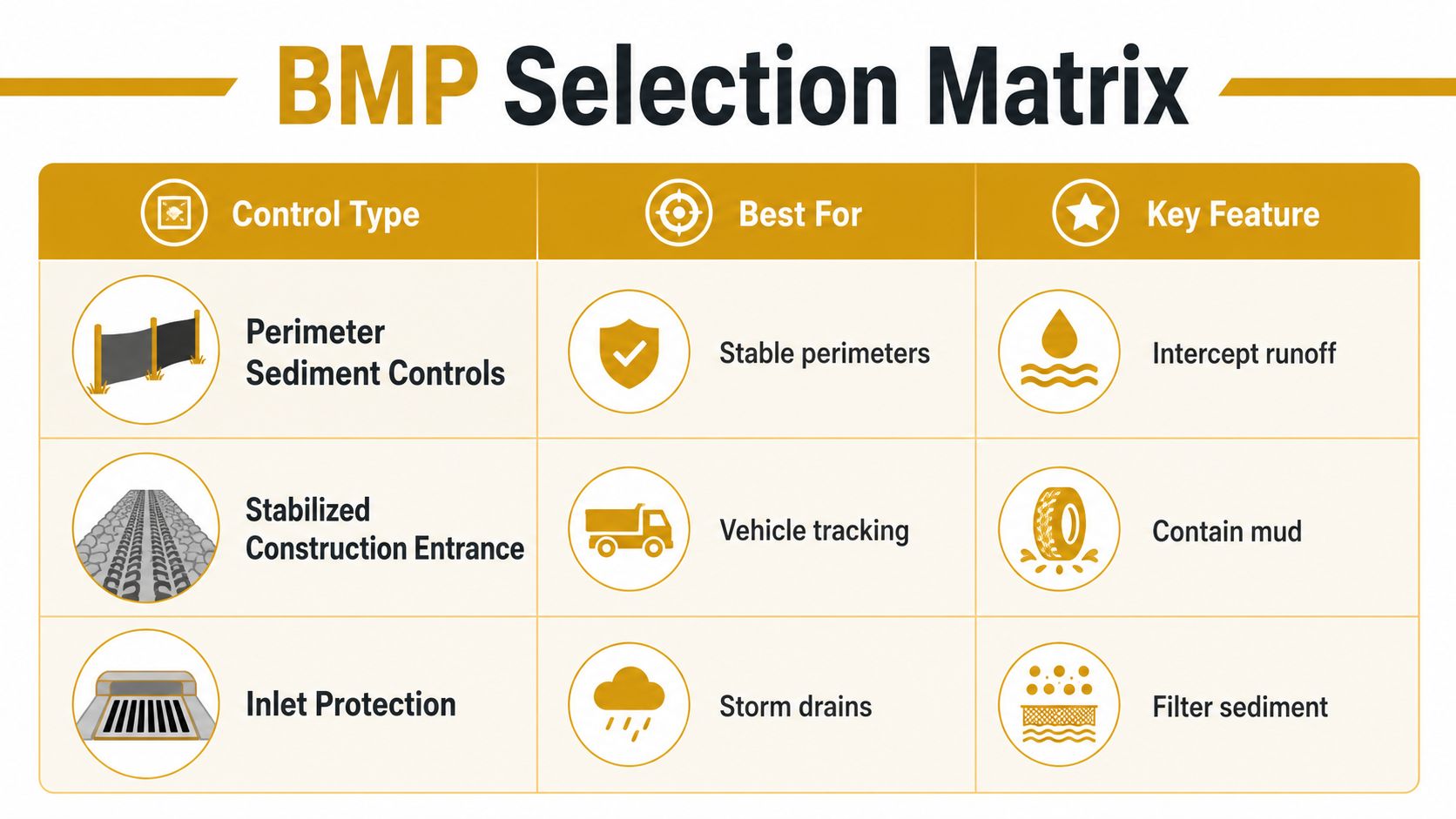
BMP selection falls apart when crews treat controls like decorations. The better approach is to place the control where the risk lives, then make sure it can survive schedule changes, new subcontractors, and the kind of daily churn that construction always brings. Guidance for construction sites emphasizes perimeter controls before disturbance, minimized and phased disturbance, and quick stabilization of denuded soil, with some jurisdictions also sizing closed conveyance measures to at least the 10-year, 24-hour storm flow Nashville stormwater guidance.
Put the first controls in before the first disturbance
Perimeter sediment controls belong in place before land-disturbing work starts. That sounds basic, but it's one of the easiest schedule points to miss when grading wants to start early and the materials show up late. If the edge of the site isn't protected, runoff will find the lowest line and take fines with it.
The next move is to centralize the messy work. Guidance from state and municipal sources stresses consolidating material storage, vehicle maintenance, fueling, and concrete truck washing so the highest-risk activities are easier to inspect and isolate Nashville stormwater guidance. That's not just neatness. It gives the superintendent one place to watch instead of five scattered ones.
Concrete washout is the field test
Concrete washout is where plans get real. EPA guidance says washout areas should be designated, wash water should be contained and treated or infiltrated, and trucks or equipment should not be washed into storm drains, streets, gutters, uncontained areas, or streams EPA SWPPP guide. Generic advice like “set up a washout area” is too thin for tight urban sites, short pours, or moving work fronts.
A field-ready washout control has to answer three questions:
- Where does the truck dump residue?
- How is the slurry kept from escaping when the day runs long or rain moves in?
- Who checks it before the next load shows up?
That's the difference between a sketch in the trailer and a workable BMP. The best location is usually close enough for drivers to use without improvising, but far enough from drainage paths that a small overflow doesn't become a discharge. If the pour is moving across the site, the washout solution has to move with it or be sized so the crew doesn't abandon it halfway through the day.
A washout setup fails when it becomes inconvenient. If the closest option is buried, undersized, or awkward to reach, crews create their own workaround.
The measure of a BMP is whether it still works after the fourth truck, the schedule slip, and the rain delay. If it can survive those three things, it has a chance of surviving an inspection too.
Handling Concrete Washout Without Derailing the Pour
Concrete washout is the stress test that shows whether the SWPPP works in the field or just reads well in the trailer. The material is urgent, messy, and unforgiving, so a weak setup gets exposed fast. EPA guidance is straightforward on the core rule, contain the wash water and keep trucks and equipment out of storm drains, streets, gutters, uncontained areas, and streams. The harder part is getting crews to follow that setup when the pour is moving and the clock is already behind.
Containment has to fit the pour, not just the permit
Washout control has to work for truck washout, pump washout, and the end-of-day cleanup routine. If the container is too small, the crew fills it faster than planned and starts looking for a shortcut. If it sits in the wrong spot, people rinse where they happen to be instead of walking to the designated area.
That is why the location should be set before the first truck rolls in. Drivers need to reach it without cutting across live traffic or soft subgrade, and the crew needs to see it as part of the work, not a separate task tucked in a corner of the site. On tight jobs, a rental containment unit or a pre-positioned container often holds up better than a hand-dug pit that changes shape as the day gets busier.
The practical test is simple. If the washout spot is awkward, buried, or slow to use, crews will create their own workaround. That is usually where the plan starts to fail.
Rain and schedule pressure expose the weak point
Washout rarely breaks down in calm conditions. It fails when the crew is behind, the weather turns, and someone decides the temporary setup can handle one more load. At that point, containment needs eyes on it, because overflow turns a tidy plan into a discharge problem.
The trade-off shows up fast on real jobs. An in-house pit can look inexpensive at the start, but it also brings excavation, maintenance, final cleanup, and someone who has to keep track of it through the week. A portable containment setup usually costs more up front, but it cuts down on improvisation during short pours and makes the washout location obvious to everyone on site. For a superintendent, that kind of clarity usually beats a clever fix that only works on paper.
Inspectors focus on washout for a reason. It is visible, easy to check, and hard to excuse when it is unmanaged. If the container is marked, contained, and used as intended, the conversation stays short.
Inspections and Recordkeeping That Survive an Audit
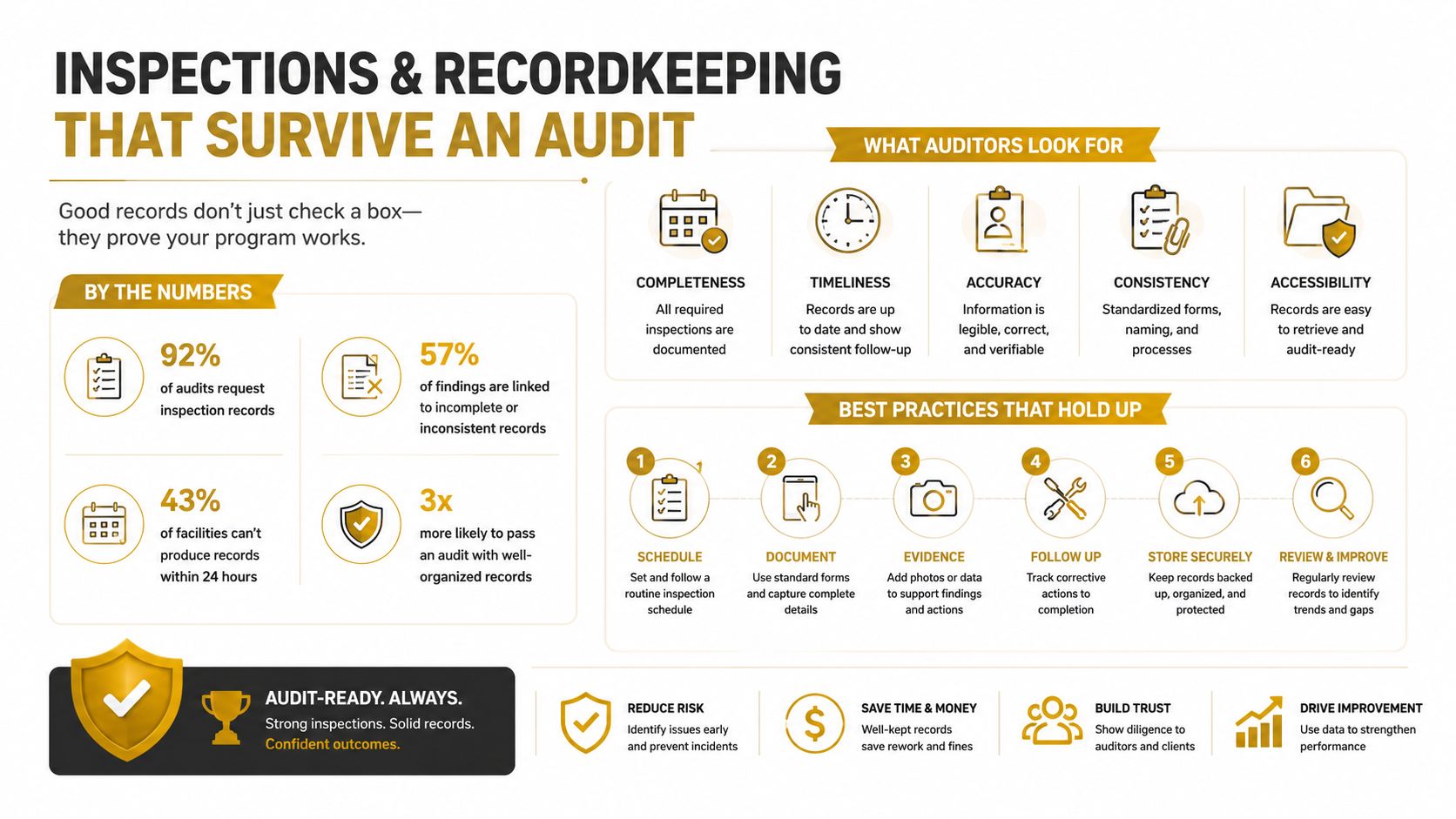
A lot of contractors still think compliance ends when the plan is written. It doesn't. EPA and state guidance expect SWPPPs to document inspections, maintenance, employee training, spill response, and site-specific updates, and Illinois EPA says the plan must stay at the job site from project initiation until final stabilization EPA stormwater planning guidance. That burden follows the permit holder through every rain event and every schedule change.
Compare the two ways contractors handle washout
In-house washout pits look simple at bid time. On the ground, they demand excavation, stabilization, maintenance, and a cleanup plan at closeout. They can work on long-duration jobs with stable layouts, but they get harder to manage when the pour sequence shifts or multiple trades keep moving through the same footprint.
Portable containment usually fits better on short-duration pours, tight sites, and jobs where the washout point has to move with the work. It gives the superintendent a clear location, easier inspection, and less chance that a crew improvises a dump point near an inlet. The trade-off is logistics. It has to be ordered, staged, and checked like any other piece of production equipment.
Washout is a field test for the whole SWPPP. If the setup is awkward or slow to reach, crews will create a workaround, and that is where the paper plan starts to fall apart.
Keep the records that prove the controls existed
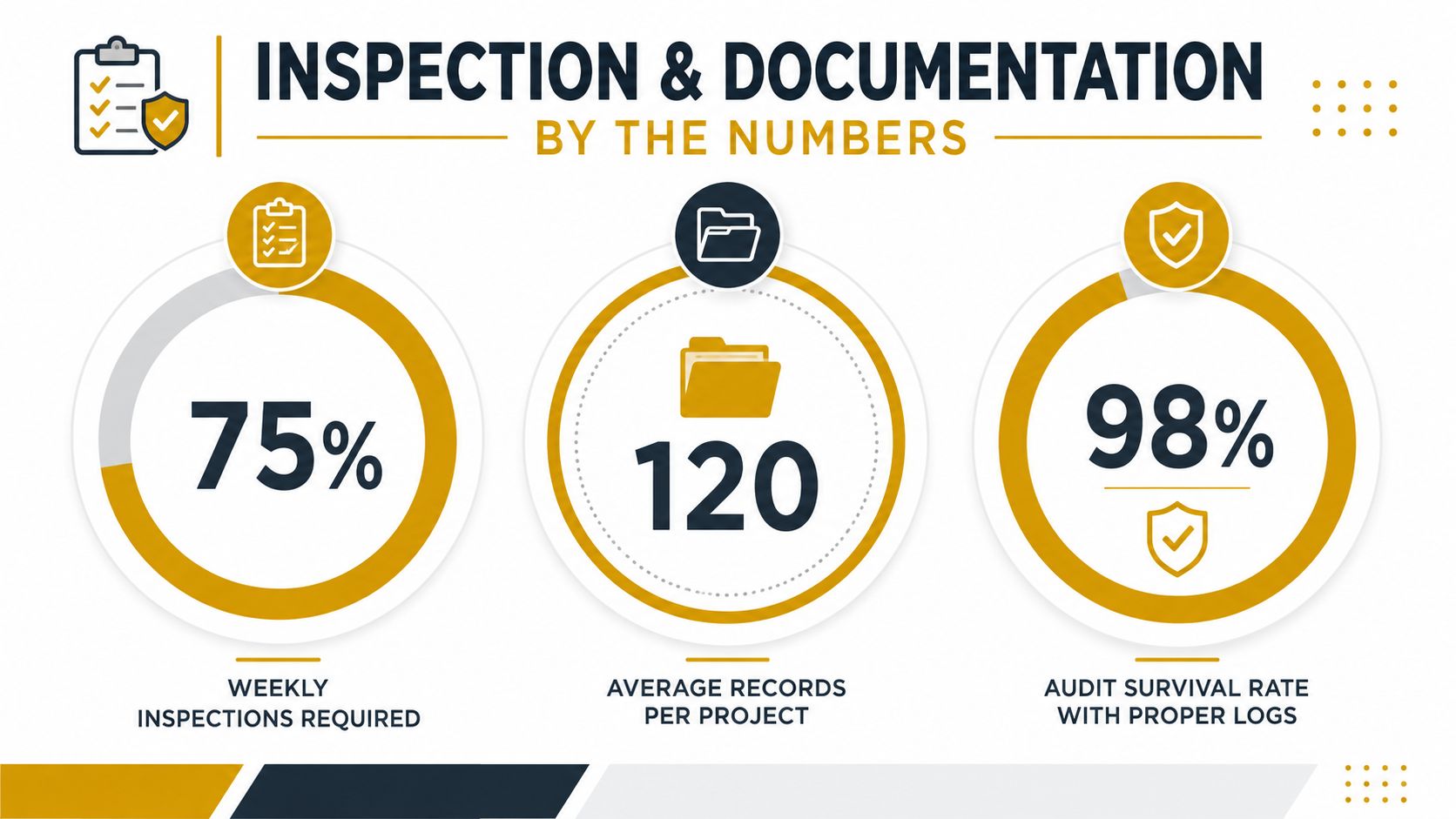
The inspection rhythm has to match the job. Assign one person to check controls after rain events, after changes in grading, after spills, and after major subcontractor shifts. If the project uses a daily log, the washout location, sediment controls, and maintenance notes should show up there every time they change.
Keep these records in the field file:
- Inspection logs: Show the date, condition, and corrective action for each check.
- Maintenance notes: Record when BMPs were repaired, replaced, or cleaned.
- Training and assignment records: Show who was responsible for each control area.
- Plan updates: Keep revised layouts, new washout locations, and spill adjustments current.
The point is not paperwork for its own sake. It is proof that the controls existed, were checked, and were corrected before a small issue turned into a discharge problem.
If the file is thin, inspectors notice. The An infographic titled Inspections and Recordkeeping That Survive an Audit, detailing key standards for compliance and best practices. lays out the basics the field team has to be able to show, not just say. A marked washout area, clean logs, and dated follow-up actions make the inspection conversation short.
California's enforcement data makes the paperwork issue hard to ignore. In that record set, reporting violations made up a large share of stormwater violations, and about a third of NPDES stormwater violations were labeled priority violations California Water Boards enforcement data. A site can have controls on paper and still fail when the logs, updates, and records do not keep pace.
Keeping Your SWPPP Alive Through Project Changes
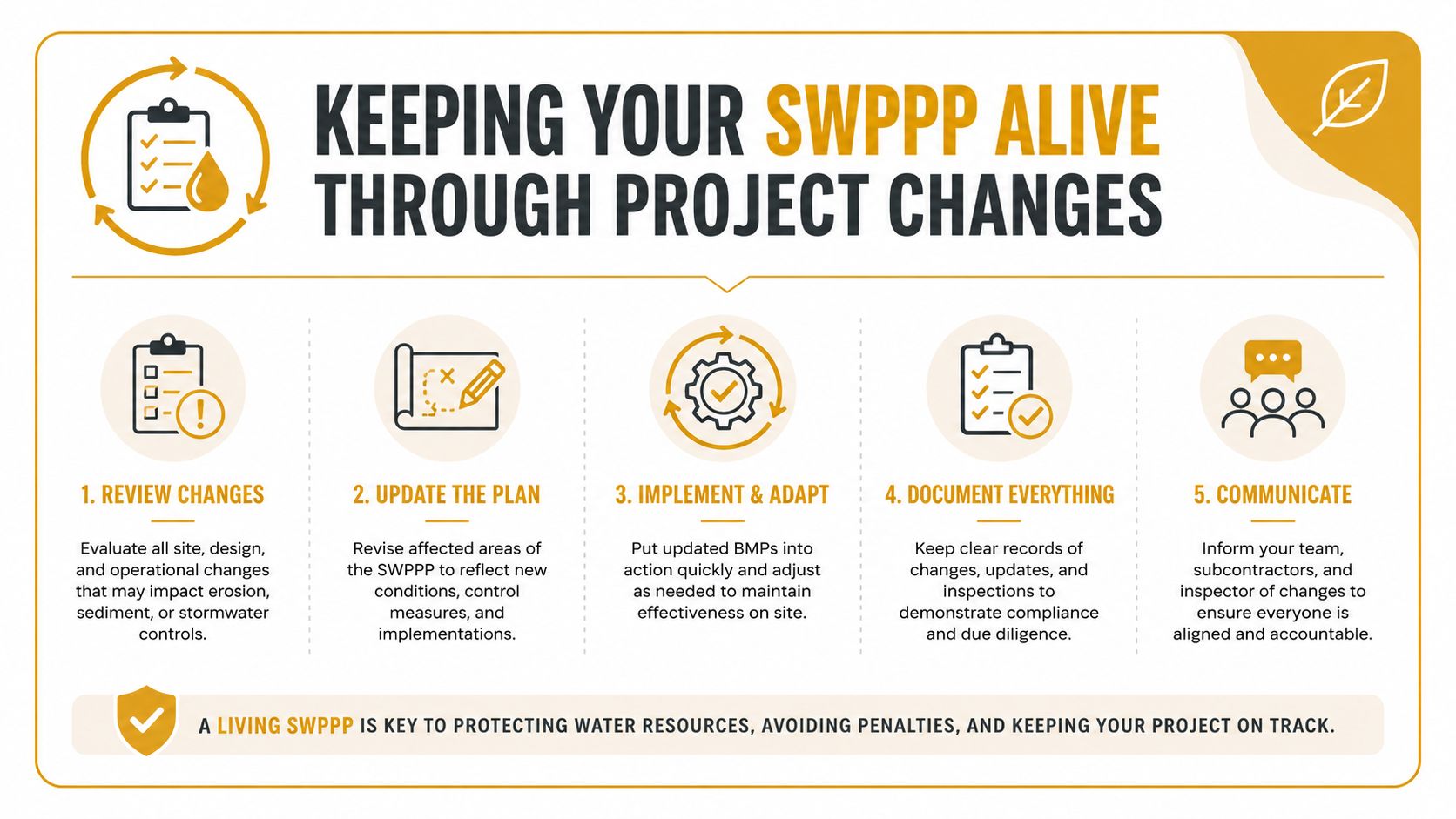
A strong stormwater pollution prevention plan stays alive by tracking change, not by pretending the job is static. Crews move, grades shift, weather interrupts, and subcontractors change the footprint every week. If the plan doesn't change with them, the compliance system starts to drift.
Treat updates like field work, not paperwork
The simplest way to keep the plan alive is to tie updates to real triggers. New material storage, a revised pour sequence, a spill, a changed drainage line, or a moved washout area should all force a plan review. That keeps the document aligned with the site instead of the memory of the last meeting.
This is also where contractor coordination matters. If one trade moves washout, another trade starts fueling nearby, or the grading crew cuts a new path for runoff, the superintendent has to know who owns the fix. Clear responsibility matters more than a long explanation.
Closeout should leave no loose ends
At final stabilization, the job should hand off with the controls documented, the washout area removed or cleaned up, and the records organized for whoever inherits the site. The worst closeout files are the ones that assume somebody else will reconstruct the story later. A clean handoff is part of keeping the SWPPP alive, because it proves the site didn't just look compliant on the last day, it was managed that way the whole time.
If you're building concrete washout controls for a live site, or trying to stop one from becoming the weak link in your SWPPP, Reborn Rentals offers concrete washout containment options built for real jobsite logistics. Use their washout solutions to keep slurry contained, keep the site cleaner, and give your crew a setup that's easier to manage when the schedule gets tight.