If you're staring at a skid of broken slab, a truck full of demo rubble, and a superintendent asking whether it's a clean load or a mixed one, you're already in the decision point that matters. In Colorado Springs, the difference between dumping concrete and recycling it isn't just environmental, it changes how the load gets accepted, what gets charged, and whether the material can go back into road base, paving, or another spec'd use.
That's why recycled concrete Colorado Springs contractors care about isn't a buzzword. It's a practical material stream tied to hauling costs, contamination rules, and the fact that clean concrete can move through the local system very differently from a load mixed with wire, rebar, mud, or road base.
Why Colorado Springs Contractors Are Switching to Recycled Concrete
A foreman on a Springs job doesn't need a lecture about sustainability. He needs a yard that'll take the load, a base that'll compact, and a number on the ticket that doesn't blow the bid. That's the whole shift. Recycled concrete has moved from a side option to a working material because it solves an everyday problem, what to do with concrete that's still valuable after demolition.
The jobsite math is changing
The U.S. EPA reported 548 million tons of C&D debris generated nationwide in 2015, with concrete making up 70% of that stream and asphalt concrete another 15%. The same EPA fact sheet says recycled concrete aggregates supply about 5% of the total aggregates market and that about 68% of recycled concrete aggregate is used as road base rather than returned to new concrete, which tells you where the market already knows how to use it efficiently. EPA C&D debris fact sheet
On a Colorado Springs project, that matters because road work, commercial pads, utilities, and subdivision infrastructure all need aggregate somewhere in the chain. If a recycled product can reliably become base, fill, or coarse aggregate, it stops being “waste” and starts acting like inventory. That's the real pivot.
Local policy is pushing the same direction
Colorado Springs' WastelessCOS plan says the community's current waste recycling and composting rate is about 16%, and it targets a 37% community-wide diversion rate by 2045. Colorado's state recycling rate was 17.2% in 2018 and 15.5% in 2023, which is a reminder that the market still has plenty of room to keep recoverable material out of the landfill. City of Colorado Springs WastelessCOS
Practical rule: if the material can be separated cleanly on the front end, it usually has a better shot at paying you back on the back end.
That's why more contractors are paying attention to concrete before it becomes a disposal line item. The smarter crews sort earlier, haul cleaner, and keep a better handle on what will be accepted as a usable recycled stream.
Technical Performance and CDOT Specifications
A lot of contractors trust recycled concrete only after they see it behave under compaction and load. That's the right instinct. If the base won't meet spec, the recycling story doesn't matter.
What the CDOT numbers actually tell you
Colorado CDOT Class 6 recycled concrete base is reported to have a modified Proctor density of 120 lb/ft³, or about 1.65 tons per compacted cubic yard, with an estimated yield advantage of 15% or more versus local virgin bases. The same source reports Hveem R-values typically above 80, beating the CDOT minimum of 78, and laboratory compressive strength of about 60 psi at 7 days when compacted at optimum moisture. CDOT Class 6 recycled concrete base data
Those numbers matter because they speak to the two things inspectors and field crews care about most. First, does the material compact predictably. Second, does it hold enough stiffness to serve the section it was placed for. When both answers are yes, recycled concrete stops being a gamble and becomes a specified base.
A clean recycled base that meets density and strength expectations is a field material, not a compromise.
Where it shows up in paving mixes
For Colorado Springs concrete paving and base applications, recycled concrete aggregate is also showing up inside optimized pavement mixes. A CDOT case study for the C-470 project shows recycled concrete aggregate included as ASTM C33 coarse aggregate #4 at 397 to 434 lb/yd³ in optimized concrete mixes, alongside 6% air and reduced cementitious demand relative to a typical CDOT paving mix. The City of Colorado Springs also specifies finished concrete needing 4,000 to 4,500 psi 28-day compressive strength and total cementitious material of 564 to 705 lb, depending on use. CDOT C-470 case study and Colorado Springs paving mix data
The takeaway is simple. Recycled concrete isn't just a base course product. In the right mix design and under the right oversight, it can sit inside pavement systems too. That doesn't mean every pour should use it, because not every job has the same exposure, finish, or testing burden. It does mean the material has moved past the “good enough for fill” reputation that some crews still attach to it.
For a superintendent or estimator, the practical question is where the material belongs. Road base, compacted structural fill, or an engineered pavement mix all demand different scrutiny. The spec drives the use, not the other way around.
Sourcing and Sorting Avoiding Tipping Fees
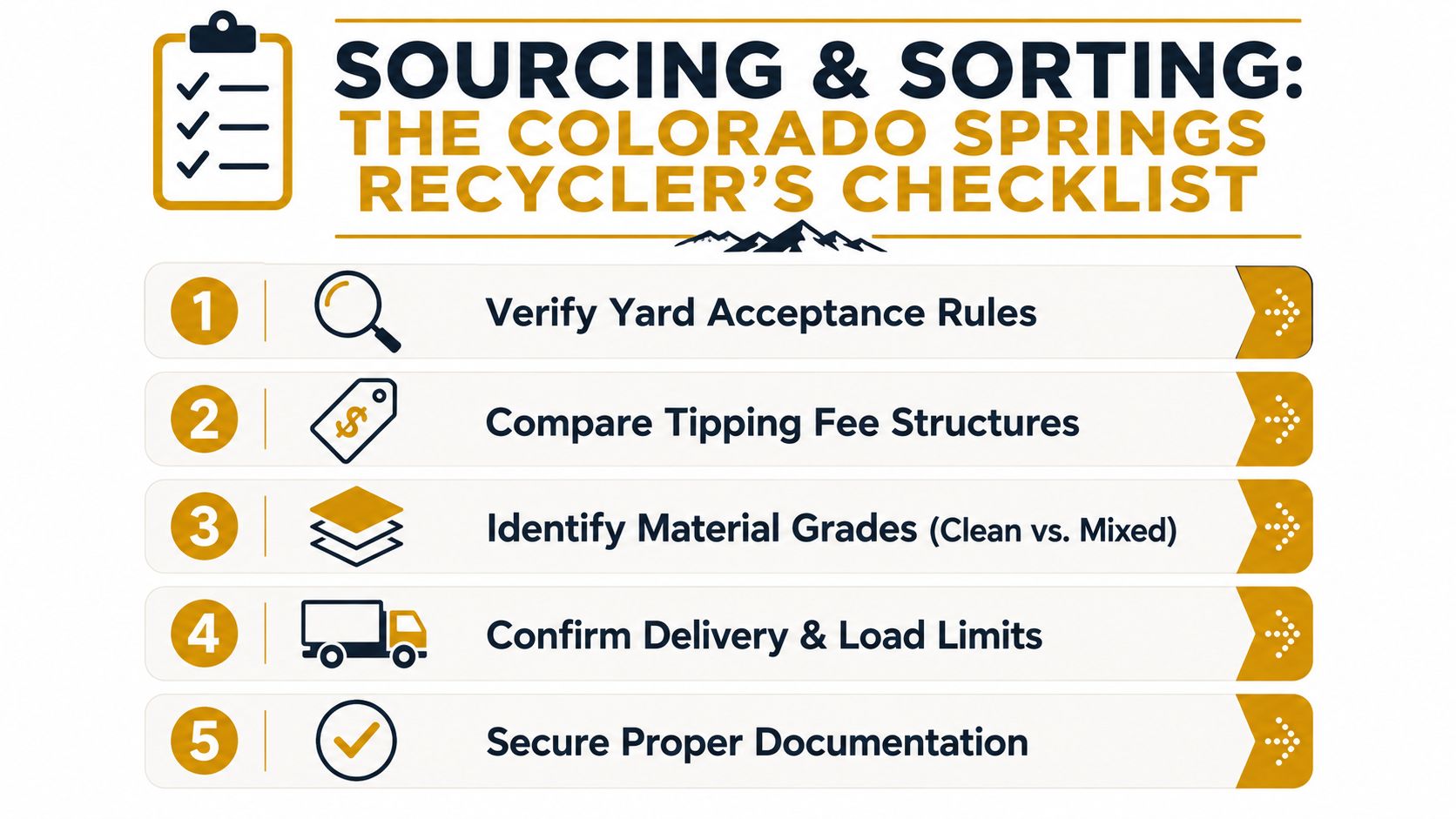
The easiest way to waste money on concrete is to load it like trash and hope the yard sorts it for you. In Colorado Springs, that's where contamination rules turn into real dollars. The cleanest load usually gets the cleanest answer.
Clean load versus mixed load
One local recycler says clean concrete with less than 10% road base, wire, rebar, or metal is accepted at no charge, while mixed concrete/asphalt loads and mud-boring dumps carry fees. Another local recycler tells customers to call the scale house if they're unsure whether the load qualifies or what the tipping fee will be. Colorado Springs aggregate recycling acceptance rules
That's the hidden economics most local pages skip. The question isn't only where to dump concrete. It's what contamination threshold changes the economics of recycling. Once a load tips from “clean” into “mixed,” the yard may move it into a different category, and that can change both acceptance and fee structure.
How to sort before you roll
A field crew can avoid most of the headaches with a quick check before dispatch.
- Strip obvious contamination first: pull out wire, rebar, wood, mud, and trash before the load hits the truck.
- Separate like materials early: keep asphalt, concrete, and base separate if you want the best chance at clean acceptance.
- Ask before you haul: scale house rules are cheaper than a rejected load.
- Document the source: when a superintendent knows where the material came from, it's easier to defend its classification.
- Watch the bottom of the bucket: a little dirt is common, but enough mud turns the conversation fast.
Field note: if the material looks mixed in the trailer, the yard will usually treat it like mixed material.
That's why sorting is not a cleanup task after the fact. It's part of the haul plan. If the load is clean, the recycler can process it into a stronger downstream use stream. If it's contaminated, the value drops and the economics follow.
Environmental Impact and Local Policy
Concrete recycling in Colorado Springs sits inside a bigger policy picture, whether a crew thinks about it or not. The city wants more diversion, the state still struggles with overall recycling performance, and industrial materials already make up a large share of the stuff getting recovered.
Why the city cares about concrete
WastelessCOS sets a 37% community-wide diversion rate by 2045 and reports a current recycling and composting rate of about 16%. That puts construction materials in the middle of the conversation, not on the sidelines. WastelessCOS plan
Colorado's statewide recycling rate was 17.2% in 2018 and 15.5% in 2023, which shows the state still has room to capture more material before it gets buried. The same Colorado recycling summary reports industrial materials diversion at 73%, including concrete, asphalt, and soil, which tells you construction recovery is already a major piece of the system. Colorado recycling summary on industrial diversion
What that means on a real site
A contractor doesn't control city targets, but the crew does control whether the truck leaves with recoverable concrete in a usable state. Clean separation, minimal contamination, and sensible stockpiling help keep material inside the recycling stream instead of sending it to landfill by default. That helps the municipality, but it also helps the job by reducing confusion at pickup and at the yard.
The bigger point is practical. Colorado Springs is not operating in a market where recycling is ornamental. The policy direction, the diversion targets, and the industrial diversion numbers all point to the same thing, construction materials recovery is part of normal operations now.
That creates a higher standard for jobsite discipline. If a load is going to be reused in road base or another aggregate application, it has to be protected from the start. Dirty handling on site becomes a policy problem later.
Cost Analysis and Estimating
Estimating recycled concrete isn't about chasing the cheapest line item. It's about pricing the whole chain, hauling, acceptance, processing, and how much usable material comes back out the other side.
Material price is only one piece
Virgin aggregate usually feels simple because it arrives as a known commodity. Recycled concrete is messier. The price depends on whether the load is clean, whether the yard takes it at no charge, and whether contamination pushes it into a fee category. If the load is sorted well, the economics improve before the material ever gets processed.
That's why hauling discipline matters as much as unit pricing. A cleaner load is easier to accept, easier to recycle, and easier to match to a downstream use like base or drainage rock. A mixed load can cost more to dump and still require more work before it becomes useful again.
Yield changes the estimate
Colorado CDOT Class 6 recycled concrete base is reported to yield about 1.65 tons per compacted cubic yard with an estimated yield advantage of 15% or more versus local virgin bases. That means the compacted product can stretch farther than some crews expect if they only look at loose volume. CDOT Class 6 recycled concrete base data
For estimating, that changes the shape of the bid. If the material performs in place and the load is accepted cleanly, the contractor may get more finished base out of the same transportation effort than with a heavier virgin alternative. The savings won't look the same on every job, because haul distance and source conditions vary, but the yield advantage belongs in the estimate every time it applies.
Compare the real job costs
Use this as a bid mindset, not a slogan.
| Cost factor | Virgin aggregate | Recycled concrete |
|---|---|---|
| Purchase price | Predictable, but often tied to quarry supply | Depends on load cleanliness and yard rules |
| Hauling | Standard inbound haul | Can improve if local recycling is closer than quarry supply |
| Acceptance | Straightforward as a new product | Can shift if contamination is present |
| Finished use | Well understood | Strong for base and suitable mixes when spec allows |
The table doesn't say recycled concrete is always cheaper. It says the cost structure is different. A careful estimator reads that difference before the proposal goes out, not after the invoice comes back.
Job Site Integration and Containment
Recycled concrete works best when the rest of the site runs clean. That's where washout containment comes in. If the slurry, sludge, and residual concrete stay uncontrolled, they contaminate stockpiles, complicate recycling, and create a mess nobody wants to defend in front of an inspector.
Keep washout separate from reusable aggregate
Washout material and recycled concrete serve different purposes. One is a controlled waste stream that needs containment. The other is a reusable aggregate stream that loses value if it gets fouled with slurry or trash. Mixing the two is how clean stockpiles become rejected loads.
A disciplined crew stages the washout area away from the recycled pile, keeps the pan or container accessible, and uses it every time the pump or finisher is done. That sounds basic because it is basic. It's also where a lot of jobs go sideways.
Reborn Rentals provides concrete washout pans and containers for delivery in Colorado and nationwide, which fits the kind of containment setup that keeps slurry out of the recycled stockpile and helps the site stay organized. Used correctly, that kind of equipment gives crews a dedicated place for washout waste instead of letting it migrate into the aggregate area.
Build the workflow around contamination control
A good layout makes the yard cleaner and the recycling easier.
- Stage delivery clearly: inspect material as it comes off the truck so broken slab, trash, and mud don't get mixed into the pile.
- Dedicate one zone for washout: keep slurry, water, and cement residue in a contained area.
- Separate haul-off streams: concrete for recycling should not ride with general debris.
- Keep the stockpile dry and visible: that helps crews spot contamination before the recycler does.
- Tell the scale house the truth: if a load is mixed, classify it that way before it gets rejected or repriced.
Clean stockpiles are built by habit, not by cleanup after the fact.
That habit pays off in three directions. The recycler sees a better load, the inspector sees better housekeeping, and the superintendent sees fewer surprises when the ticket prints. It also protects the downstream use of the material, because contaminated aggregate is much harder to trust in base or spec work.
On a busy Colorado Springs job, that can be the difference between smooth turnover and a week of backtracking. Keep the concrete stream separate, contain the washout, and send the recycler something worth processing.
If you're planning a pour, a demo, or a site prep package in Colorado Springs, line up your washout containment before the trucks roll. Visit Reborn Rentals to set up the concrete washout equipment that keeps slurry contained, helps protect your recycled concrete stockpile, and makes the whole job easier to manage.