You know the day. The rain comes in sideways, the inspector shows up unannounced, and someone on the crew points at a muddy discharge path that nobody wanted to discuss yesterday. Or the pump crew is already chasing groundwater in a basement cut, concrete is scheduled for the afternoon, and the washout area is wherever the truck can reach. That's when construction site water management stops being paperwork and turns into schedule control, compliance control, and damage control.
A good water plan doesn't just keep puddles down. It keeps sediment out of drains, keeps concrete slurry out of soil, keeps excavations stable, and keeps the crew supplied with safe drinking water and sanitation. When teams treat water as an afterthought, the hidden costs show up fast in rework, delays, complaints, and avoidable cleanup.
The High Stakes of Site Water Control
The worst water problems on a job usually start small. A superintendent walks the site after a storm, sees water pushing toward a curb inlet, and finds the silt fence was never tied in at the low end. An inspector spots slurry staining near the washout area, asks for the plan, and the conversation shifts from the pour schedule to permit compliance.
Water control is not just puddle control
On a busy job, water touches almost every trade. Earthwork exposes soil, concrete crews generate slurry, excavation crews fight groundwater, and every truck wash or tool rinse creates another pathway that needs to be contained. If the site team only reacts after water moves where it should not, the fix usually costs more than prevention.
Uncontrolled water creates several problems at once. It can trigger cleanup work, disrupt access routes, destabilize subgrades, and leave documentation gaps when regulators want to see how runoff and waste were managed. That is why construction site water management has to be handled like a site system, not a housekeeping task.
Practical rule: If water leaves the work zone, the site is already behind.
The standard in the field is direct. Know where water comes from, where it wants to go, and what happens when it gets there. That includes stormwater, slurry, groundwater, wash water, and the water the crew needs to work safely.
Profit and compliance usually fail together
The cost of poor water control is not limited to cleanup. A missed control can force crews to stop work, add pumping, bring in extra containment, or redo finish work that got contaminated. If water reaches a structure or subgrade, the damage can become structural instead of cosmetic, especially on below-grade work where poor control can lead to flooding, unstable subgrades, boils, seepage, loss of fines, and uplift of slabs, along with corrosion or dilution damage to concrete and metals U.S. Bureau of Reclamation field manual.
That is why the smart move is to plan water as part of production. Keep it out of places where it causes damage, keep it contained where it is generated, and keep a clear record of what the site team did when conditions changed.
Regulatory Framework and Environmental Impact
A site can look under control in the morning and still create a water problem by lunch. Rain on disturbed soil, concrete residue, slurry, and wash water does not stay put, and once it reaches a storm drain or ditch it can carry sediment, nutrients, heavy metals, and hydrocarbons with it. One cited estimate says uncontrolled sediment can raise suspended solids by up to 500% urban construction water-quality guidance.
Why the permit side matters on real jobs
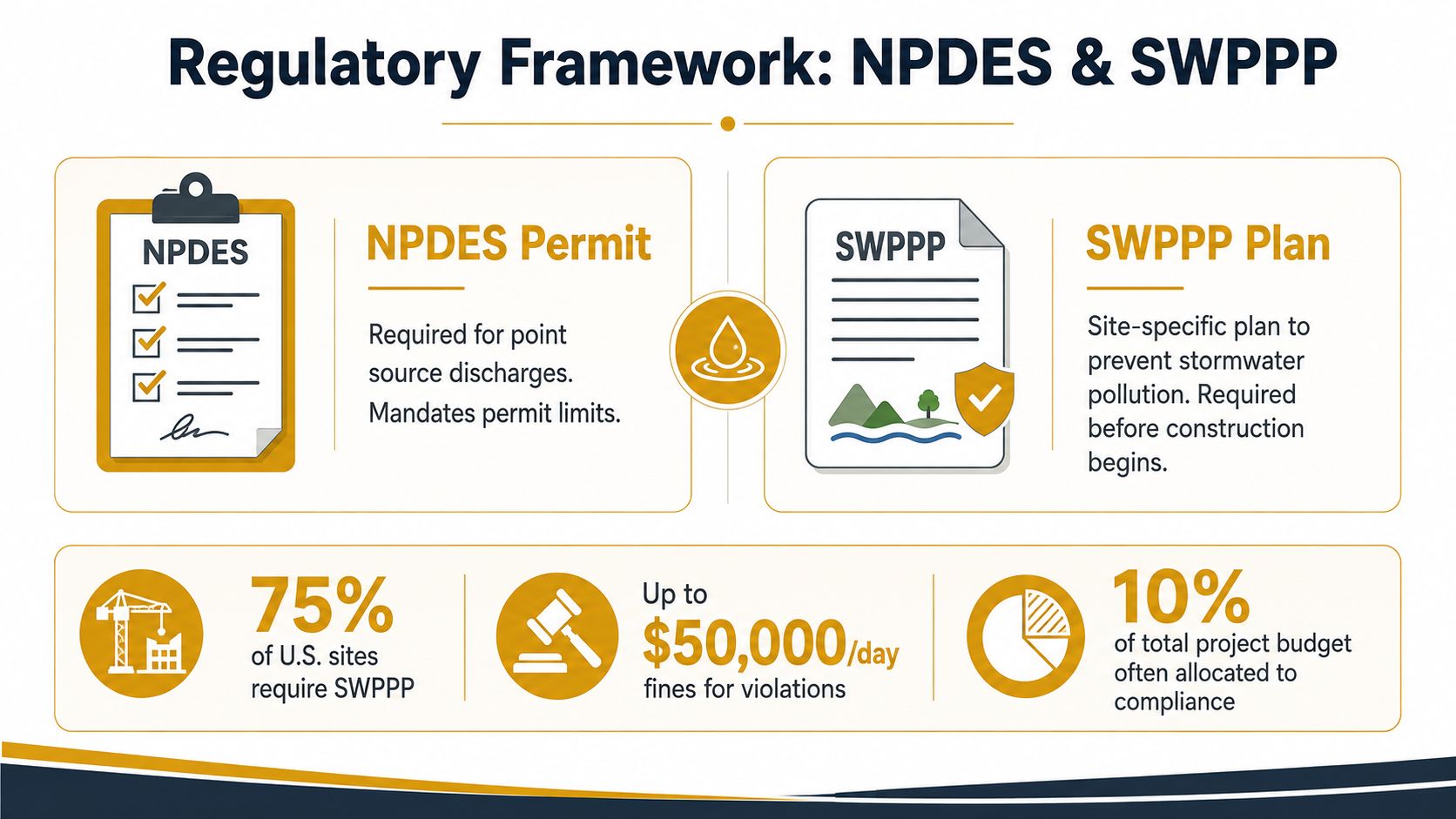
In the U.S., NPDES permits and SWPPP plans set the stormwater rules for construction work. The permit defines what can leave the site, and the SWPPP shows how the crew will keep pollution out of those discharges. On paper, that is an administrative requirement. In the field, it decides where stockpiles go, how access roads are stabilized, where washout is placed, and how the superintendent responds after rain.
The same issue shows up in the pressure on site water use. A UK and Ireland construction guidance note reports baseline site water consumption of 148 m³ per £1 million of contractors' output at 2008 constant prices, with an estimated average mains-water use of about 147.1 m³ per £1 million and an overall baseline range of 112–189 m³ per £1 million Construction Leadership Council guidance. The guidance also estimates total mains-fed water use in England and Wales at 153,076,076 m³ for the baseline period, with abstracted water use at 10,704,369 m³ Construction Leadership Council guidance. Those figures make the point plainly, water control affects operating cost and resource use on ordinary projects, not just special ones.
Concrete work is where the water goes
A Brazil construction-water study found consumption at 0.20–0.25 m³ per m² of constructed area, and concreting activities accounted for 39.15% to 68.63% of total accumulated water use over the study period Brazil construction-water study. The same study reported about 211 liters of water to produce 1 m³ of concrete in a batching plant Brazil construction-water study.
That matters because the water on site is not only coming in through hoses. It also comes out through washdown, curing, cleanup, and equipment maintenance. If the crew does not control those flows, the project carries pollution risk and avoidable waste at the same time.
Field takeaway: Concrete, runoff, and groundwater need one plan, not three separate half-plans.
Site Assessment and Strategic Planning
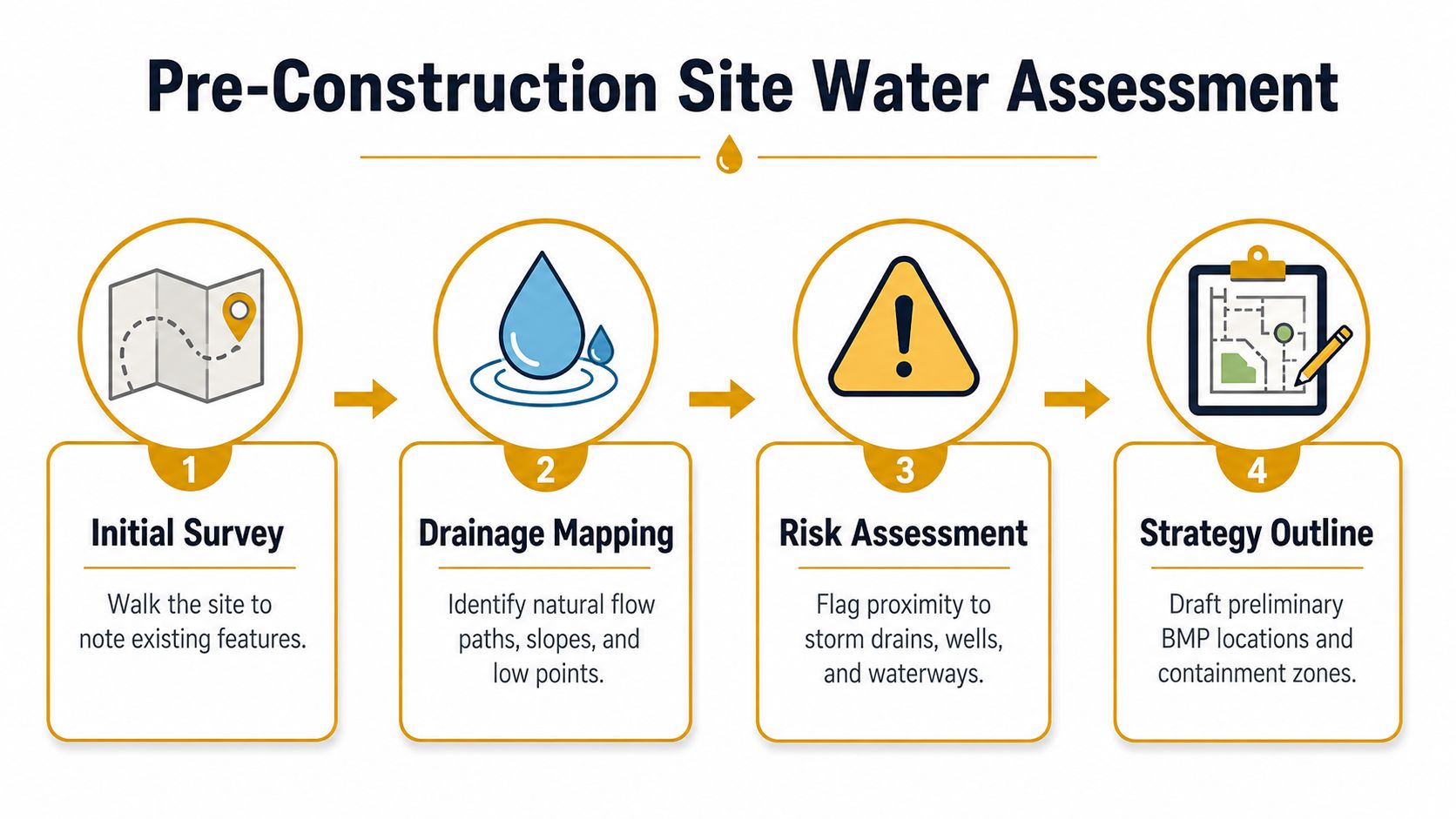
Before the first stake goes in, the superintendent and the earthworks lead should walk the site with a water lens, not just a grading lens. Low spots, natural drainage paths, nearby storm drains, and any connection to waterways or existing ditches need to be identified early. If the team misses those features during setup, the site ends up spending production hours fighting water that should've been routed around the work.
A field-first assessment workflow
Start with the ground itself. Walk the perimeter, note where water already wants to move, and mark any areas that collect runoff after light rain. Those spots usually tell you where temporary berms, inlet protection, or sediment barriers will matter most once the site is disturbed.
Then map the drainage logic against the schedule. Grading, utility cuts, concrete placement, and excavation don't happen in a vacuum, so the water plan has to match the sequence of work. A containment measure that makes sense on day one may be in the wrong place after the next phase of earthwork.
Here's the sequence that usually holds up in the field:
- Initial survey. Walk the site and note the existing features that affect water movement.
- Drainage mapping. Identify slopes, low points, and the direction runoff will naturally take.
- Risk assessment. Flag storm drains, wells, waterways, stockpile areas, and below-grade zones.
- Strategy outline. Draft preliminary BMP locations, containment zones, and pump discharge points.
Build the plan around the job sequence
A solid water plan isn't just a sketch. It should tell the crew what gets installed first, what gets moved as the work progresses, and who checks it after weather changes. If concrete is coming before final grading, the washout area and access points need to be ready before the trucks arrive.
Water controls fail when they're placed where the drawing looked convenient, not where the runoff actually travels.
The best plans also leave room for field adjustments. Soil conditions change, rain changes timing, and excavation depth can expose more groundwater than expected. A site team that plans for those shifts avoids the scramble that usually shows up at the worst possible time.
Best Management Practices for Erosion and Sediment
Erosion control and sediment control are related, but they are not the same job. Erosion control keeps soil from moving in the first place. Sediment control catches what still gets loose. If crews confuse the two, they install the wrong device in the wrong spot and then wonder why muddy water keeps leaving the site.
Match the control to the problem
Silt fences work best as a perimeter filter for shallow sheet flow, not as a dam for concentrated runoff. They need proper trenching, correct fabric support, and solid tie-ins at the ends. If the bottom edge lifts or the fabric is not keyed into the soil, water runs underneath and the fence turns into decoration.
Fiber rolls or similar wattles are useful on slopes and around disturbed areas where the goal is to slow runoff and trap fine material. They are easier to place than a basin and can be moved as the work advances. The mistake is assuming they can handle heavy flow. They cannot, and they fail fast if they are placed in a channel that is already carrying water at speed.
Sediment basins are the larger tool for sites with enough drainage area and enough room to build one. They give water time to settle solids before discharge, which makes them the right choice when the job produces large volumes of runoff. The trade-off is space, maintenance, and the need to remove accumulated material before capacity is lost.
Installation details decide whether the BMP works
Most failures are boring and preventable. A fence without overlapping ends leaks. A roll without proper soil contact undercuts. A basin without maintenance fills up and overflows dirty water. The product on the truck matters less than the crew's discipline in installing and inspecting it.
Concrete-related work makes this even more important. Since concreting can account for a major share of accumulated site water use, as noted earlier, the crew should place sediment controls where washdown, truck traffic, and concrete residue are most likely to load the runoff path.
A simple rule helps on busy sites:
- Put the control close to the source when the runoff path is short and manageable.
- Use a larger containment feature when multiple trades are contributing sediment.
- Inspect after rain and after disturbance because both conditions change how the control performs.
The right BMP does not just satisfy a checklist. It keeps the rest of the site from inheriting a mess.
Concrete Washout and Slurry Containment
A crew can ruin a clean site in a single afternoon if concrete washout is treated like an afterthought. Fresh slurry is highly alkaline. Once it reaches soil or groundwater, the problem is no longer just a mess on the surface, it can change the receiving area in ways that are costly to clean up and difficult to explain later.
Size the washout for the pour, not for the hope
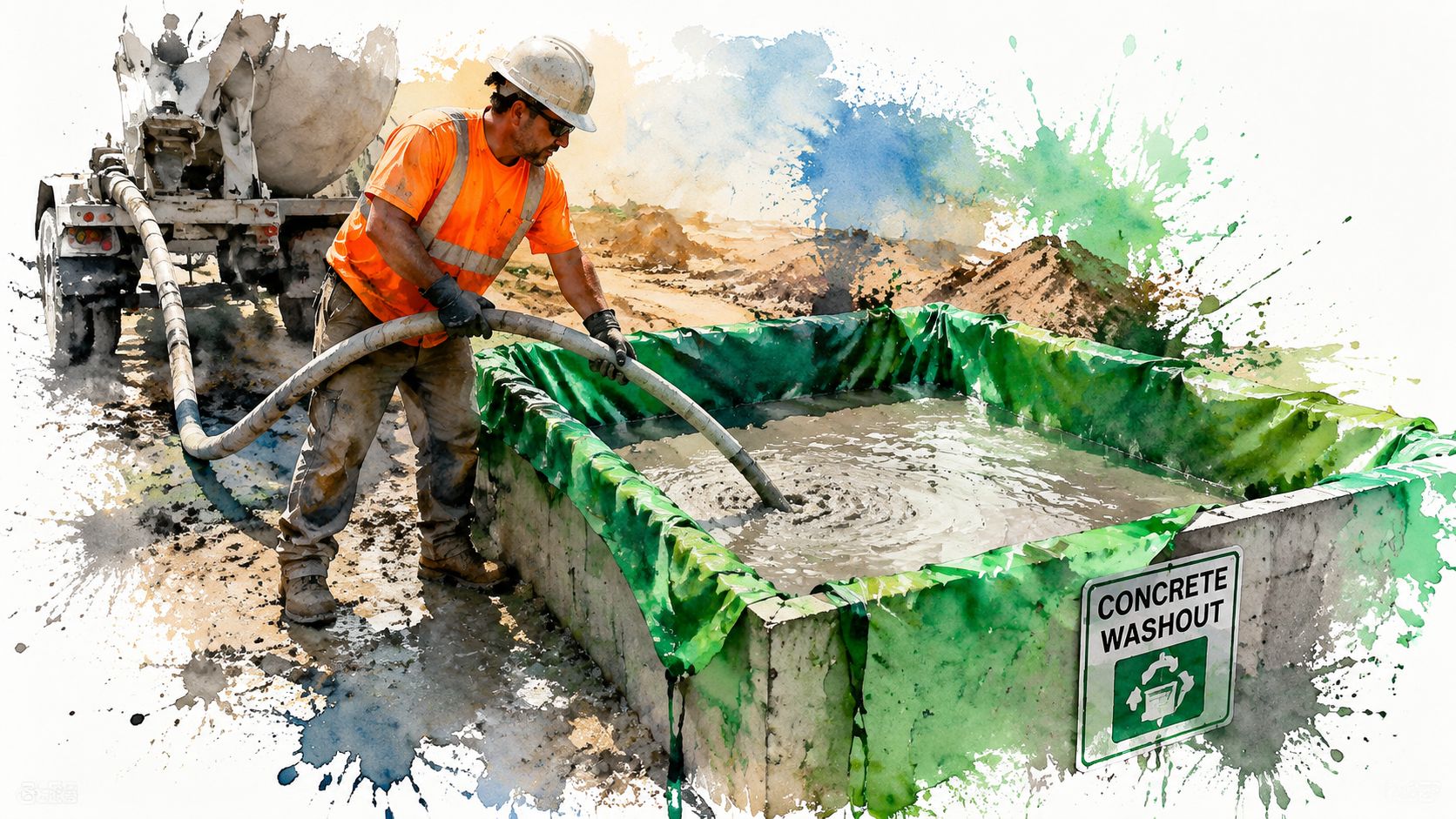
The container has to match the cleanup volume the crew will produce. Reborn Rentals lists washout pans and containers for rent, including a 72' x 72' x 24' option with approximately 18.25 tons and about 441 gallons of liquid capacity, plus a 72' x 72' x 14' option with about 310 gallons of capacity. That kind of sizing matters because a small bin disappears fast once the ready-mix trucks, pump lines, and hand tools start getting rinsed.
Placement matters just as much as capacity. Set the washout where trucks can reach it without tearing up the site, but keep it out of the stormwater flow path so residue does not wash into drains, slopes, or unprotected soil. Leave enough clearance for the pump crew or finisher to work without overshooting the edge, and keep it far enough from active traffic that a passing truck or loader will not clip it.
Keep the area clean enough to use
A washout area only works if someone stays on it. That means checking the fill level, keeping the liner intact, and removing hardened material before the container loses usable space. If slurry piles up until wash water starts splashing out, the system has already failed and the next rain just spreads the problem.
Good field practice looks like this:
- Line the container correctly so leakage does not reach the subgrade.
- Keep the access path obvious so the truck or pump operator does not improvise.
- Schedule cleaning before the next major pour instead of after the overflow.
- Dispose of hardened waste properly once the material is cured enough for removal.
The site also needs to keep washout separate from the rest of the water picture. Tool rinse water, truck wash water, and concrete residue should not end up in the same casual ditch or soil pit. Once crews start treating them as one messy category, housekeeping slips, inspection problems follow, and the site loses control of the whole water plan.
Dewatering and Groundwater Control
Below-grade work changes the water problem from cleanup to ground stability. Once an excavation hits groundwater, the crew is not just keeping water out of the hole. It is protecting the subgrade, the sidewalls, and the structure that will eventually sit there.
Pumping has to be sized and directed
Improper dewatering can trigger flooding, unstable subgrades, boils, seepage, loss of fines, and uplift of slabs. It can also lead to corrosion or dilution damage to concrete and metals. That makes the pump choice a control decision, not just a speed decision.
The discharge line needs a destination before the pump starts. If the water leaves the excavation and runs onto an unprotected slope or straight into an inlet without treatment, the site has just traded one problem for another. The same discipline that protects the hole also protects the receiving area.
Good control combines interception, pumping, and discharge planning
A workable dewatering setup usually uses more than one tactic. Groundwater interception can reduce the load before it reaches the excavation. Pumping handles the water that still enters. Discharge planning keeps the pumped water from turning into a runoff problem elsewhere on the site.
If the water leaves the cut and leaves a muddy track downhill, the dewatering plan is not finished.
The best systems are the ones the crew can keep up with. Hoses kink, pumps clog, and temporary channels erode. A field team that checks flow, verifies outlet condition, and adjusts after heavy rain usually avoids the kind of emergency that turns a working excavation into a delay notice. That same habit also cuts hidden costs, since a bad dewatering setup can spread cleanup work across the rest of the site, interfere with inspections, and create compliance gaps that do not show up until someone is already looking for them.
Whole-Site Water Strategy and Worker Needs
A real water plan does not stop at runoff control. It also covers the water the crew needs to stay safe, clean, and productive. Construction guidance is treating metering, reuse, leak repair, and routing wastewater to permitted treatment or disposal as part of the same management picture. Industry discussion has also pointed out that construction sites often focus on the build and overlook drinking water and sanitation needs for workers Construction Leadership Council guidance.
Keep the human side in the same plan
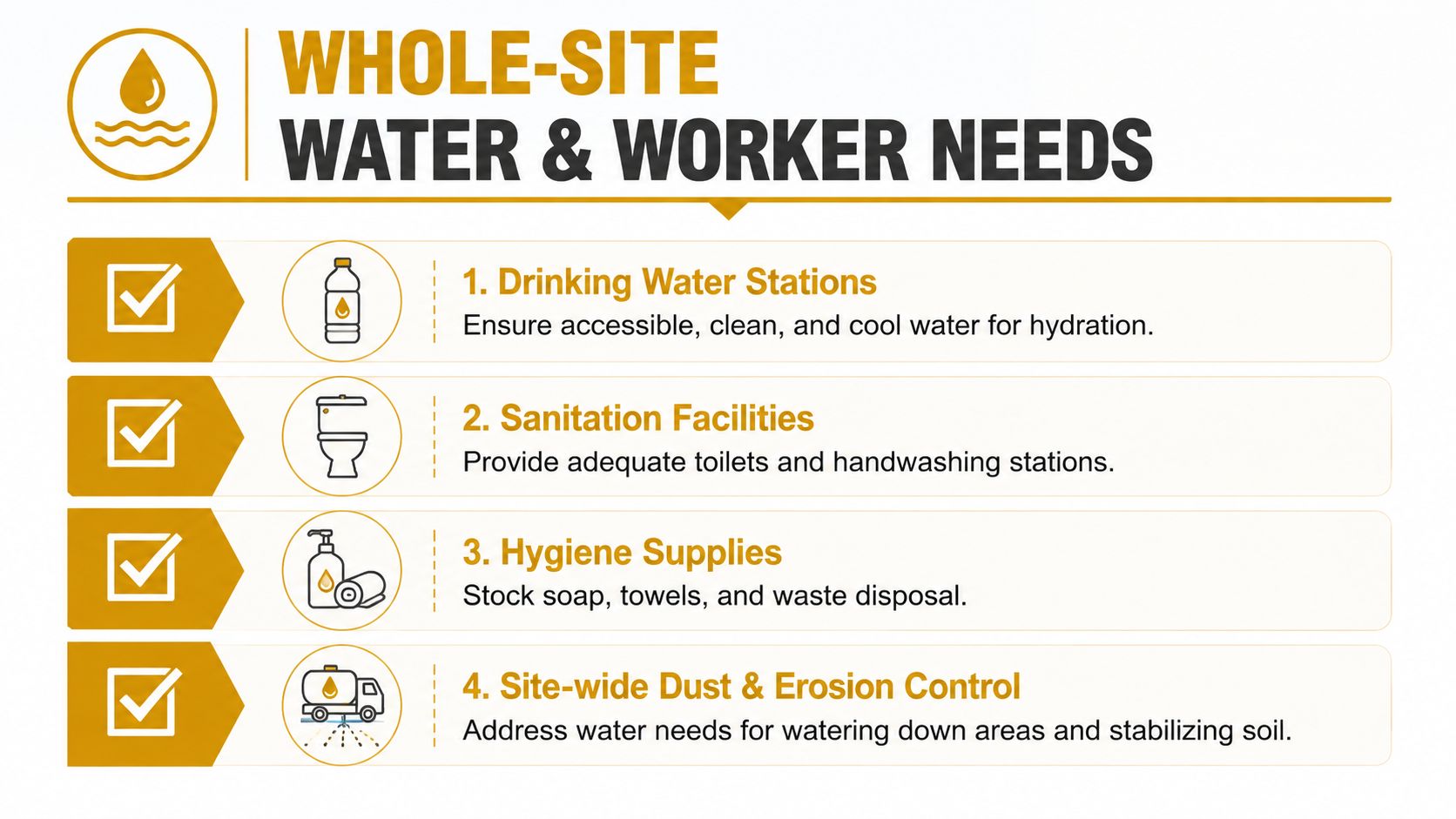
A crew that cannot find clean drinking water loses time and creates a health problem. Toilets and handwashing stations that are too far away, or out of service, create sanitation issues that runoff control cannot solve. Water management has to include the people using the site, not just the materials moving through it.
A daily checklist keeps that part from slipping:
- Drinking water stations. Make sure they are accessible, clean, and cooled when possible.
- Sanitation facilities. Check that toilets and handwashing stations are adequate and usable.
- Hygiene supplies. Restock soap, towels, and waste disposal items before they run out.
- Site-wide dust and erosion control. Confirm the water used for suppression and stabilization is being directed where it should.
One option for concrete-specific containment
For crews that need concrete washout containment on a rental basis, Reborn Rentals provides washout pans and containers with delivery, which can fit into the broader site water plan alongside other controls.
The point is consistency. When drinking water, sanitation, washout, dewatering, and runoff all live in one management system, the site runs cleaner and the inspection conversation gets much simpler.