A three-day concrete pour is on the schedule, the crew is booked, and someone has already found a washout pan advertised at $25 per day. The quick math looks easy: $25 multiplied by three days, or $75. Then the quote includes delivery, pickup, a rough-access surcharge, taxes, and possibly an express-order premium. The number on the invoice no longer resembles the number in the job-cost spreadsheet.
That's why a useful rental price estimate can't stop at the daily rate. Washout containment costs depend on the equipment selected, the number of rental days, delivery logistics, ground conditions, timing, and applicable charges. A reliable estimate separates those inputs before the equipment ships, so the superintendent, project manager, and owner's representative are working from the same assumptions.
Why Your Washout Rental Budget Keeps Missing the Mark
The mistake usually happens during a rushed pre-pour meeting. A foreman says the crew needs a pan for three days, the project manager searches for a daily price, and the estimate gets entered as a single line item. Nobody has confirmed whether the truck can reach the placement area, whether the pan will sit on stable ground, or whether the order needs expedited handling.
The daily rate is real, but it's only one layer. A washout rental estimate also has to account for rental duration, delivery and pickup, site access, terrain, express handling, taxes, and any published fees or surcharges. Leave one out and the budget is understated before the first load of concrete arrives.

The daily rate isn't the delivered cost
A pan may be inexpensive to rent but costly to position. A gravel driveway, soft shoulder, narrow access lane, steep grade, or blocked staging area can change the delivery plan. The carrier might need different equipment, extra handling, or more time on site.
Duration creates another common blind spot. If a pour is planned for three days but weather, inspection timing, or finishing work pushes cleanup into a fourth day, the rental period changes. A project team that budgets only for the planned pour can end up treating ordinary schedule movement as an unexpected cost.
Practical rule: Budget the equipment as a delivered, placed, and collected service, not as a daily price printed beside a product photo.
A proper estimate prevents awkward conversations later. Before approval, the team should know the selected plan, expected rental dates, delivery address, access conditions, placement requirements, and which charges are confirmed versus still subject to site review. That small discipline turns a vague allowance into a number the job can manage.
Breaking Down Every Cost Component
Start with the base equipment line, then build outward. Reborn Rentals lists washout pans and containers with clear daily pricing starting at $25 per day, while the final amount can change with delivery, site conditions, express handling, and duration. The important distinction is between the equipment rate and the complete rental price estimate.
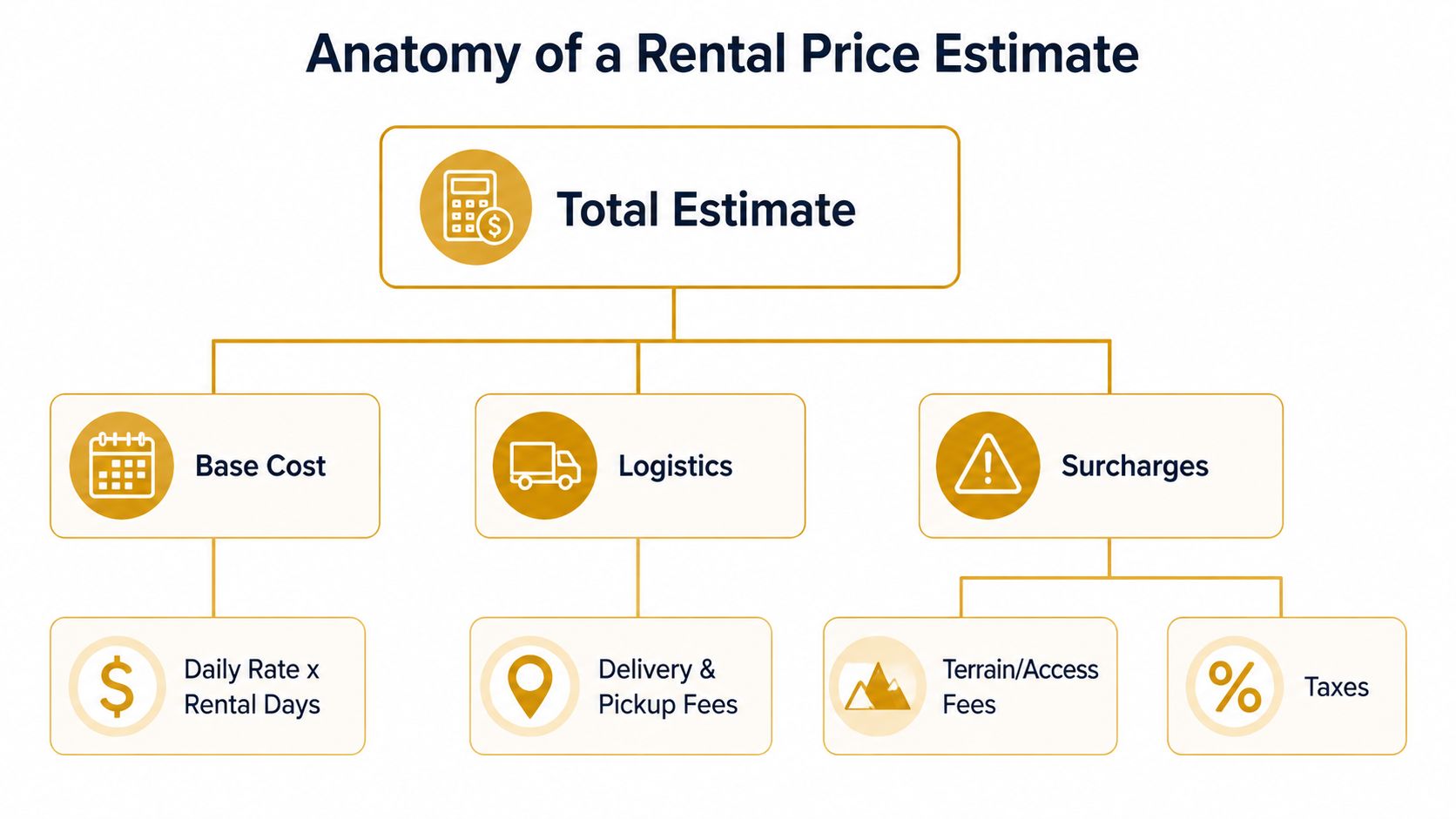
Base cost and duration
The base calculation is straightforward:
Daily rate × rental days = equipment subtotal
Confirm when the rental clock starts and ends. Some teams count only active pour days, but the supplier may need the pan available for setup before the pour and cleanup afterward. Include the intended pickup date, then consider whether the schedule has enough room for weather or inspection delays.
Equipment size also affects the selection. A larger pan may cost more or require more demanding placement, but an undersized pan can create overflow, unsafe housekeeping, and compliance problems. Match the pan to the expected washout volume and the physical constraints of the site.
Delivery and pickup
Delivery and pickup are separate logistics questions, even when one company handles both. Ask whether the quoted delivery charge includes placement or only curbside drop-off. Confirm the pickup conditions as well, because a pan that's easy to drop may be harder to retrieve after the site has changed.
Give the supplier the full project address, gate restrictions, preferred delivery window, surface type, and distance from the unloading point to the final placement area. “The site is accessible” isn't enough information for a carrier making a real delivery decision.
Terrain, access, and timing
Terrain surcharges can apply when the placement area lacks a stable, flat surface for the delivery vehicle or handling equipment. Gravel, soft soil, slopes, tight turns, and limited clearance all deserve a direct question before dispatch.
An express-order premium may apply when the equipment has to be prepared or delivered on short notice. It's avoidable when the project team orders early, but it becomes a genuine budget risk when a pour date moves forward and the rental request follows it.
Finally, ask how taxes and environmental fees are handled for the project address. The tax jurisdiction may not match the office location, and environmental or service-related charges should appear as distinct lines rather than being buried inside a daily allowance.
Running a Sample Calculation for a Real Pour
Consider a hypothetical five-day residential foundation pour using a standard 72-inch by 72-inch by 24-inch washout pan. The listed capacity is approximately 441 gallons, and the published starting rate is $25 per day. The example below includes a delivery fee, a terrain surcharge for a gravel driveway, and sales tax, but it uses placeholder amounts for those project-specific items because they must be confirmed in the formal quote.
The method matters more than the placeholders. A project manager can replace each assumption with the supplier's written amount and preserve the same calculation.
Sample Washout Rental Estimate Breakdown
| Line Item | Unit Cost | Quantity | Subtotal |
|---|---|---|---|
| 72-inch × 72-inch × 24-inch washout pan | $25/day | 5 days | $125 |
| Delivery fee | Confirm with supplier | 1 | Enter quoted amount |
| Gravel-driveway terrain surcharge | Confirm with supplier | 1 | Enter quoted amount |
| Pickup fee | Confirm with supplier | 1 | Enter quoted amount |
| Sales tax | Project-specific rate | 1 | Calculate on taxable items |
| Estimated total | $125 + quoted charges + applicable tax |
The equipment subtotal is the only part that can be calculated from the stated starting rate and five-day duration. Delivery, terrain, pickup, and taxes shouldn't be invented in an internal budget. Entering a guessed fee creates false precision and makes the estimate look more reliable than it is.
A smaller remodel example
A bathroom remodel may need the 72-inch by 72-inch by 14-inch option, listed at approximately 310 gallons. The capacity changes, but the estimating process doesn't: identify the equipment, multiply the confirmed daily rate by the rental days, add delivery and pickup, disclose any access surcharge, and apply the correct tax treatment.
A good spreadsheet shows assumptions beside every amount. That way, the person approving the rental can see what's confirmed, what's provisional, and what still requires a quote.
For a live project, attach a site note to the estimate. Record whether the pan will sit on gravel, soil, pavement, or another surface, and state whether a forklift, crane, or special placement method may be required. That note protects the budget from the most common failure, a clean-looking total built on incomplete field information.
Building Your Own Estimate Template
A reusable template should force the estimator to answer operational questions before entering a total. Copy the following fields into a spreadsheet, procurement form, or project cost log.
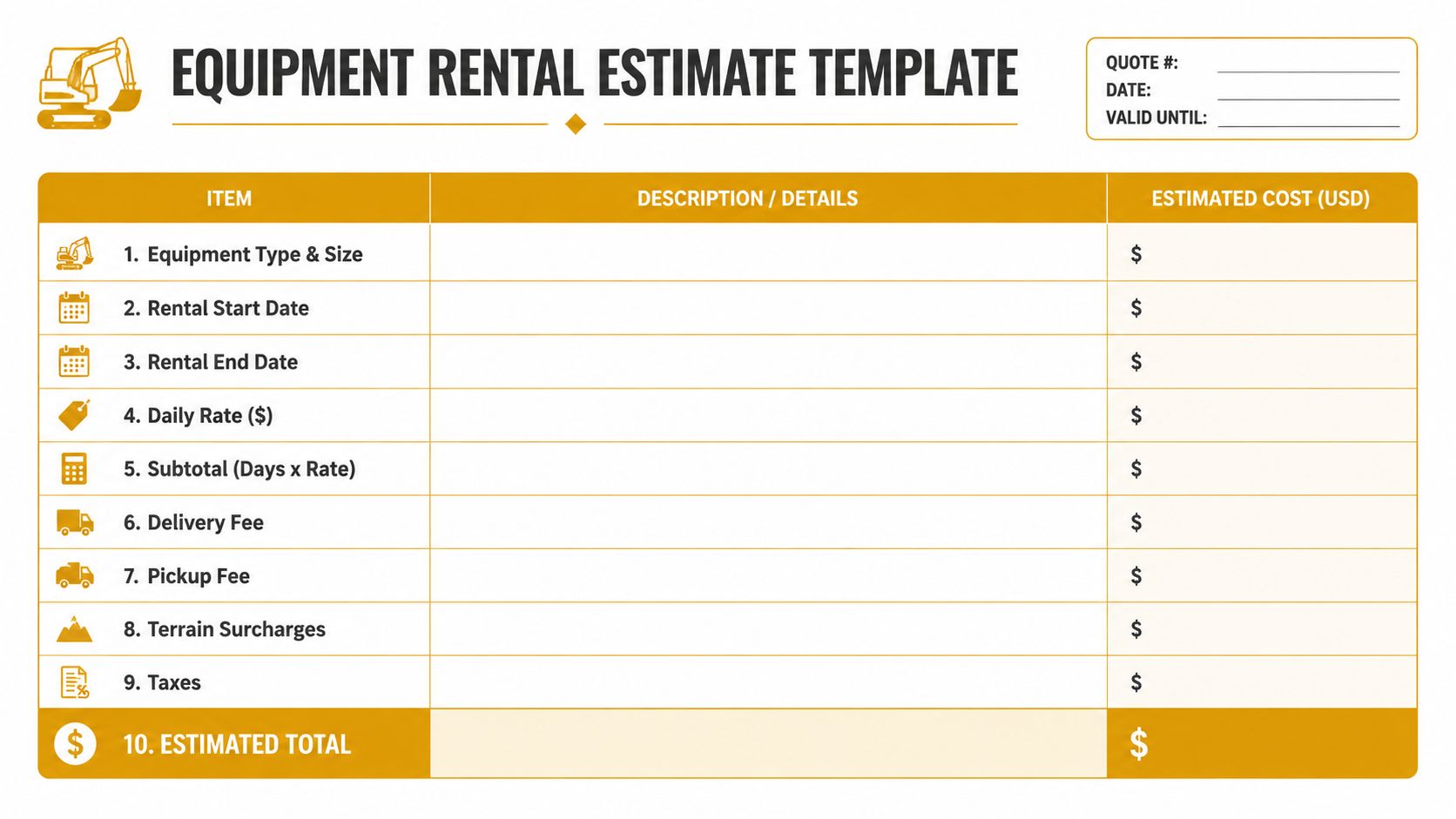
Equipment and dates
- Equipment type and size: Record the pan dimensions and capacity that match the pour.
- Rental start date: Use the date the supplier must deliver or make the equipment available.
- Rental end date: Include the planned pickup date, not just the last active pour day.
- Daily rate: Enter the confirmed rate from the product listing or quote.
- Subtotal: Multiply the daily rate by the number of billable rental days.
Logistics and field conditions
- Delivery fee: Enter the quoted amount and clarify whether placement is included.
- Pickup fee: Confirm whether retrieval is priced separately.
- Terrain or access surcharge: Note gravel, soft ground, slope, narrow access, clearance limits, or other constraints.
- Express-order flag: Mark whether the request needs expedited preparation or delivery.
- Tax jurisdiction: Use the project address to identify the applicable tax treatment.
The site-access questions deserve as much attention as the arithmetic. Confirm the route from the public road to the placement area, identify who controls gates or escorts, and document whether the surface can support the delivery method. If the pan must be moved after drop-off, clarify who supplies the forklift or other handling equipment.
Reborn Rentals provides a Cart, Details, and Checkout flow where customers can add equipment, enter dates and locations, and review order information before committing. Use that workflow as a validation step, then request written confirmation when access conditions or special placement requirements could change the price.
Grand total
Your final row should read:
Estimated total = equipment subtotal + delivery + pickup + surcharges + applicable taxes
Keep an assumption column beside the cost column. “Quoted,” “pending site review,” and “not applicable” are more useful than leaving a blank cell that someone may interpret as zero.
Requesting a Formal Quote Through Reborn Rentals
An internal estimate helps with planning, but a formal quote gives procurement and field management a common reference. It can support a purchase request, a subcontractor allowance, a submittal package, or an owner change-order discussion. The request should contain enough site detail that the supplier doesn't have to guess.
Use the communication channel that fits the project team, including Messenger, WhatsApp, email, QR-based contact sharing, or a scheduled callback. The channel matters less than the completeness of the information sent through it.
Include the details that change the number
Send these items together:
- Project address: Include the exact delivery location, not only the job name.
- Rental dates: State the requested delivery, active-use period, and pickup timing.
- Equipment selection: Provide the pan dimensions or ask the supplier to recommend an option based on the planned pour.
- Access conditions: Describe gravel, soft ground, slopes, tight entrances, gate restrictions, and placement distance.
- Schedule urgency: Identify whether the order is routine or requires express handling.
- Placement requirements: Explain whether the pan needs to be set in a particular location or handled after delivery.
Ask for an itemized response. The quote should distinguish the daily equipment charge from delivery, pickup, terrain or access charges, express handling, taxes, and any other applicable fee. If the supplier can't confirm a line yet, the quote should label it as pending rather than omitting it.
Verbal confirmation is useful on a busy site, but written pricing is what survives a handoff between estimating, purchasing, and field operations.
Review the supplier's published fees and surcharges, terms and conditions, FAQ, and project policies before approval. A formal quote won't eliminate every site variable, but it makes the assumptions visible and gives the team a clear basis for resolving a changed condition.
Your Pre-Pour Rental Estimate Checklist
Run this checklist before the order is released. It takes less time than correcting an incomplete delivery plan after the concrete truck is already scheduled.
- Confirm pan size: Match the selected dimensions and capacity to the expected washout volume and available footprint.
- Verify availability: Confirm that the requested equipment is available for the actual delivery window.
- Get an itemized quote: Require written lines for equipment, delivery, pickup, surcharges, express handling, and taxes.
- Check delivery and pickup timing: Confirm gate access, staging, placement, and retrieval conditions.
- Clarify surcharge policy: Ask how gravel, soft ground, slopes, restricted access, and urgent orders affect pricing.
- Finalize rental duration: Count setup and cleanup time, then include a realistic schedule buffer.
- Review taxes and contract terms: Check the project address, tax treatment, cancellation language, and applicable policies.
The strongest estimate is the one another person can audit without calling the original estimator. Put the equipment choice, dates, access notes, and every known charge in writing, then compare the completed form with the supplier's formal quote before the pour date is locked.
Visit Reborn Rentals to review washout pans and containers with daily pricing starting at $25, then use the Cart, Details, and Checkout process to build an order around your dates and site location. Send the project address, access conditions, and placement requirements through the available contact channels so the team can confirm the rental price estimate before delivery.