Let's be honest—nobody loves dealing with building permits. For a lot of contractors, they feel like pure red tape designed to slow you down. But if you’ve been in this business for any length of time, you know that thinking is a fast track to disaster.
Think of a permit as your project's official playbook. It’s the legal green light from your local authority, making sure every single part of the job—from the footings to the roof—is built to last and, most importantly, built to be safe. Skipping this step is a gamble that almost never pays off, often leading to stop-work orders, massive fines, and legal headaches that can sink a project before it even gets off the ground.
Why Building Permits Are Your Project's Foundation

A building permit isn't just a piece of paper you tack to a job site fence. It’s a formal, non-negotiable confirmation that your plans line up with the local building codes—the rules put in place to protect people and property. Treating permit compliance as a cornerstone of your business isn’t just good practice; it’s how you protect your reputation and your bottom line.
Getting a handle on the building permits requirements early on is the best way to avoid nasty surprises down the road. The number of permits getting approved can swing wildly depending on the economy and how strict the local inspectors are feeling, and that can directly impact your schedule.
We’ve seen this play out time and time again. Building permits in the U.S. hit an all-time high of 2,419 thousand back in December 1972 but cratered to a low of just 513 thousand in March 2009. That kind of volatility shows just how much outside forces can create backlogs and delays in getting your approval.
This is exactly why you can't afford to be reactive. You have to get ahead of it. You can track these trends and see how they might affect your next project by checking out the latest permit activity across the U.S. on tradingeconomics.com.
The Core Pillars of Permit Compliance
When you start looking at permits strategically, they stop being a headache and start becoming a tool that protects you. Every rule, every inspection, and every signature serves a purpose.
Understanding why compliance is so critical helps frame the entire process. Here are the fundamental reasons you should never cut corners on a permit.
| Key Reasons for Building Permit Compliance |
| :— | :— |
| Reason | Impact on Your Project |
| Safety & Structural Soundness | Confirms your plans meet fire, electrical, and structural codes. It’s your proof of a safe build. |
| Property Value Protection | Protects your client’s investment. Unpermitted work can kill a property's value and halt a future sale. |
| Avoiding Penalties | Keeps you safe from stop-work orders, steep fines, and even demolition orders for unapproved work. |
| Maintaining Insurance Coverage | Insurers can deny claims for damage related to unpermitted work, leaving you holding the bag for repairs. |
Ultimately, a permit isn't just a single document—it’s a bundle of responsibilities. For any concrete work, for example, your permit obligations almost always include environmental rules. This means you’re on the hook for managing things like concrete washout to keep slurry and pollutants out of storm drains and local waterways.
This proves how building permits requirements are about much more than just the structure itself. They’re about being a professional, responsible contractor in every aspect of the job.
Decoding the Different Types of Building Permits
Walking into the world of permits can feel like trying to order coffee in a new country—the language is unfamiliar, and one small mistake can get you something you absolutely didn't want. Not all jobs are the same, so it makes sense that not all permits are the same, either. Getting a handle on the different types is your first real step to building a timeline and budget that won’t fall apart.
Think of it this way: permits are just tools for a specific task. You wouldn't use a sledgehammer to frame a window, and you wouldn't pull a plumbing permit for a big structural job. Matching the right permit to your scope of work is how you avoid headaches with the building department.
The Major Permit Categories
Most projects you tackle will need one or more permits that fall into a few main buckets. These are the big-picture approvals that cover the core parts of your build. Knowing them helps you guess what your local inspectors will be looking for before they even ask.
A few of the most common permits you'll run into are:
- Standard Building Permit: This is the big one. It's usually needed for any new construction, a major addition, or significant changes to a building's structure. It's the master permit that says your whole project—from the foundation all the way to the roof—is following safety and zoning laws.
- MEP Permits: This isn't one permit but a group covering the three vital systems in any building: Mechanical (your HVAC), Electrical, and Plumbing. You'll almost always need these for new installations or major upgrades to make sure everything is safe and up to code.
- Demolition Permit: Before you can build up, you often have to tear down. This permit makes sure the demo is done safely, with a plan for handling debris and shutting off utilities correctly.
Permits Specific to Concrete and Site Work
For any of us working with concrete, the requirements get even more specific. Concrete jobs often mean changing the lay of the land and dealing with materials that can wreck the local environment if you're not careful. This brings a whole new set of specialized permits into play.
Two of the most important ones for concrete-heavy projects are the Grading Permit and the Stormwater Pollution Prevention Plan (SWPPP).
A Grading Permit is basically your official permission to move dirt. You need one anytime you plan to excavate, fill, or change the natural slope of a site. The whole point is to make sure your work doesn't cause erosion, mess with neighboring properties, or create a drainage nightmare.
This permit is tied directly to your environmental responsibility on the job. Any serious grading work pretty much guarantees you'll also need a SWPPP. That's a detailed plan showing exactly how you’ll stop construction gunk—like sediment, chemicals, and concrete slurry—from washing into storm drains and local waterways. This is a huge deal for inspectors.
Differentiating Between Residential and Commercial Permits
Another key thing to keep straight is whether your project is residential or commercial. Both need permits, but the review process for commercial work is a whole different beast.
Residential Permits
- Focus: The main concerns here are life safety, basic structural integrity, and zoning rules like property setbacks and building height.
- Example: For a new house, you’ll get a standard building permit, probably bundled with your MEPs. If you’re just pouring a new driveway, you might need a separate permit if it’s big enough to affect drainage.
Commercial Permits
- Focus: Way more intense. These permits get reviewed for fire suppression systems, ADA compliance, higher occupancy loads, and much more complex MEP systems.
- Example: A commercial office build-out is a maze of permits. You'd need a building permit for the structural work, separate MEP permits, and likely a demo permit for the tear-out. The paperwork and number of inspections are on a totally different level than a residential job.
Understanding these differences from the jump helps you prepare for the specific hurdles each project will throw at you. You can get the right documents ready and set expectations with your client that are actually realistic.
Your Roadmap to Navigating the Permit Process
Let's be honest, nobody enjoys dealing with permits. But if you want to avoid costly delays and stop-work orders, you have to master the system.
Think of the permit process less as a mountain of red tape and more as a series of checkpoints. It’s the city’s way of making sure your work is safe, sound, and built to last. Each step is designed to catch problems before they become expensive headaches on the job site.
Knowing the path forward is half the battle.
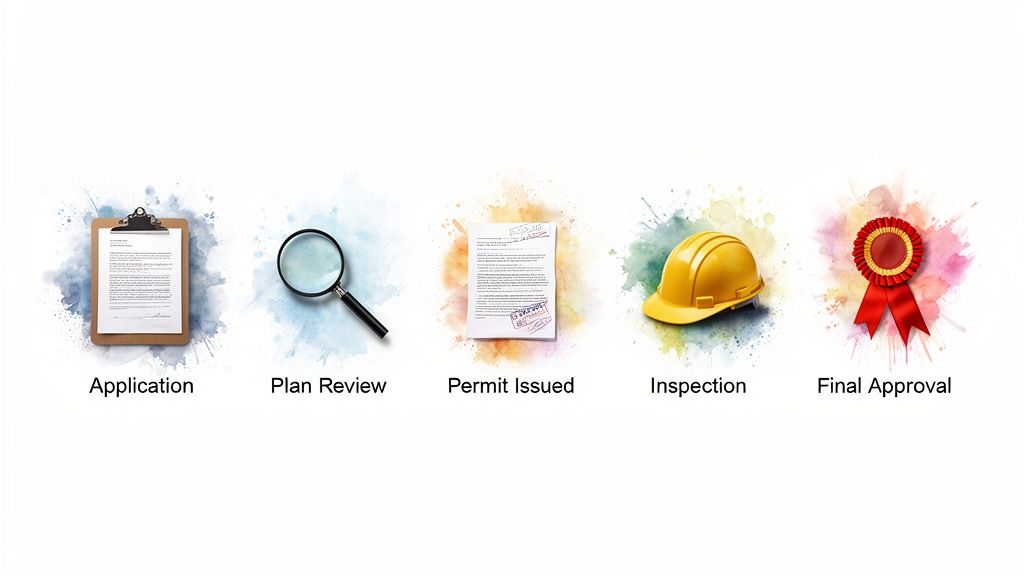
The Five Core Stages of a Building Permit
While every city hall has its own quirks, the permit journey almost always follows these five steps. Get these right, and you're well on your way.
Application Submission: This is your opening move. You’ll package up all your plans, blueprints, and engineering specs and hand them over with the official application. A complete, well-organized package here sets a professional tone from the start.
Plan Review: Now your plans are under the microscope. City officials and engineers will comb through every detail, checking your work against building codes, zoning laws, and environmental rules. This is where they catch mistakes on paper, so you don't make them with concrete.
Permit Issuance: You get the green light. Once the reviewers are satisfied that your plans tick all the boxes for building permits requirements, they issue the permit. This is your legal authorization to break ground.
Site Inspections: This is where the rubber meets the road. A building inspector will visit your site at key milestones—think foundation pours, framing, and final touches. They’re there to confirm the work you're doing in the field actually matches the plans they approved.
Final Approval and Closeout: After the final inspection passes, the permit is officially closed out. This is the final stamp of approval, confirming your project was built to code and is safe to use. It’s the finish line.
Navigating Common Roadblocks and Delays
Even the best-laid plans can hit a snag at the permit office. The most common holdups are usually preventable. Incomplete drawings or plans that clearly clash with local codes are the fastest way to get your application kicked back.
The permitting timeline can vary dramatically depending on your location's specific rules. California's building permit landscape is a prime example of rigorous requirements, where delays can average 6-12 months due to intense reviews for seismic standards, coastal protections, and stormwater controls. Discover more about how these regional factors create permit backlogs.
This is exactly why good communication is your secret weapon. Building a decent relationship with the people at the permit office can save you a world of hurt. When they ask for changes, get on it. If you’re not sure about something, ask. A quick question is always better than a costly mistake.
Tips for Better Communication with the Permit Office
A little effort up front can prevent massive delays down the road.
- Attend Pre-Application Meetings: If the city offers them, go. It’s your chance to get direct feedback from reviewers and spot potential problems before you’ve invested too much time and money.
- Designate a Single Point of Contact: Don't have three different people from your crew calling the office. Pick one person to handle all communication to avoid confusion and keep things clear.
- Be Organized and Respectful: When you call or email, have your permit number and project address ready. These folks are busy, and a little professionalism goes a long way.
By understanding this roadmap and planning for the bumps, you can handle building permits requirements like a pro. A structured approach keeps your projects on time, on budget, and on the right side of the law.
Your Essential Permit Application Checklist
Getting a permit approved isn't about luck; it’s about good old-fashioned preparation. I’ve seen countless projects get delayed because the application package was sloppy or incomplete. Think of it like a pre-pour checklist: you don't start the concrete flowing until every piece of rebar and form is perfectly in place.
Gathering your documents is more than just checking boxes for a city clerk. It’s about building a case for your project. A well-prepared application shows the plan reviewer you’re a professional who has thought through every detail, from the structural loads to the environmental impact. It makes their job easier, and that can only help you.
A complete application package is your first, best chance to get that stamp of approval without frustrating revisions. Here’s a rundown of what you'll need to have ready.
| Document | Purpose | Pro Tip |
|---|---|---|
| Completed Application Form | The official entry form for your project. It includes owner details, project scope, and estimated cost. | Fill it out completely and double-check every entry. A simple typo in the address can get your application bounced right back to you. |
| Construction Drawings / Blueprints | The visual "story" of your project, including floor plans, elevations, and structural details. | These almost always need to be stamped by a licensed architect or engineer. Don’t submit preliminary sketches. |
| Site Plan / Survey | A bird's-eye view map of the property showing property lines, existing structures, and the proposed work's location. | This proves you’re not encroaching on setbacks or easements. It's one of the first things a reviewer looks for. |
| Stormwater Pollution Prevention Plan (SWPPP) | A detailed plan outlining how you'll manage runoff and prevent pollution, especially for sites over one acre. | This is where you specify your washout containment method. Be explicit. |
| Erosion & Sediment Control Plan | Details the specific measures (silt fences, inlet protection, etc.) you'll use to keep soil and debris on-site. | This works in tandem with the SWPPP to show you have a comprehensive site management strategy. |
| Structural Calculations | The engineering math that proves load-bearing elements (foundations, retaining walls) are safe and sound. | This is non-negotiable for any structural concrete work and must come from a licensed engineer. |
Getting these documents in order ahead of time transforms the application process from a headache into a straightforward part of the job.
Why Your Concrete Work Demands Extra Paperwork
When your job involves significant site disturbance—and a big concrete pour definitely qualifies—the paperwork gets a little heavier. That’s because the potential to impact the surrounding environment goes way up. Your application needs to prove you have a solid plan to manage that risk.
You’ll often see a condition on your permit that says something like, “Implement Best Management Practices (BMPs).” That’s not a friendly suggestion. It’s a direct order to use proven methods for controlling pollution, and for us, that explicitly includes proper concrete washout containment.
To get ahead of this, your application for a concrete-intensive job will likely need:
- A Stormwater Pollution Prevention Plan (SWPPP): For most sites, this is a must-have. It’s your playbook for controlling erosion and preventing slurry, sediment, and other gunk from hitting the storm drains. Your washout system is a key player here.
- An Erosion and Sediment Control Plan: This shows the physical barriers you’ll use, like silt fences and protected inlets, to keep your mess contained.
- Structural Calculations: For any concrete holding up a structure, an engineer has to provide the math that proves the design is safe.
Building departments are getting much tougher on this. In 2024, a total of 981,911 single-family permits were issued nationwide, a 6.7% jump from the previous year. A growing number of those permits come with strict, non-negotiable conditions for site management. You can dig into more of these national building permit trends on NAHB.org.
When you include a clear, detailed plan for your SWPPP and washout procedures from the start, you're not just satisfying a requirement. You’re telling the city you’re a pro who understands modern building permits requirements and is ready to get the job done right.
Knowing When Concrete Work Requires a Permit
"Does this job need a permit?" It's the question every concrete pro asks, and getting it wrong can bring a world of hurt down on a project. Stop-work orders, fines, and angry clients are just the start.
While the nitty-gritty rules change from one county to the next, the core principles are pretty consistent. I've found a simple rule of thumb works wonders: if the concrete is holding something up or holding something back, you're heading to the permit office.
This simple gut check covers the vast majority of jobs that will have your local building inspector paying a visit.
Definite Permit Triggers for Concrete Work
Let's be clear: any time you're dealing with structural integrity, a permit isn't optional. It's guaranteed. The city wants to know for sure that critical supports are designed and poured correctly to avoid a disaster down the road.
If your scope of work includes any of the following, start the permit process now.
- Foundations and Footings: Every new foundation for a house, garage, or commercial building requires a permit, full stop. This is the bedrock of the structure, and you'll need engineered plans to back it up.
- Structural Slabs: This isn't your average patio. We're talking about slabs-on-grade that are an integral part of the building's support system, like those used in a post-tensioned foundation.
- Retaining Walls: Here’s where height matters. Most jurisdictions draw the line for retaining walls somewhere between 3 to 4 feet. That height is measured from the bottom of the footing all the way to the top of the wall.
- Basements or Cellars: Pouring walls and a slab for a new basement is massive structural work. It will always demand a permit and a detailed set of plans.
This decision tree gives you a quick visual to help map out if you're in permit territory.
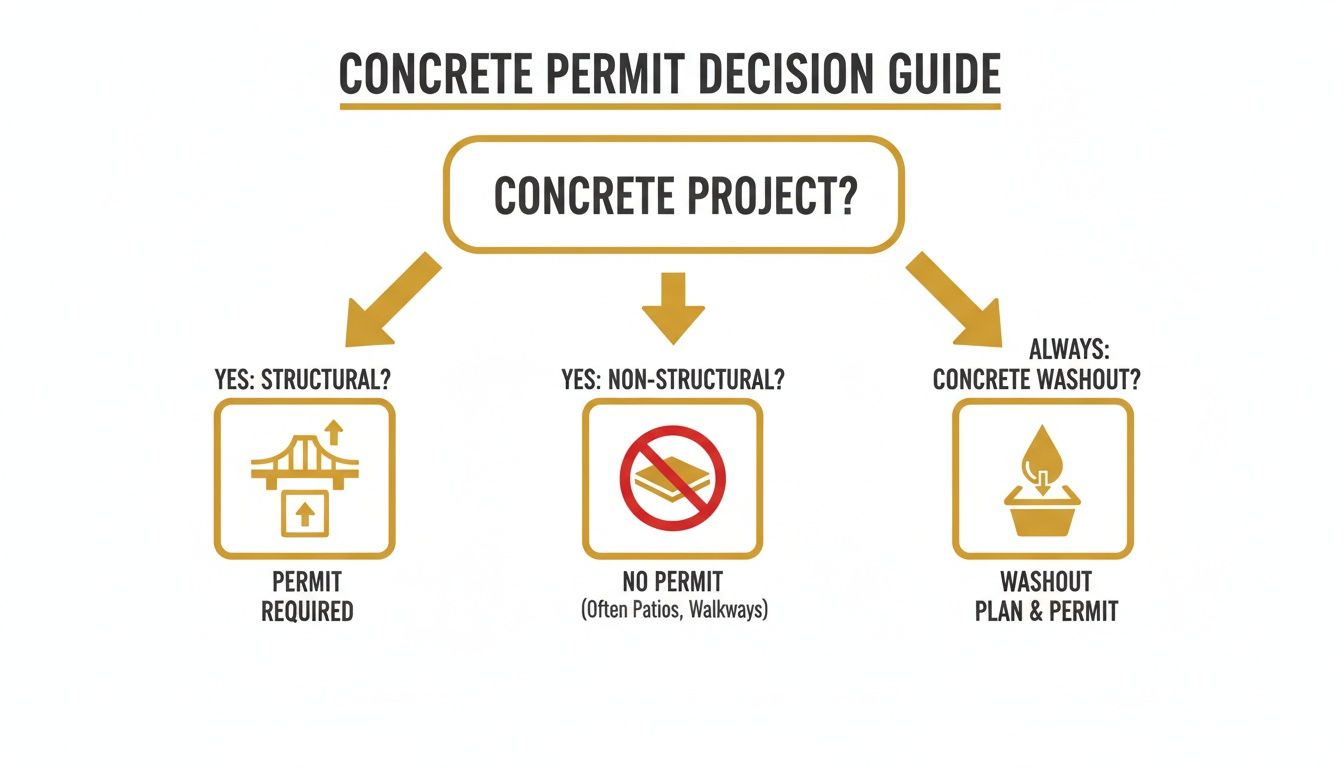
The flowchart makes one thing crystal clear: while some small jobs might skip a structural permit, no job gets a free pass on environmental rules.
Common Exemptions and the Big Exception
Of course, not every piece of flatwork is a major project. Building departments know this and usually allow for small, non-structural jobs without needing a ream of paperwork. These exemptions are almost always defined by size.
Here’s what you can often do without a permit:
- Small Patios or Walkways: Slabs that aren't tied to the foundation and stay under a certain footprint (often 200 square feet) are usually good to go.
- Minor Repairs: Simply patching a few cracks or resurfacing an old, worn-out slab typically doesn't require a permit.
But hold on. This is where a lot of contractors get into trouble, because there’s a critical distinction to make.
A project might be exempt from a building permit, but it is almost never exempt from environmental law. The Clean Water Act doesn't care if your slab is 100 square feet or 1,000. If your concrete washout slurry hits a storm drain, you are on the hook for some serious fines.
This means that even on a "no-permit" job, you still have a non-negotiable legal duty to manage your site's waste.
Proper concrete washout containment is a must for every single pour, no matter how small. Skipping a compliant solution like the washout pans from Reborn Rentals isn't just cutting a corner—it's a direct violation that can cost you far more than a building permit ever would.
Pro Tips for Keeping Your Site Compliant—and the Inspector Happy

Getting that permit stamped and in your hand feels like crossing the finish line, but it’s really just the start of the race. The real work of compliance happens every single day on the job site, where your plans meet the messy reality of construction. It’s how you manage your site that separates the pros from the guys who get hit with stop-work orders.
Think of your approved permit as the game plan you and the city agreed on. The inspector isn’t a referee looking to throw a flag on every play. They’re just there to see if you’re running the plays you said you would. Your job is to make it dead simple for them to give you a thumbs-up.
One of the smartest moves you can make is to ask for a pre-application meeting with the permitting office. This is your shot to get ahead of problems, ask questions about anything that seems fuzzy, and start building a good rapport with the folks who will be reviewing your work. It's a small step that pays off big time.
Keep Your Paperwork Clean and Ready
When an inspector rolls up, the last thing you want is a mad dash to your truck to dig out a coffee-stained permit from under a pile of receipts. It just screams disorganization and instantly puts them on edge.
Instead, keep a dedicated permit binder or a clearly marked digital folder on a tablet. Make sure it's always on-site and easy to grab.
- Laminated Permit Card: Post the official card somewhere visible and protected from the weather.
- Approved Plans: Have a clean, full-size set of the stamped plans ready to go in the site trailer or your work truck. No excuses.
- Inspection Records: Keep a simple log of every inspection—the date, the inspector's name, and what happened (pass, fail, or notes for next time).
This isn't just about looking good. It’s about having a single source of truth if a question comes up. It’s a simple habit that shows you’re a professional who takes the rules seriously.
Connect Your Daily Work to the Permit
Real compliance means your crew understands how every task connects back to the building permits requirements. This is especially true for those environmental rules that are so easy to forget in the heat of the moment. You'll often see a condition that requires using “Best Management Practices” (BMPs) for pollution control.
That’s not just boilerplate text. It's a direct command to control your site's mess. For concrete guys, it’s crystal clear: you must have a designated, leak-proof system for concrete washout. If you don't, you're not just ignoring a suggestion—you're violating your permit and federal laws like the Clean Water Act.
This is where your planning pays off. Using the right gear isn't just about tidiness; it’s about checking multiple boxes on your permit at once. A purpose-built system, like the washout pans from Reborn Rentals, shows any inspector that you’re serious about managing concrete slurry.
Making that choice proves you aren't just doing the bare minimum. It shows you're actively preventing pollution. Plus, it helps you avoid those surprise fines that can cost you thousands. In the end, that commitment to doing things right is what inspectors notice and clients remember, making every job smoother and more profitable.
A Contractor's Guide to Building Permit FAQs
When it comes to construction, you’re bound to have questions about building permits. Getting bogged down by confusion and delays costs you real time and money, so getting fast, straight answers is everything. We’ve put together this quick-reference guide to tackle the most common questions we hear from contractors in the field.
Think of this as your cheat sheet. Use it to solve problems on the fly and clear up any doubts before they snowball into a headache on the job site.
Can I Start Work While My Permit Is Being Reviewed?
Absolutely not. We can't say this enough. Starting work before that permit is officially in your hands is the fastest way to get hit with a stop-work order and some serious fines.
Your approved permit is your legal green light. Without it, any work you do is considered illegal. In a worst-case scenario, an inspector can force you to tear it all down. The review process is there for a reason—it’s the city’s final check to make sure your plans are solid and meet all safety, zoning, and environmental codes before the first shovel hits the ground.
How Long Does It Take to Get a Building Permit?
That’s the million-dollar question, and honestly, the answer is all over the map. For a straightforward job, like a simple deck or a small interior remodel, you might get your permit in a couple of days or weeks. But for new construction or a major renovation, you could be looking at several months.
A few things can really slow you down:
- The City's Workload: Some permit offices are just slammed. If there's a backlog, you're in for a longer wait, no matter how perfect your application is.
- Project Complexity: The more moving parts your project has, the more eyes need to review it. Complex plans get routed to multiple departments—structural, electrical, environmental—and that takes time.
- Application Quality: This one's on you. A sloppy, incomplete, or inaccurate application will get kicked right back, adding weeks or even months to your timeline while you fix it.
What Happens If My Permit Expires?
Building permits aren’t good forever. They all come with an expiration date, mainly to keep projects from sitting unfinished for years. Usually, a permit will expire if work doesn't start within a certain window (often 180 days) or if there's a long pause in construction after you've already started.
If your permit expires, you can't just pick up your tools and get back to it. You’ll have to apply for a renewal or an extension. That almost always means paying more fees, and you might even have to update your plans to meet new building codes that have been passed since your original permit was approved.
Should the Homeowner or the Contractor Pull the Permit?
Whoever pulls the permit is the one legally on the hook for making sure the work follows the approved plans and meets all codes. As a professional contractor, it is always in your best interest to pull the permit yourself. This puts you in the driver's seat, giving you direct control over scheduling inspections and talking with the building department.
When homeowners pull their own permits, it can get messy fast. You're the one doing the work, but they're the one who's technically responsible. That's a recipe for liability confusion and frustrating communication breakdowns with inspectors. Always pull the permit under your own license. It protects you and your business.
For every concrete job, even those exempt from a building permit, managing washout is a legal must. Ensure your site is always compliant with reliable containment solutions from Reborn Rentals. Explore our durable washout pans and simplify your site management today.
Created with the Outrank tool