On any job site, dealing with leftover concrete is a given. The real challenge isn't the hardened stuff—it's the soupy, chemical-laced water left over after a rinse. That's concrete washout, and it's a bigger deal than most people think.
What Is Concrete Washout and Why Does It Matter
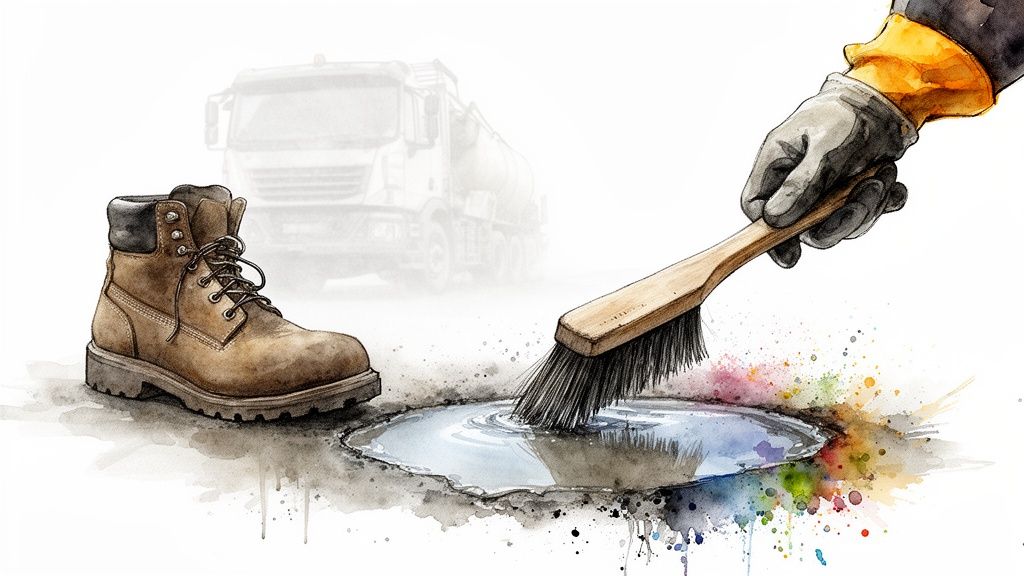
Don't think of it as just dirty water. Every time you rinse a concrete truck chute, a pump hose, or even a hand trowel, you're creating a small, uncontrolled chemical event. The runoff is a toxic slurry loaded with cement fines, aggressive chemical admixtures, and heavy metals.
This wastewater is incredibly alkaline, often hitting a pH of 12 or higher. To put that in perspective, that’s on par with liquid drain cleaner. When that stuff hits the ground or gets into a storm drain, it triggers a serious environmental hazard with consequences that can last for years.
The Environmental Damage from Unmanaged Washout
The main danger here is what this slurry does to soil and water. Natural ecosystems depend on a delicate pH balance to survive, and concrete washout completely upends it.
The word "washout" sounds harmless, doesn't it? It suggests a simple cleanup. The reality is you're creating a hazardous material that demands strict containment to protect the environment and avoid some very real legal trouble.
This chemical shockwave causes several problems:
- Water Contamination: A single uncontrolled washout can poison a small stream or pond, making it lethal for aquatic life. Fish, frogs, and insects can suffer chemical burns and gill damage, wiping out local wildlife.
- Soil Sterilization: When the slurry soaks into the soil, its high alkalinity kills off the beneficial microbes plants need to grow. It essentially turns fertile ground sterile, making it impossible for native vegetation to return.
- Clogged Stormwater Systems: The solids in washout—sand and cement particles—don't just disappear. They settle in pipes and culverts, hardening like… well, concrete. Over time, this buildup chokes off stormwater flow and can lead to serious flooding on and around your site.
Why It Matters for Your Project
Beyond just doing the right thing for the environment, proper washout management is all about compliance and risk. The Environmental Protection Agency (EPA) has strict rules for this, usually spelled out in your site's Stormwater Pollution Prevention Plan (SWPPP).
Ignoring these rules is asking for trouble. It can lead to stop-work orders, massive fines, and a black mark on your company's reputation. For any project manager, understanding these risks is step one. A reliable, compliant washout system isn't just a "nice-to-have"—it's a non-negotiable part of any professional job site that protects your budget, your timeline, and the environment.
The High Cost of Improper Washout Management
Let's be blunt: mishandling concrete washout is one of the fastest ways to derail a project. This isn't just about keeping your site looking clean. It’s about avoiding the kind of financial and environmental headaches that can shut you down completely.
Think of that gray, watery slurry as a chemical spill waiting to happen. With a pH often hitting 12, it’s as corrosive as drain cleaner. One unexpected overflow, especially during a rainstorm, can unleash a compliance nightmare that puts your entire operation at risk.
The Environmental Toll of a Single Mistake
The biggest danger from concrete washout is its intense alkalinity. Our local soil and water ecosystems depend on a neutral pH to survive. When that caustic slurry escapes your job site, the damage is immediate and severe.
- Wiping Out Aquatic Life: If that runoff hits a stream, pond, or storm drain, it instantly jacks up the water's pH to lethal levels. It burns fish and amphibians, damages their gills, and can kill off an entire local aquatic population in minutes.
- Sterilizing the Soil: When this stuff soaks into the ground, it destroys the vital microbial life that makes soil fertile. The ground effectively becomes sterile, unable to grow anything and leading to long-term erosion issues.
This isn't a small mess. It's a serious environmental event, and it's regulated by strict federal and local laws designed to stop exactly this kind of pollution.
Understanding the Financial Penalties
The financial stakes here are massive. The EPA, along with state and city authorities, enforce the rules through your site's Stormwater Pollution Prevention Plan (SWPPP). They don’t mess around when it comes to violations of the Clean Water Act.
Fines for improper washout can be crippling. Penalties often shoot past $10,000 per day, per violation. Think about that. A single, leaky dirt pit that overflows for a week could theoretically rack up over $70,000 in fines—and that’s before they hit you with a stop-work order.
A proactive containment strategy isn't an expense—it's a critical investment. The cost of a professional washout container is a tiny fraction of the fines, legal fees, and reputational damage that result from a single compliance failure.
The industry is catching on fast. The global market for professional concrete washout systems, valued at $245.03 million in 2024, is expected to jump to $336.57 million by 2032. As the US construction industry contributes over $1.8 trillion to the GDP, smart and compliant washout management is no longer optional; it's a core part of doing business. You can dive deeper into these trends in recent industry analysis reports.
The Hidden Costs of Non-Compliance
On top of the fines, the fallout from a washout violation can hit your bottom line in other painful ways. These are the hidden costs that can quickly sink a project's profitability.
Think about these other risks:
- Stop-Work Orders: Inspectors have the power to shut your entire site down until the problem is fixed. That means costly delays, blown schedules, and angry clients.
- Reputational Damage: Word gets around. A violation can tarnish your company’s name, making it tougher to win the next bid or hire good people.
- Cleanup Expenses: If you contaminate soil or water, you’re on the hook for cleaning it up. That's a complicated and expensive process you have to pay for.
The "wait and see" approach to concrete washout is a gamble you simply can't afford to take. A proper containment system isn't just best practice—it's fundamental to protecting your project, your budget, and your reputation.
Choosing Your Concrete Washout Containment System
When it comes to concrete washout, not all containment systems are the same. Picking the right one is your first and best defense against environmental fines and a messy, non-compliant job site. This decision is much more than just digging a hole in the ground—in fact, those old-school methods are often what get contractors in hot water.
Think about it this way: you wouldn't try to hold water in a cardboard box. So why would you trust a simple, unlined dirt pit to contain caustic concrete slurry? Those makeshift pits offer zero structural integrity and absolutely no guarantee against leaks, especially when a sudden rainstorm hits.
Outdated Methods Versus Modern Solutions
The most common point of failure on any job site is relying on a hastily dug, unlined pit. This approach is a recipe for disaster. The highly alkaline slurry will inevitably leach into the soil, sterilizing it and seeping down into the groundwater. Worse, a rainstorm can cause it to overflow in minutes, sending a toxic mess straight into storm drains and local waterways.
Modern, compliant solutions are built from the ground up to stop these problems before they start. Professional concrete washout containers are made from heavy-gauge, leak-proof steel. They are designed as a completely self-contained system, making sure every last drop of hazardous slurry is captured safely.
A well-chosen containment system isn't just a container; it's an insurance policy. It guarantees that you are capturing hazardous materials according to EPA guidelines, protecting your site from unexpected spills and your budget from massive non-compliance fines.
Choosing a professional system from Reborn Rentals over a dirt pit is the difference between proactive compliance and reactive crisis management. It keeps your site clean, organized, and ready for an inspection at a moment's notice.
Calculating Your Required Washout Capacity
One of the most important things you'll do is figure out how much washout your project will actually generate. An undersized container is just as bad as a dirt pit because it can overflow just as easily. To get it right, you need to calculate your site's potential washout output.
Start by adding up the contributions from these key sources:
- Number of Concrete Trucks: Every truck needs a chute washout after each pour.
- Concrete Pumps: A pump and its long hose system create a huge amount of washout water during cleanup.
- Ready-Mix Truck Hoppers: The hopper itself needs a good rinse.
- Tools and Equipment: Don’t forget the small stuff! Wheelbarrows, shovels, and finishing tools all add to the total volume.
As a general rule of thumb, you can expect about 1 cubic yard of solid concrete waste for every 100 cubic yards of concrete poured. But the water is the real issue. A single truck chute washout can produce 50 gallons of slurry, and a full pump cleanup can generate hundreds of gallons more.
Matching Container Size to Your Project Scale
Once you have a solid estimate of your washout volume, you can pick the right size container. This isn't a one-size-fits-all decision; it has to match the pace and scale of your concrete work.
To help you match your project's needs with the right container, here’s a quick guide to our most common rental options. This will help you estimate the best fit to ensure you have the capacity you need.
Washout Container Sizing Guide
| Container Model | Dimensions (L'xW'xH') | Liquid Capacity | Load Capacity | Ideal Project Type |
|---|---|---|---|---|
| Ramp Pan 441 | 6'x6'x2' | 441 Gallons | 9,900 lbs | Medium-sized commercial jobs, multi-family housing, or projects with regular concrete pump use. |
| Ramp Pan 310 | 6'x6'x1.2' | 310 Gallons | 9,900 lbs | Small residential pours, renovations, or jobs with tight spaces. Great for 1-2 truck washouts. |
| Roll-Off Bin | Varies (e.g., 20'x8'x4') | 2,000+ Gallons | Varies | Large commercial developments, infrastructure, and high-volume sites with multiple trucks and pumps running daily. |
For a small residential foundation pour with just a couple of trucks, a 310-gallon ramp pan should do the trick. But for a commercial project with a concrete pump running all day, you’ll want to step up to the larger 441-gallon pan or even a roll-off bin to safely handle everything.
It’s always better to be safe than sorry. Choosing a container with a little more capacity than you think you need gives you a buffer for unexpected delays or heavy rain. It’s the easiest way to keep your concrete washout management 100% compliant.
Best Practices for Washout Area Deployment
Getting the right container to your site is just the start. Where you put it and how you manage it is what separates a smooth, compliant operation from a costly headache. A properly deployed washout area isn’t just a box—it’s a critical part of your site’s safety and efficiency.
Think of it this way: you wouldn’t put a first-aid station in some forgotten, hard-to-reach corner. Your washout container needs that same smart thinking. It has to be easy for trucks and pumps to get to, but safely away from anything it could harm.
Choosing the Right Location
The first and most important rule is strategic placement. You’re looking for that sweet spot that’s convenient for your crew without creating a new problem for inspectors or the environment. Before you drop that container, take a walk around your site.
A poorly placed washout is a spill waiting to happen. Get the location right, and you’ve already won half the battle against contamination and fines.
Your Location Checklist:
- Easy Access: Make sure concrete trucks, pumps, and other heavy equipment can get to it safely and easily. Steer clear of tight corners or areas with a lot of foot traffic.
- Safe Distance from Water: Keep the container at least 50 feet away from any storm drains, ditches, or bodies of water. This buffer zone is non-negotiable for preventing runoff.
- Level Ground: Always set the washout container on a flat, stable surface. A tilted container is an accident waiting to happen.
- Visible and Clearly Marked: The area needs clear signage marking it as the designated concrete washout zone. This tells everyone exactly where to go and stops people from dumping where they shouldn’t.
This simple flowchart can help your team decide which system is the best fit for your job’s specific needs.
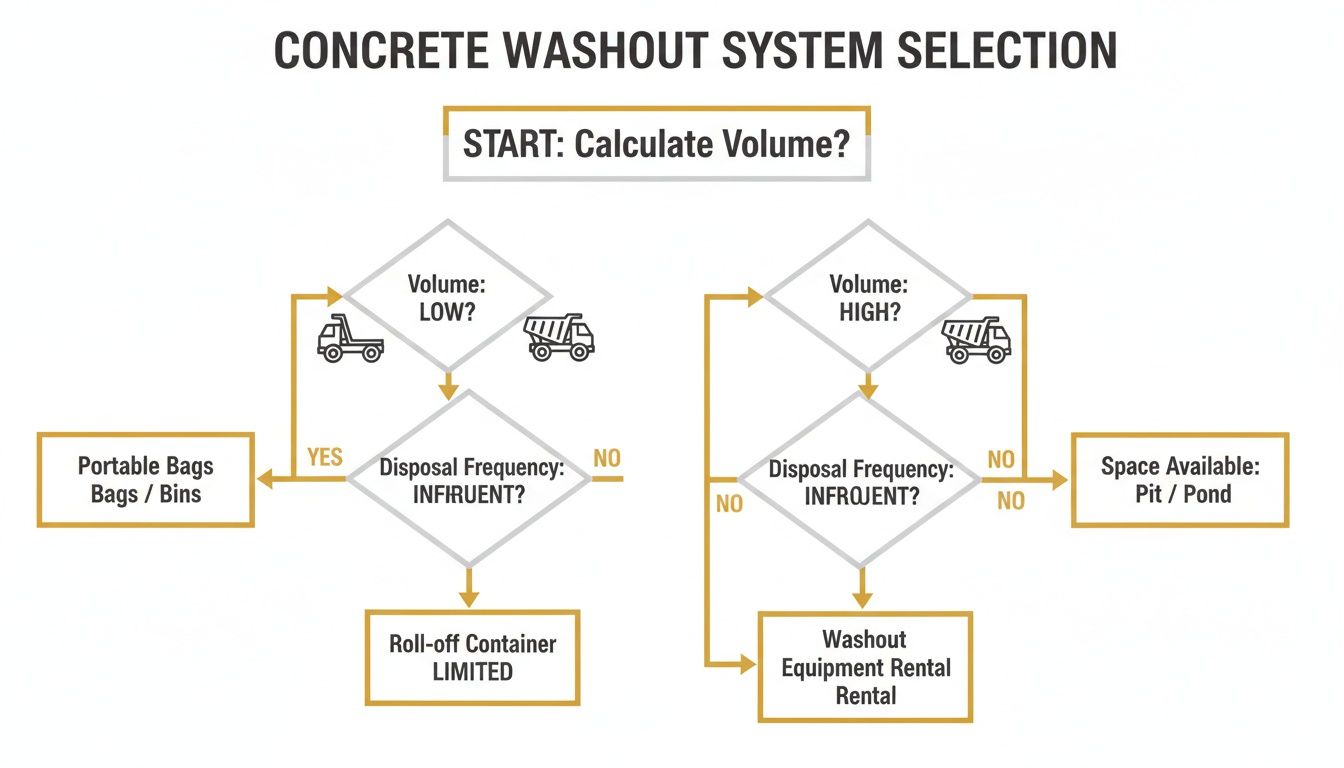
It all comes down to volume. Matching your site’s output with the right container capacity keeps things running smoothly.
Operating and Maintaining the Washout Area
Once your container is in place, you need clear ground rules for the crew. Everyone handling concrete needs to know how to use the washout area correctly. A little training up front prevents big messes later.
A designated concrete washout area is not a “set it and forget it” piece of equipment. It needs to be checked on regularly to stay effective and compliant. Consistent oversight is what keeps a job site looking professional.
To keep things in top shape, put a simple inspection and maintenance routine in place. A quick daily check can stop a small issue from turning into a major violation.
Daily Maintenance Checklist:
- Monitor Fill Levels: Eyeball the container’s capacity every day. Once it hits 75% full, it’s time to call us for a service or pickup. Don’t push it.
- Inspect for Damage: Give the container a quick walk-around. Look for any new leaks, cracks, or other signs of damage.
- Keep the Area Clean: A clean site is a safe site. Sweep up any spatter or debris around the container to prevent it from being tracked all over your job.
Follow these simple steps for deployment and maintenance, and your concrete washout process will be efficient, safe, and fully compliant from day one.
From Waste to Resource: The Washout Recycling Lifecycle
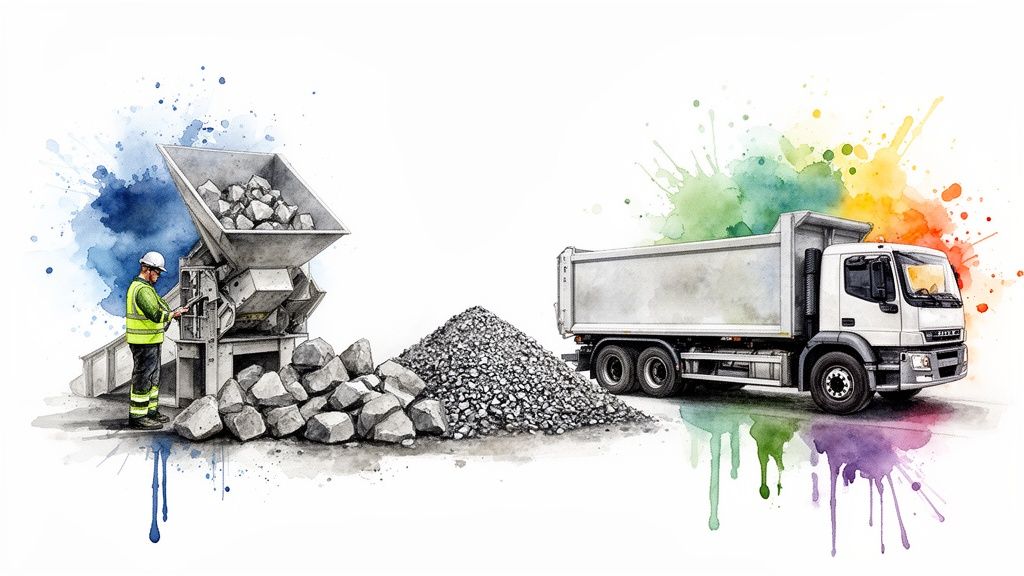
Ever wonder what happens to all that gray, hardened material in your washout pan after we haul it away? It’s easy to think of it as just another pile of waste, but that couldn’t be further from the truth. The journey that concrete takes is one of the best examples of smart recycling in our industry.
Proper washout doesn’t just end when the container leaves your site. In fact, that’s where the real work begins. We transport the liquid slurry to a special processing facility, where it’s allowed to fully harden into a solid block. This is a critical step—it safely locks away all the harmful alkaline stuff, getting the material ready for a second life.
The Transformation Process
Once they’re at the recycling facility, those solid concrete blocks don’t sit around for long. They’re fed into massive industrial crushers, which are basically giant, super-powered blenders built for rock.
These machines use incredible force to smash the hardened concrete into smaller, usable pieces. The crushed material is then run through a series of screens to sort it by size, creating what we call recycled aggregate.
This isn’t just about getting rid of waste; it’s about creating a resource. By crushing old concrete, we’re making a direct replacement for new materials that would have to be mined, quarried, and hauled, which burns a ton of energy and scars the landscape.
The finished aggregate is a top-quality, durable material that’s ready to head right back out to another job site.
Closing the Loop with Recycled Aggregate
This freshly made aggregate is way too valuable to be dumped in a landfill. Instead, it goes straight back into the construction supply chain, creating a closed-loop system where waste from one project becomes the foundation for the next.
Common uses for recycled concrete aggregate include:
- Road Base: It’s an amazing sub-base material for roads, highways, and parking lots. It gives asphalt or new concrete a rock-solid foundation to sit on.
- Backfill Material: It works perfectly as structural fill for trenches, behind retaining walls, and in other spots where you need stable fill.
- New Concrete Mixes: Sometimes, the aggregate can even be mixed into new batches of concrete, cutting down on the need for freshly mined sand and gravel.
This whole cycle is a huge win. We keep thousands of tons of material out of landfills while saving our planet’s finite natural resources.
The Real-World Impact of Recycling Concrete
The environmental payoff here is massive—and we have the numbers to prove it. A case study from south Florida’s construction boom gives us a perfect snapshot. Between 2017 and 2021, one company’s recycling program across eight counties diverted 63,823 tons of concrete washout.
Out of that, 22,063 tons were crushed into new aggregate. The result? A greenhouse gas savings of 5,649 metric tons of CO2 equivalent. You can dig into the full story in Diligent’s environmental report.
When you partner with a service like Reborn Rentals, you’re doing more than just checking a compliance box. You’re plugging into a system that cuts landfill waste, protects natural resources, and lowers the carbon footprint of the entire industry. You’re turning a simple cleanup task into a powerful statement about your commitment to building a better future.
Taming the Washout Chaos on Your Job Site
Let’s be honest, managing concrete washout shouldn’t be a logistical nightmare that slows your crew to a crawl. On today’s fast-moving job sites, compliance needs to be efficient, not a burden. Your washout process—from the first call to the final pickup—ought to be as simple and reliable as the power tools your team trusts every day.
Imagine this: instead of burning up an hour on the phone chasing down a container and a price, you get it all sorted online in just a few minutes. A straightforward rental process eliminates all that friction and puts you back in control of your schedule and your budget. This is how modern job sites should run.
Ditch the Old Way of Renting
The old way of handling concrete washout was a recipe for headaches, full of hidden costs and fuzzy timelines. You’d get a vague quote over the phone, only to get hit with surprise delivery fees, environmental charges, and pickup costs when the final bill arrived. It makes trying to cost a job accurately feel like a guessing game.
Modern rental services, like what we do here at Reborn Rentals, put everything on the table. With clear, upfront daily pricing, you know exactly what you’re paying from day one. This lets you budget with confidence and dodge that end-of-project sticker shock that eats into your profit.
We designed our process for busy contractors who don’t have time to waste:
- Book It Online: Pick your container, lock in your delivery date, and confirm the location with a simple three-step checkout. No phone tag necessary.
- Stay Flexible: Your project timeline is going to change. Easily manage your delivery, service swaps, and final pickup dates online to keep up.
- No Surprises: All potential costs, like delivery or placement on tricky terrain, are spelled out clearly from the start.
This approach means you can line up a compliant washout solution from your truck or office in less time than it takes to grab a coffee. Your crew stays focused on the build, not on chasing down equipment.
A truly easy process isn’t just about speed; it’s about reliability. It’s knowing the right gear will show up on time and that help is there when you need it. That’s what turns compliance from a chore into a seamless part of your operation.
Why Fast, Human Support Matters
Even with the best plan in the world, questions are going to pop up on site. Maybe a concrete pump operator needs to double-check the container’s capacity, or the super has a quick question about placement. In those moments, you can’t afford to wait on hold or send an email into a black hole.
That’s why having responsive, human support is so important. When your crew can get a quick answer over text, email, or a scheduled call, the project keeps moving forward. It stops small questions from snowballing into big delays or, worse, compliance issues. When you work with a rental partner who actually picks up the phone, concrete washout stops being a headache and becomes just another part of a well-run day.
Your Concrete Washout Questions, Answered
Even the best-laid plans can run into questions on the job site. When it comes to concrete washout, we’ve heard them all. Here are some quick, no-nonsense answers to the questions that pop up most often for project managers and site supervisors.
What Happens if We Don’t Use a Washout Container?
Skipping a proper washout container is one of the biggest gambles you can take on a construction site. Without a designated, leak-proof bin, that highly alkaline slurry from truck chutes and pumps soaks right into the ground. It contaminates the soil, kills off vegetation, and often finds its way into storm drains, putting you in direct violation of the Clean Water Act.
The fallout isn’t pretty. We’re talking potential stop-work orders and daily fines that can easily climb past $10,000 per violation. A professional concrete washout container isn’t just for keeping things tidy—it’s essential protection against massive financial and legal headaches.
How Much Washout Will My Project Actually Produce?
Figuring out your washout volume is key to getting the right size container and avoiding a nasty overflow. A good rule of thumb to start with is that for every 100 cubic yards of concrete you pour, you’ll end up with about 1 cubic yard of solid waste.
But the real wild card is the liquid. A single concrete truck can generate 50 gallons of wastewater just from rinsing its chute. A full pump washout? That can create hundreds of gallons. Before you order, always get a count of the trucks and pumps you expect on-site each day to get a realistic handle on the capacity you’ll need.
How Often Should the Washout Container Be Serviced?
This is a big one for staying compliant. The short answer: you should never let a concrete washout container get completely full.
The best practice is to schedule a service or a swap-out when your container hits about 75% full. If you wait longer, you’re risking an overflow, especially with an unexpected rainstorm. A quick visual check each day is all it takes to stay on top of it.
By keeping an eye on the fill level, you ensure your site stays clean, organized, and ready for any inspection.
Can’t We Just Dig a Pit and Line It?
While digging a plastic-lined pit might look like a cheap shortcut, it’s an old-school method that’s loaded with risk. Those liners are surprisingly fragile and get torn all the time by rocks, rebar, or equipment. One little rip and the whole setup is useless and non-compliant, letting that caustic slurry leak straight into the soil.
A professional steel container is a much safer bet. It’s a 100% leak-proof solution that’s built for tough job site conditions, giving you real peace of mind that you’re fully covered.
Is Proper Washout Management Actually Cost-Effective?
Absolutely. The cost to rent a professional washout system is pocket change compared to a non-compliance fine. But there are other hidden costs, too. Think about the downtime. For a ready-mix plant with 20 trucks, old-school pit washouts can chew up over 13 hours of labor every day.
One industry analysis showed this can add up to over $500,000 in annual losses for a big operation. In contrast, modern systems can save them over $130,000 a year just by reclaiming resources more efficiently. You can see the full financial breakdown in this detailed industry report on washout efficiency.
Ready to make your concrete washout process simple, compliant, and efficient? Reborn Rentals offers durable, leak-proof containers with transparent, upfront pricing. Book your container online in just a few clicks and keep your project on track.