Understanding Concrete Washout and Why It Matters
Concrete washout is simply the process of cleaning out the leftover slurry from trucks, pumps, and tools after a pour.
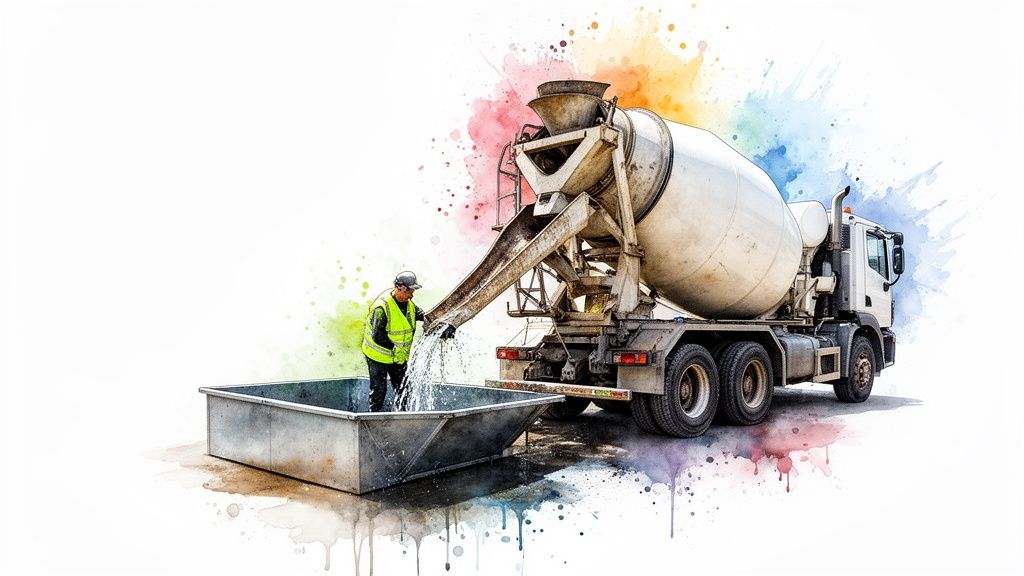
Think of it like wiping your muddy boots on a doormat before walking into a clean house—it’s all about containing the mess. On a job site, that "mess" is a high-pH, chemical-heavy slurry that you can't just dump on the ground or let run into a storm drain.
Proper washout management isn't just a "nice-to-have" anymore. It's a non-negotiable part of modern construction, driven by two things every contractor understands: protecting the environment and staying compliant.
Without a designated containment system, the gunk from a concrete chute or a pump hopper becomes a huge liability. This isn't just dirty water; it’s a caustic soup that can cause some serious headaches.
The Environmental and Regulatory Risks
The biggest problem with uncontained washout is what’s in the water. The runoff is extremely alkaline, with a pH level often hitting 11 to 13—about the same as drain cleaner or bleach.
When that liquid soaks into the ground, it can poison the soil, kill surrounding vegetation, and make its way into groundwater.
If the slurry finds its way into a storm drain, it's a direct pipeline to local rivers and streams. The high pH is toxic to fish and other aquatic life, creating a dead zone.
To get a clear picture of what’s at stake, here’s a quick summary of the main concerns every site manager should know.
At-a-Glance Concrete Washout Key Concerns
| Concern Area | Description of Risk | Potential Consequence |
|---|---|---|
| Soil & Groundwater | Highly alkaline slurry (pH 11-13) seeps into the earth, raising soil pH to toxic levels. | Kills plant life, creates barren zones on-site, and contaminates underground drinking water sources. |
| Surface Water | Runoff enters storm drains, flowing directly into rivers, lakes, and streams. | The caustic water is lethal to fish and other aquatic organisms, devastating the local ecosystem. |
| Regulatory Compliance | Uncontrolled discharge violates federal laws like the Clean Water Act and site-specific SWPPPs. | Leads to stop-work orders, massive daily fines, and potential legal action from agencies like the EPA. |
| Business Reputation | A history of violations makes it harder to win bids and secure contracts with responsible clients. | Loss of future projects, damage to brand image, and being labeled as a "dirty" contractor. |
As you can see, the risks aren't just about being eco-friendly; they directly impact your project's timeline and budget.
The bottom line is that you have to stop this highly alkaline slurry from leaving your job site. Federal and local rules, like the Clean Water Act and your site’s Stormwater Pollution Prevention Plan (SWPPP), hold you legally responsible for any discharge.
Ignoring these regulations can hit your business hard, and the consequences are far from minor.
- Steep Financial Fines: Environmental agencies can—and do—issue fines that climb into the tens of thousands of dollars per day until the problem is fixed.
- Costly Project Delays: An inspector can shut your site down with a stop-work order, throwing your entire schedule and budget into chaos.
- Reputation Damage: A violation goes on your record. It can tarnish your company's name and make it tough to land the next big job, especially with clients who care about environmental responsibility.
With stakes this high, professional washout solutions have become an essential piece of equipment. They aren't just a best practice; they are your first line of defense for managing risk on any site with concrete.
The Evolution from Leaky Pits to Modern Containment
It wasn't that long ago that "managing" concrete washout was a messy, unreliable guess. Before purpose-built containers became the go-to solution, job sites had to make do with whatever was cheap and easy—and almost guaranteed to fail.
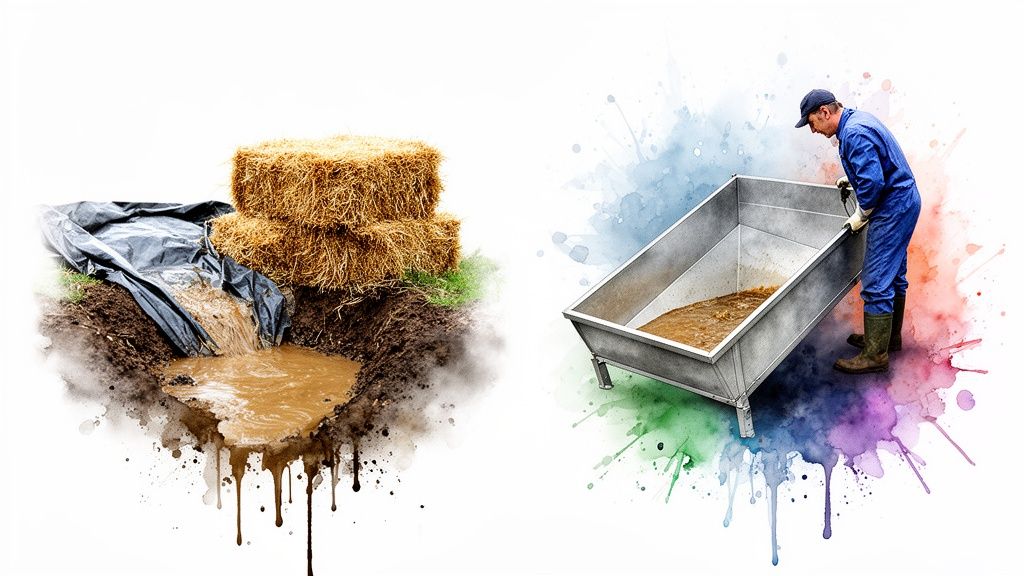
The classic method? Dig a shallow pit, throw in a thin sheet of plastic, and stack some hay or straw bales around it. This was supposed to hold back the heavy, caustic slurry. It was a daily gamble.
The sharp aggregate in the concrete waste would rip right through those flimsy liners, letting highly alkaline water bleed directly into the soil. A good rain would overflow the pit, and the hay bale "walls" would just collapse under the weight.
From Frustration to Innovation
These DIY pits weren't just an environmental liability; they were an operational nightmare. The constant leaks, spills, and contaminated soil were a huge headache for contractors just trying to get a job done without the right tool for it. This frustration on job sites across the country is what sparked the idea for modern containment.
The story of Mark Jenkins, founder of Concrete Washout Systems, is a perfect example. Back in the late 1990s, he got fed up with dealing with messy sites where bales tipped over and plastic tore. The failing pits didn't just pollute the ground; they made it impossible to properly recycle the concrete waste. That experience pushed him to develop the first patented roll-off container built specifically for concrete washout. You can read more about his journey on Modern Pumping Today.
The Shift to Professional Equipment
The jump from leaky, plastic-lined holes to engineered steel pans was a major turning point for the industry. It marked a change in mindset from reactive cleanups to proactive containment.
Understanding the failures of the past makes it crystal clear why today’s professional equipment is so essential. Durable steel washout pans aren't just an upgrade; they are the reliable answer to the historical problems of leaks, spills, and compliance violations.
Modern solutions deliver on several key promises that the old methods couldn't:
- Leak-Proof Design: Watertight, welded steel construction completely stops contaminated slurry from ever touching the ground.
- Structural Integrity: These pans are engineered to handle the massive weight and volume of concrete waste without buckling or overflowing.
- Operational Efficiency: They create a designated, stable area for washout, keeping the site organized and cutting down on cleanup labor.
- Compliance Certainty: Using a professional system is the surest way to meet SWPPP requirements and avoid fines.
This evolution wasn't just about building a better box. It was about solving real-world challenges—both operational and environmental—and ultimately making job sites safer, cleaner, and more compliant.
Understanding the Real Environmental Impact of Washout
It’s easy to dismiss concrete washout as just another mess on a busy job site. But that gray, watery slurry isn’t just dirt and water—it’s a chemical cocktail that poisons the ground it touches.
The biggest problem is its incredibly high pH. Fresh concrete washout water can have a pH level between 11 and 13, making it dangerously caustic.
For a little perspective, that’s about the same alkalinity as drain cleaner or household bleach. A single splash of this stuff can throw an entire ecosystem out of whack.
When that liquid isn't properly contained in a washout pan, it starts a chain reaction of damage that spreads far beyond the initial spill. It hits the soil, the water, and the local wildlife hard.
How Washout Poisons Soil and Water
The most immediate damage happens when the slurry soaks into the ground. The caustic liquid completely changes the soil's chemistry, making it impossible for plants to get the nutrients they need. This leaves behind sterile, barren patches where nothing can grow, long after your project is complete.
From the soil, those pollutants keep moving, seeping down toward groundwater aquifers. This is a huge risk, especially in areas where people rely on well water. If that slurry finds its way into a storm drain, the threat becomes even more direct and immediate.
- Suspended Solids: All the fine cement and sand particles make the water cloudy. This blocks the sunlight that underwater plants need to live. As the solids settle, they blanket the gravel beds fish use for spawning, choking off their reproductive cycle.
- Trace Heavy Metals: Concrete often contains traces of heavy metals like chromium, lead, and zinc. These toxins build up in fish and other aquatic life, working their way straight up the food chain.
- Extreme pH Shock: The sudden, massive spike in alkalinity is instantly fatal for fish, frogs, and insects. It literally burns their skin and gills, causing massive die-offs and creating dead zones in what used to be healthy streams.
The EPA has spelled out these dangers clearly, explaining how untreated washout poisons local water with high pH and solids like calcium oxides. This is exactly why regulations are so strict—and why leak-proof containment isn’t just a good idea, it’s a necessity. You can read the full details in the EPA's washout guide to see the science behind the rules.
How to Choose Your Concrete Washout Solution
Picking the right concrete washout system isn’t just about checking a box for the inspector—it’s about matching the right tool to your specific job. The decision you make here affects your site’s efficiency, cleanliness, and your ability to avoid some pretty hefty environmental fines.
It all comes down to one question: is your washout contained or not? There’s no in-between.
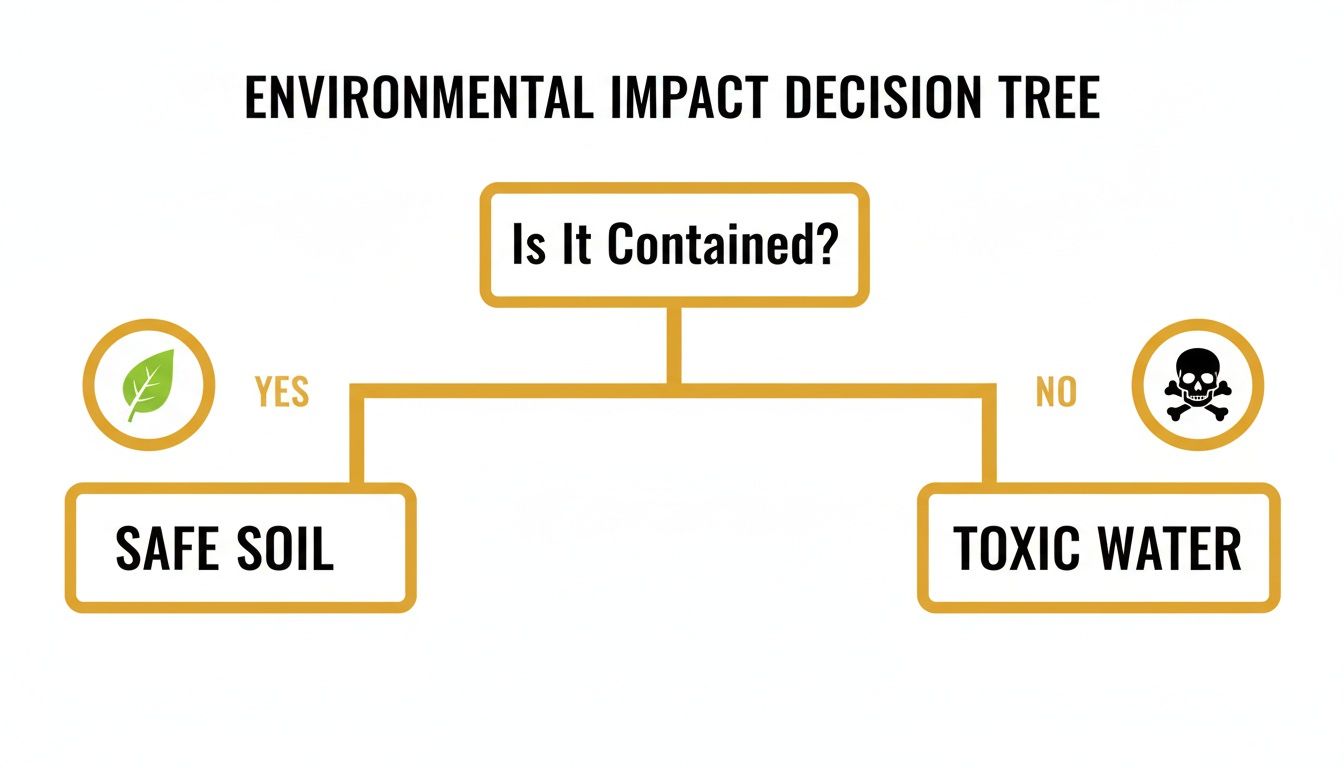
As you can see, you either capture the caustic slurry and protect the ground, or it escapes and creates toxic runoff. It really is that simple.
Comparing Common Containment Systems
To help you get a clear picture of what's out there, we've put together a quick comparison of the most common washout solutions. Each one has its place, and knowing the pros and cons will help you avoid renting something that’s either overkill or, even worse, not nearly enough.
Washout Containment Solution Comparison
| Solution Type | Best For | Pros | Cons |
|---|---|---|---|
| Portable Steel Pans | Most commercial and industrial construction projects; high-volume pours. | Extremely durable, 100% leak-proof, large capacity, and reusable. | Heavy and requires a forklift or crane to move; not ideal for tight spaces. |
| Inflatable/Vinyl Berms | Small jobs, interior work, or sites with very tight access. | Lightweight, portable, and easy to set up anywhere. | Prone to punctures, tears, and can have a limited capacity. |
| Self-Contained Trailers | Mobile operations like concrete cutting or large, spread-out projects. | Maximum mobility, as the containment moves with the work. | Higher rental cost and typically more complex to operate. |
This table should give you a good starting point. Steel pans are the industry standard for a reason—they’re tough and reliable. But for those unique jobs, it’s good to know you have other options.
Matching the Solution to Your Project
Okay, let’s talk job site reality. A huge industrial slab pour with a dozen mixer trucks needs a completely different setup than a small crew pouring a residential patio.
Choosing the right system is a matter of balancing capacity with site constraints. The goal is to always have more containment than you think you’ll need, especially with rain in the forecast.
For the vast majority of construction jobs, a heavy-duty steel pan is your best bet. It offers the perfect mix of reliability and volume. A standard 72″ x 72″ x 24″ pan, for example, holds over 400 gallons of slurry. That’s more than enough to handle washout from several trucks without ever worrying about an overflow.
On the other hand, if you’re working inside a finished building or on a tight urban lot, that small inflatable berm might be the hero of the day. You can’t exactly bring a heavy steel box in there. By thinking through your job’s demands first, you’ll get a solution that works for your crew and keeps your site running smoothly.
The Financial Case for Proper Washout Management
Let’s be honest, most contractors see washout containment as a chore—another line item on a budget that’s already stretched thin. But here’s the thing: ignoring proper concrete washout isn’t just an environmental headache. It’s a direct threat to your bottom line.
Failing to plan for washout can trigger a financial nightmare that makes the cost of a rental pan look like pocket change. We’re talking about serious, project-killing expenses.
- Massive EPA Fines: Getting caught can mean fines from the Clean Water Act that climb into the tens of thousands of dollars per day.
- Costly Project Shutdowns: A stop-work order from an inspector doesn’t just pause your project; it destroys your timeline and budget.
- Expensive Cleanup Bills: If slurry contaminates the soil or a waterway, you’re on the hook for the remediation costs, which can be astronomical.
These are the obvious risks. But the real financial story goes even deeper, shifting from just avoiding penalties to actively saving money.
Flipping the Script to Cost Savings
Proper washout management isn’t just about dodging fines; it’s about running a smarter, more efficient operation. That old-school, makeshift method of digging an unlined pit might seem cheap, but it’s quietly draining your resources. Think about the hidden costs: the labor hours to dig the pit, the price of plastic liners that always seem to tear, and the final bill for backfilling and hauling away contaminated dirt.
The biggest drain, though, is wasted time. Every minute a concrete truck sits idle waiting to wash out is a minute it’s not on the road delivering the next load.
The numbers are staggering. A typical ready-mix plant with 20 trucks performing 40 washouts daily can lose over 13 hours of productive truck time each day to slow, inefficient pit methods.
That’s not a typo. For a plant with 20 trucks washing out 40 times a day, a slow 20-minute process at a makeshift pit adds up to 13 hours of lost productivity. Every. Single. Day. By switching to a professional system, that same plant could see annual savings approaching $500,000 just by getting trucks back on the road faster. You can explore the full financial breakdown in this industry analysis.
Using a dedicated rental pan completely changes the math. It turns a messy, unpredictable chore into a fast, streamlined part of the job. You stop bleeding money on inefficiency, and you start building a reputation for being the professional, compliant crew that wins the best projects.
On-Site Washout Best Practices for a Compliant Job
Having the right washout container is a great start, but it’s only half the battle. A truly clean and compliant site depends on how you manage it every day. A poorly placed or neglected washout station can cause just as big of a mess as having no container at all.
Let’s walk through how to get it right.
It all begins with picking the right spot. Your designated washout area must be a safe distance from any storm drains, ditches, open water, or other sensitive areas. This isn’t just a good idea—it’s a non-negotiable part of your Stormwater Pollution Prevention Plan (SWPPP).
Once you’ve found your spot, make it obvious. Use bright, clear signage to mark the washout area so every driver and operator knows exactly where to go. A few well-placed signs can prevent a lot of headaches and accidental dumping.
Don’t Set It and Forget It
The biggest mistake you can make is treating your washout pan like a dumpster you can ignore. Effective washout management is all about staying ahead of the problem, not scrambling to clean up a spill.
A washout pan is only as good as the plan you have to manage it. Daily monitoring and consistent crew training are what really stop overflows and keep you compliant from start to finish.
This means getting your crew on board. They need to know more than just where the washout is; they need to understand how to use it without splashing concrete slurry all over the site.
Here are a few critical habits to build into your daily site routine:
- Keep an Eye on Capacity: Check the liquid level in your container every single day. Don’t get caught off guard—a pan that’s only half-full can easily overflow in a heavy downpour.
- Schedule Pickups Early: Never wait until the container is brimming to call for a swap. Work with your rental provider, like Reborn Rentals, to schedule timely pickups and replacements. This avoids downtime and keeps your site running without a hitch.
- Maintain Clear Access: The path to the washout station has to stay clear. Make sure materials, equipment, and other vehicles aren’t blocking the way for concrete trucks or service vehicles.
Following these practices isn’t just about checking a box. It’s about giving your team the tools and knowledge to run a tight ship, keeping your job site clean and avoiding the kind of fines and delays that can derail a project.
Got Questions About Concrete Washout? We’ve Got Answers.
Even the most buttoned-up site plan runs into questions on the ground. When it comes to something as critical as concrete washout, you need fast, straight answers to keep the project moving and the inspectors happy.
Here are the most common questions we hear from contractors and the real-world solutions that work.
How Do I Figure Out What Size Washout Pan I Need?
Picking the right size comes down to knowing your pour volume. The last thing you want is a pan overflowing halfway through the day.
A good rule of thumb is to plan for 7 to 10 gallons of washout water for every cubic yard of concrete you’re pouring. For big commercial jobs, it’s always smart to go with a high-capacity steel pan. Smaller residential pours might only need a more compact container.
Always get a container that’s a little bigger than you think you need. That extra space is your safety net, giving you a buffer to prevent overflows, especially if there’s rain in the forecast.
What Actually Happens to the Concrete Waste After You Haul It Away?
Once a licensed hauler picks up the full container, it doesn’t go to a landfill. It’s taken to a specialized recycling facility where that waste gets a second chance.
The water is either evaporated off or treated so it can be used again in other industrial processes. The hardened concrete solids are then crushed up and processed into recycled aggregate. This material gets a new life as:
- Road base for new roads and infrastructure.
- Construction fill to build up ground levels.
- An ingredient in brand-new concrete mixes.
This whole process turns a potential liability into a resource, making sure the material is repurposed instead of just dumped.
Can I Just Build My Own Washout Pit to Save a Few Bucks?
Digging a hole and lining it with plastic might look like a cheap shortcut, but it’s a gamble that almost always backfires. We strongly advise against these DIY pits because they are famous for failing and rarely meet modern SWPPP regulations.
Those plastic liners tear open the second they touch sharp aggregate, letting caustic slurry leak straight into the soil. A single tear can trigger the exact fines and cleanup costs you were trying to avoid, making it a much more expensive mistake in the long run. Using a purpose-built, leak-proof steel container is the only surefire way to guarantee compliance and protect yourself from headaches.
Who Is Actually Responsible for Concrete Washout on a Job Site?
When it comes down to it, the general contractor or the main permit holder is the one on the hook for making sure all environmental rules are followed. That includes providing and maintaining a proper concrete washout system.
While your subs—like the concrete supplier and pump operator—are required to use the washout, the GC is ultimately accountable. It’s their job to make sure the washout is on-site, working correctly, and in line with the site’s Stormwater Pollution Prevention Plan (SWPPP).
Ready to ensure your next project is clean, compliant, and efficient? Reborn Rentals provides durable, leak-proof concrete washout pans to keep your site in order. Get clear, upfront pricing and dependable service by visiting https://www.rebornrental.com to book your container today.