You're standing on a hot Phoenix lot with a pump truck idling, a washout pan half-full, and a superintendent asking the same question every crew asks when the slab is down, where does this gray mess go before it turns into a problem? In this market, concrete disposal isn't just a cleanup task. It's a logistics decision, a stormwater decision, and sometimes the difference between a smooth closeout and a rejected load.
Phoenix makes that harder than a lot of places. The city moves material at real scale, and the disposal system is built for volume, not for sloppy mixed loads that haven't been thought through. At the same time, desert sites still have to protect drains, inlets, and washes from alkaline washwater and contaminated runoff.
That's why concrete disposal Phoenix work has to be planned before the first chute drops. The crew needs to know what's clean, what's mixed, where it's going, and how the washout gets contained without creating a hardened block in the pan.
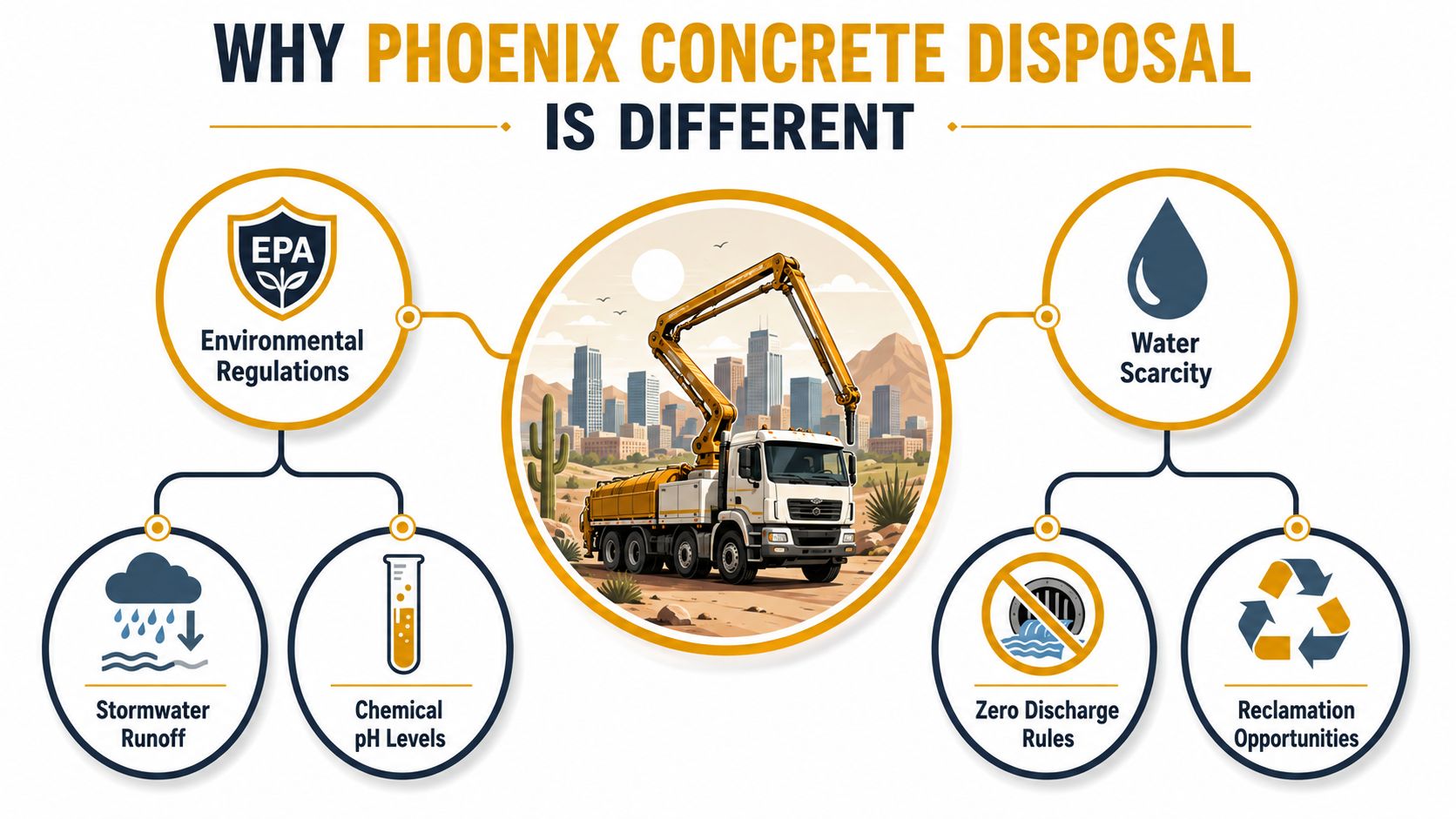
Why Phoenix Concrete Disposal Is Different From Other Markets
A Phoenix pour day moves fast. The truck backs in, the hose crew sets, someone rinses tools, and the washout water has to land somewhere that will not turn into a problem by noon. That pressure is real because the city already handles a heavy waste stream, and Phoenix solid waste operations are built around moving a lot of material through the system, with collection vehicles traveling nearly five million miles in the City's FY 2024–25 solid waste update Phoenix solid waste update.
The waste stream is already huge
The EPA's national C&D debris data explains why concrete never gets treated like a side issue. In the United States, 600 million tons of construction and demolition debris were generated in 2018, and that was more than twice the amount of municipal solid waste generated that year EPA C&D debris data. EPA's material-specific figures also show the total rising from 547.04 million tons in 2015 to 600.33 million tons in 2018 EPA C&D debris data. On a Phoenix slab, that means your load is part of a very large disposal network, and clean separation matters because mixed material slows the whole handoff.
Desert conditions change the risk
Phoenix crews work in heat, dust, tight staging, and very little forgiveness when slurry reaches a curb inlet. A concrete washout that would be annoying in a wetter market can become a stubborn compliance problem here because the site dries fast, solids set up quickly, and access for cleanup is often tight. The practical question is not just whether the material gets hauled off, it is where it goes, who will take it, and how badly the job gets slowed if the load is mixed.
Practical rule: if the load is clean and separated, it is simple. If it is mixed, wet, or staged badly, every step gets slower and more expensive.
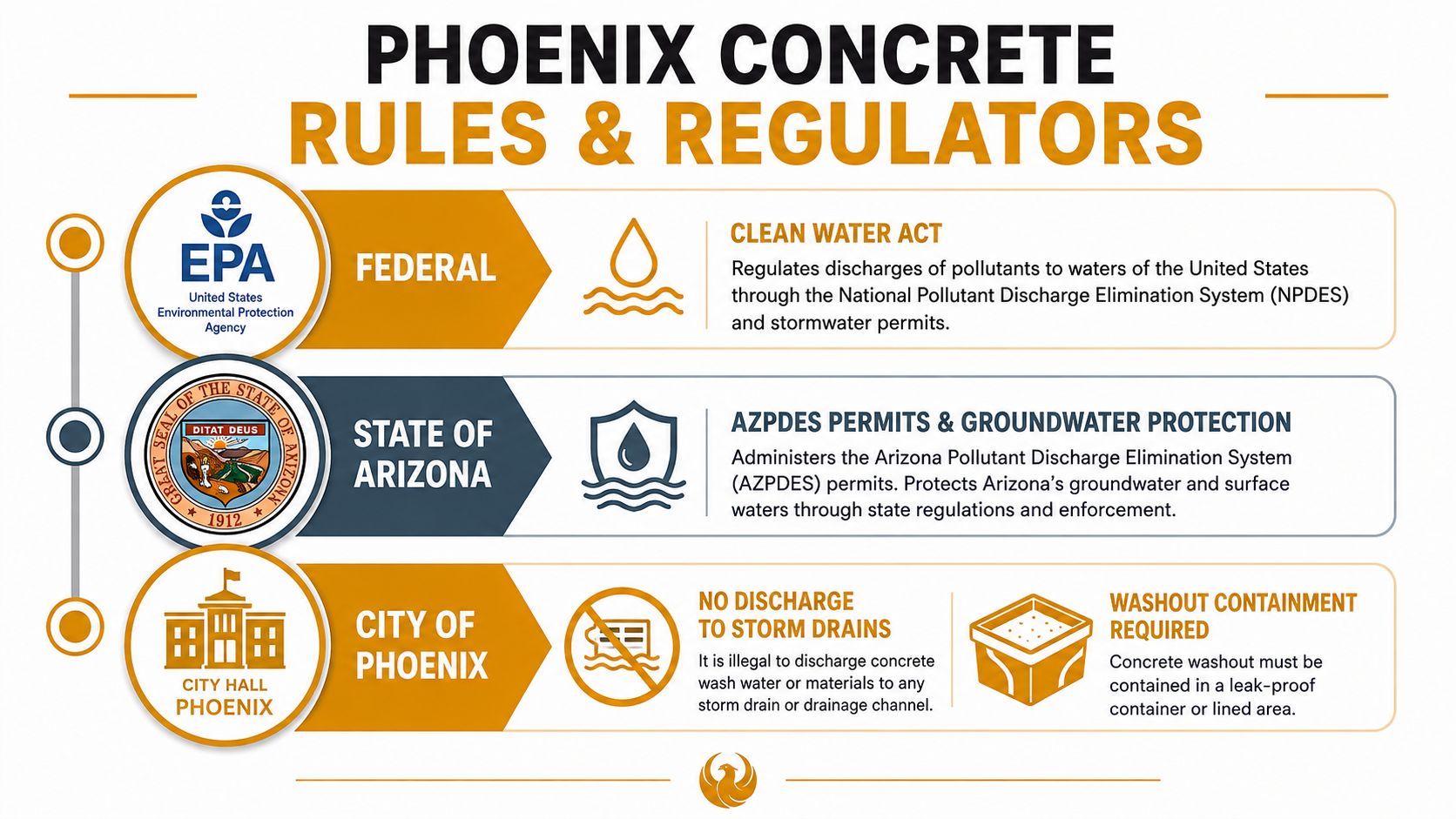
Rules and Regulators Every Phoenix Crew Should Know
A Phoenix concrete job gets checked in the order an inspector would care about it. Federal stormwater expectations shape how washout gets contained, state solid-waste rules affect where debris can go, and city rules decide what belongs in bulk pickup, what gets rejected, and what a transfer station will take.
Federal pressure starts with stormwater
EPA C&D debris guidance shows why concrete stays on the radar as a waste-management problem, not just a cleanup issue. On a hot Phoenix lot, the risk shows up fast when slurry reaches a drain. The visible mess is part of it, but the bigger concern is the high-pH washwater path and the chance that contaminated water moves off-site before it cures or evaporates.
City rules shape the practical answer
Phoenix makes the disposal path clearer than a lot of crews expect. The City's bulk-trash rules exclude bricks, concrete, dirt, rocks, asphalt, and roofing materials from residential bulk pickup City of Phoenix bulk trash rules. The transfer-station guidance also says commercial quantities of liquid wastes and other special wastes are not accepted City of Phoenix bulk trash rules. A contractor cannot treat a mixed demo pile like household debris and expect the city to sort it out.
Phoenix's own solid-waste operation shows why source separation matters. The city reported more than one million tons processed through two transfer stations, two materials recovery facilities, and one compost facility in its FY 2024–25 update. At that scale, contaminated or poorly staged loads create friction quickly.
Keep the paperwork boring and the site clean. That is the easiest way to make an inspector's visit uneventful.
What should be on file before demo starts
- Utility locate records so the crew knows what is under the slab before the breaker comes out.
- Hauling plan that names the receiving facility and the load type.
- Washout location sketch showing where the pan goes and what it stays away from.
- Source-separation instruction for rebar, wood forms, dirt, and trash.
- Pickup contact and timing so the final haul does not sit on-site longer than needed.
On-Site Washout Containment That Works
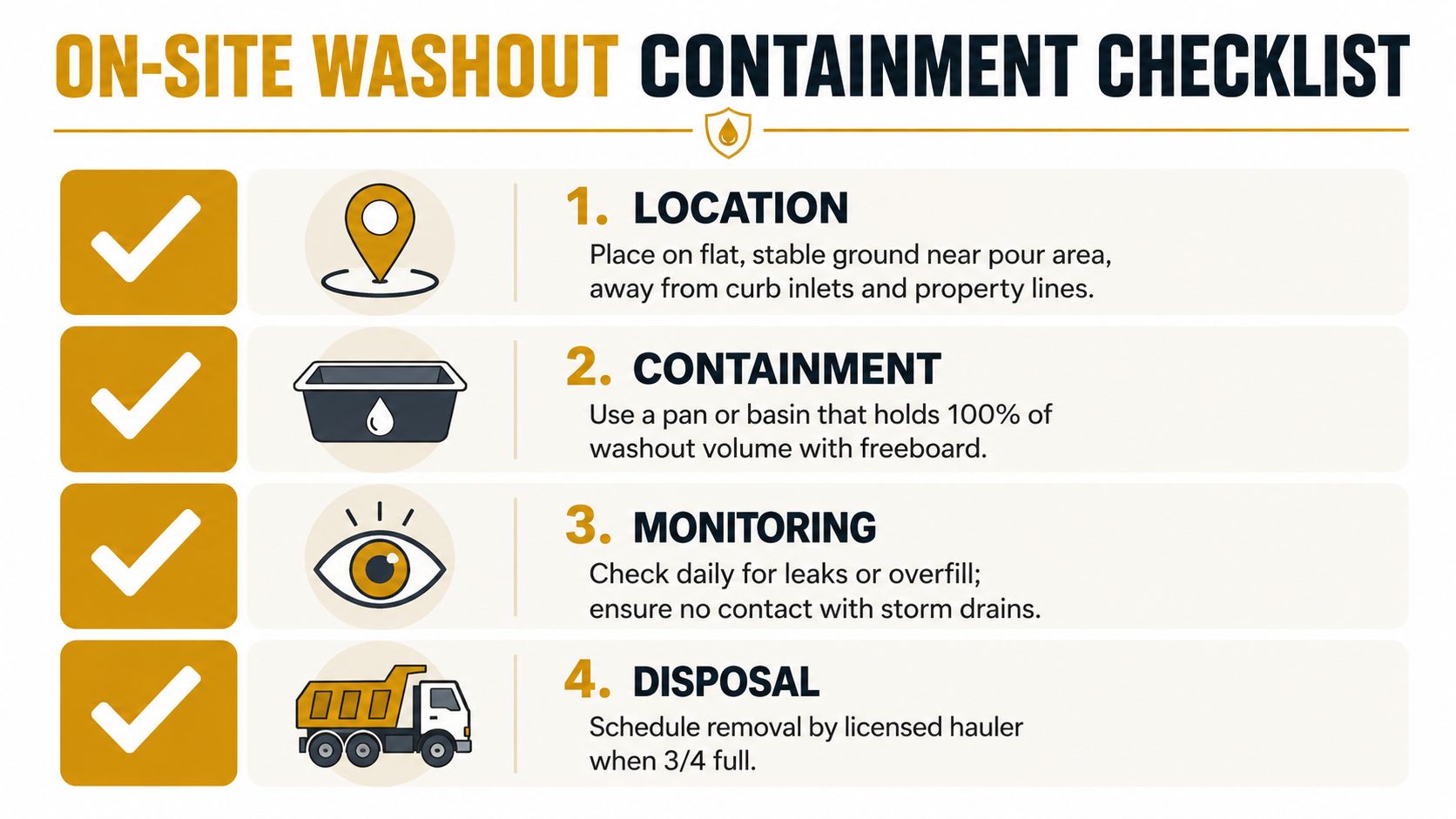
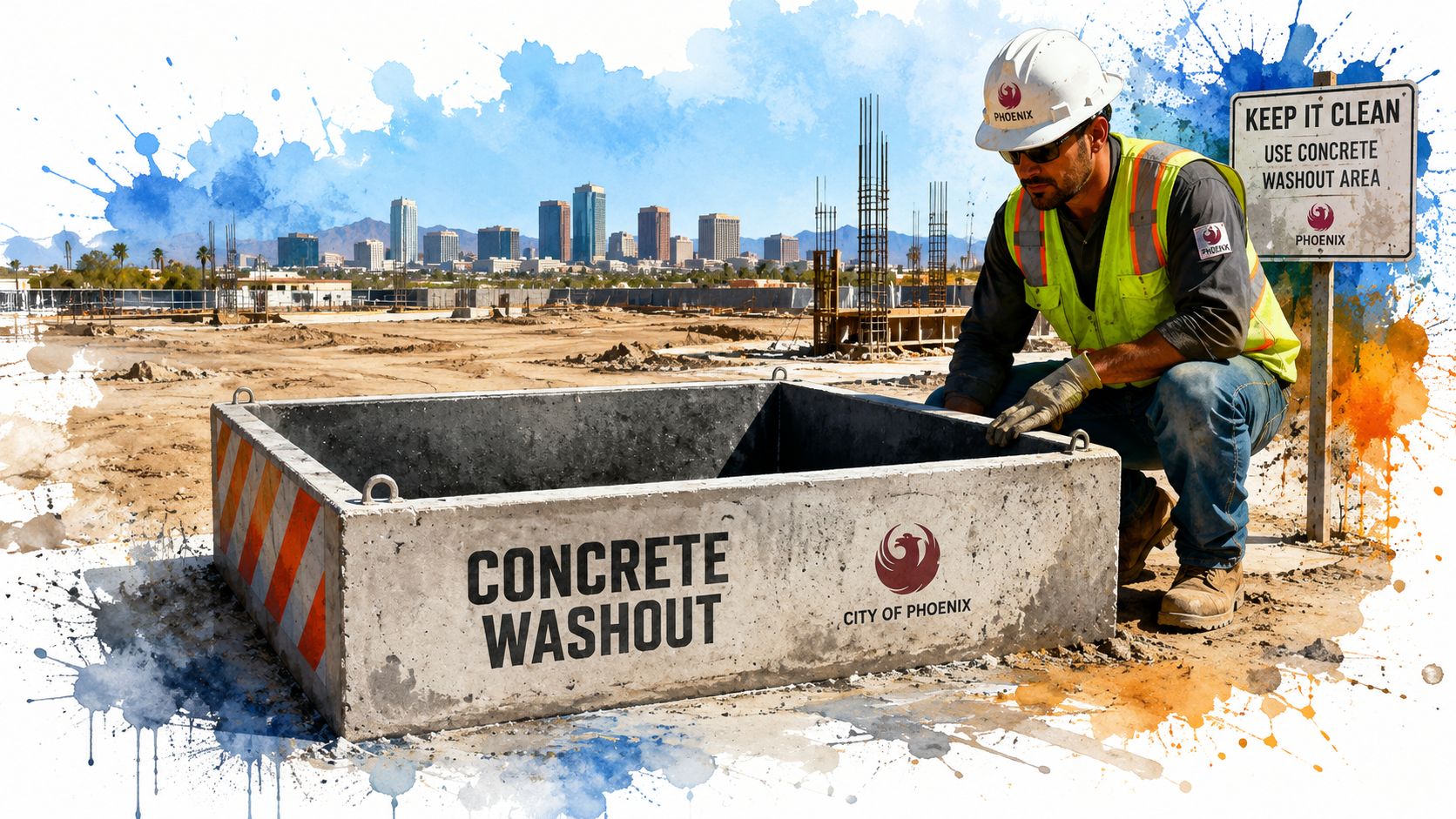
A washout pan only works if the crew can use it. On a Phoenix lot, that usually means flat, stable ground close enough to the pour area to be practical, but not so close that a pump hose, loader bucket, or truck tire tears it up. It also needs to sit clear of curb inlets, drainage swales, and any route where slurry could move if someone misses a rinse.
Size it for the day, not for wishful thinking
Site-management guidance points to 6 cubic feet of containment for every 10 cubic yards of concrete placed, with at least 1 foot of freeboard and a 10-mil plastic lining City of Denton concrete waste management guidance. That source is not Phoenix-specific, but the layout problem is the same in desert work, undersized pans, weak lining, and overflow that reaches drainage features.
The setback guidance matters just as much. Keep washout at least 20 feet from inlets and drainage features, and 50 feet when the site allows. On a tight lot, that is a layout choice you make before the first truck rolls in, not after the hose is already rinsing.
Daily habits prevent the ugly failures
The failure mode that hurts crews most is simple. Solids harden into a mass that nobody wants to chip out, and the washout pan turns into a labor problem of its own. Once that happens, cleanup slows down, the rental stays on site longer, and the crew starts improvising under pressure.
Order of operations: let the water evaporate, let the residue cure, then haul the solids. Never let slurry leave the pan.
Small habits keep the setup usable. Scrape tools before they cake up, do not overfill the basin, and do not leave the pan where runoff can hit it after a storm or after overnight irrigation. Once the material starts turning into a block, the crew is already behind.
Hauling and Recycling Options Across the Phoenix Area
Phoenix concrete usually has three practical destinations. Clean broken concrete can go to a recycling yard, where it gets crushed into base rock or aggregate. Smaller clean loads, or mixed inert material that still fits the receiving rules, can go through a transfer station. Mixed loads that cannot be sorted well enough for recycling usually end up on a landfill or C&D disposal path.
Clean concrete belongs in a cleaner stream
Separated concrete is easier to process and usually easier on the budget because it needs less sorting. That is why source separation matters so much on site. Once wood forms, trash, dirt, or rebar get tangled through the pile, someone has to spend time pulling the stream apart before the material can move to the next step.
Mixed loads change the economics
A mixed C&D load creates additional handling time and disposal complexity. It also takes more judgment at the scale house, because the receiving facility has to decide whether the load fits its rules or needs to be sent elsewhere. Contractors cannot count on city bulk pickup for concrete, so the job still has to move through the formal disposal chain. As noted earlier, Phoenix bulk rules do not treat concrete as ordinary residential bulk waste, which is why transfer stations and recyclers end up doing the bulk of the work.
Simple decision rule
- Clean and separated: send it to recycling.
- Mixed but inert: route it through a transfer station or approved C&D channel.
- Contaminated or liquid waste: use specialized handling and containment.
That rule keeps crews from wasting time on the wrong destination. It also keeps the site from turning into the place where every questionable load gets dropped off “for now,” which is usually how a disposal day goes sideways.
A Realistic Demo and Haul Sequence for Phoenix Sites
A small commercial demo in Phoenix usually starts before the breaker touches the slab. The crew walks the site, confirms utility locates, checks where the truck can stage, and decides which part of the slab can stay clean enough for recycling. That prep matters because once the concrete comes up, the difference between a clean pile and a rejected pile is mostly how disciplined the first hour was.
Sort before the slab comes apart
The first mistake is treating everything under the saw cut as one stream. Rebar mesh, wood forms, trash, and dirt all change how the load gets handled. If you mix those into the concrete from the start, the hauler gets a load that takes longer to sort and may trigger extra fees or rejection at the receiving facility.
A better sequence is simple. Break the slab into manageable pieces, separate obvious contaminants as you go, and stage the clean chunks where the loader or truck can reach them without overloading the equipment. Tight Phoenix lots make staging critical because there usually isn't spare room to build a giant pile and fix it later.
If the bucket is full of mud, wire, and broken slab all at once, the disposal bill gets larger before the truck leaves the gate.
Closeout matters as much as the haul
The last truck shouldn't be the end of the job. Final cleanup means sweeping loose fines, pulling stray rebar, checking the haul route, and making sure no residue is sitting where irrigation or runoff can move it. If the site still has material scattered around after the haul, the crew hasn't finished disposal, it's only paused.
The cleanest jobs are the ones where the superintendent and the hauler never have to debate what the material is. The slab comes up, the clean concrete leaves clean, and the remaining debris gets handled as debris instead of as a mystery pile.
Renting a Washout Pan From Reborn Rentals
The rental decision gets easier when the pour size is matched to the pan instead of guessed. Reborn Rentals lists a 72-by-72-by-24-inch pan at roughly 18.25 tons and about 441 gallons for major pours and pump trucks, plus a 72-by-72-by-14-inch pan at around 310 gallons for smaller pours and finishing tools Reborn Rentals product details. That sizing split is practical because the washout plan should fit the day's actual concrete volume, not just the job title.
How the checkout flow works
The process is set up in three steps, Cart, Details, and Checkout, so the crew can add the item, set the dates and location, and lock in delivery notes without a long back-and-forth Reborn Rentals rental process. That matters when the site schedule is already tight and the pan has to land before the first truck shows up.
The pricing is transparent, starting at $25 per day with potential additional charges for delivery, rough terrain, and express orders Reborn Rentals fees and surcharges. The key is timing. Schedule delivery early enough that the pan is staged before pour day, then set pickup after the last washout so the rental clock doesn't keep running while the site is already clean.
The practical questions crews ask
- Where should it sit? Close enough for pump access, but not in the path of trucks.
- When should it arrive? Before the first load, so the crew never improvises.
- When should it leave? After the final rinse and after the residue is manageable.
Cost, Scheduling, and Common Mistakes to Avoid
Concrete disposal costs in Phoenix usually come from four places, the washout pan rental days, the hauling or bin fee, the receiving facility charge, and the soft cost of delay when a load gets rejected or a site has to be reworked. The cheapest path is rarely the one that looks cheapest at the start. It's the one that keeps clean concrete clean, keeps slurry in containment, and keeps the truck from making extra trips.
Schedule like the site is already busy
Order the washout pan one day before the pour. Confirm pickup the morning after final washout so the rental doesn't sit on-site longer than needed. That small scheduling habit avoids the most common waste, which is paying for equipment nobody is using because the crew got busy on another punchlist item.
The mistakes that hurt Phoenix crews most
- Undersized containment: the pan fills too fast, and the crew improvises.
- Bad placement: the washout sits too close to a drain or runoff path.
- Mixed loads: rebar, wood, dirt, and trash make the load harder to process.
- Late cleanup: slurry hardens into a block that takes labor to remove.
- No pickup plan: the site keeps paying for a pan after the job is already done.
A Phoenix contractor who treats disposal as part of the pour plan usually spends less time fighting the site later. The crew works cleaner, the receiving facility gets a better load, and the closeout stays simple instead of turning into another job.
If you're lining up a pour, a demo, or a washout plan in Phoenix, Reborn Rentals keeps the containment side straightforward with ready-to-deploy pans, clear sizing, and simple checkout. Visit Reborn Rentals to set up the right washout solution before the first truck rolls in, and keep your concrete disposal process clean from start to finish.