You've got a truck loaded before sunrise, the customer is waiting, and the debris looks simple until you notice drywall mixed with lumber, concrete chunks, and a few items nobody bothered to sort. At the landfill gate, that “one load” becomes a classification, a weight ticket, a covering inspection, and a decision about whether the material can enter at all.
The Doña Ana County landfill is a contractor logistics problem before it's a disposal destination. The right facility, a correctly described load, securement that survives the drive, and a clear plan for prohibited materials can determine whether the trip is routine or ends with a rejection, an unexpected charge, or a second haul.
Why This Landfill Matters to Doña Ana County
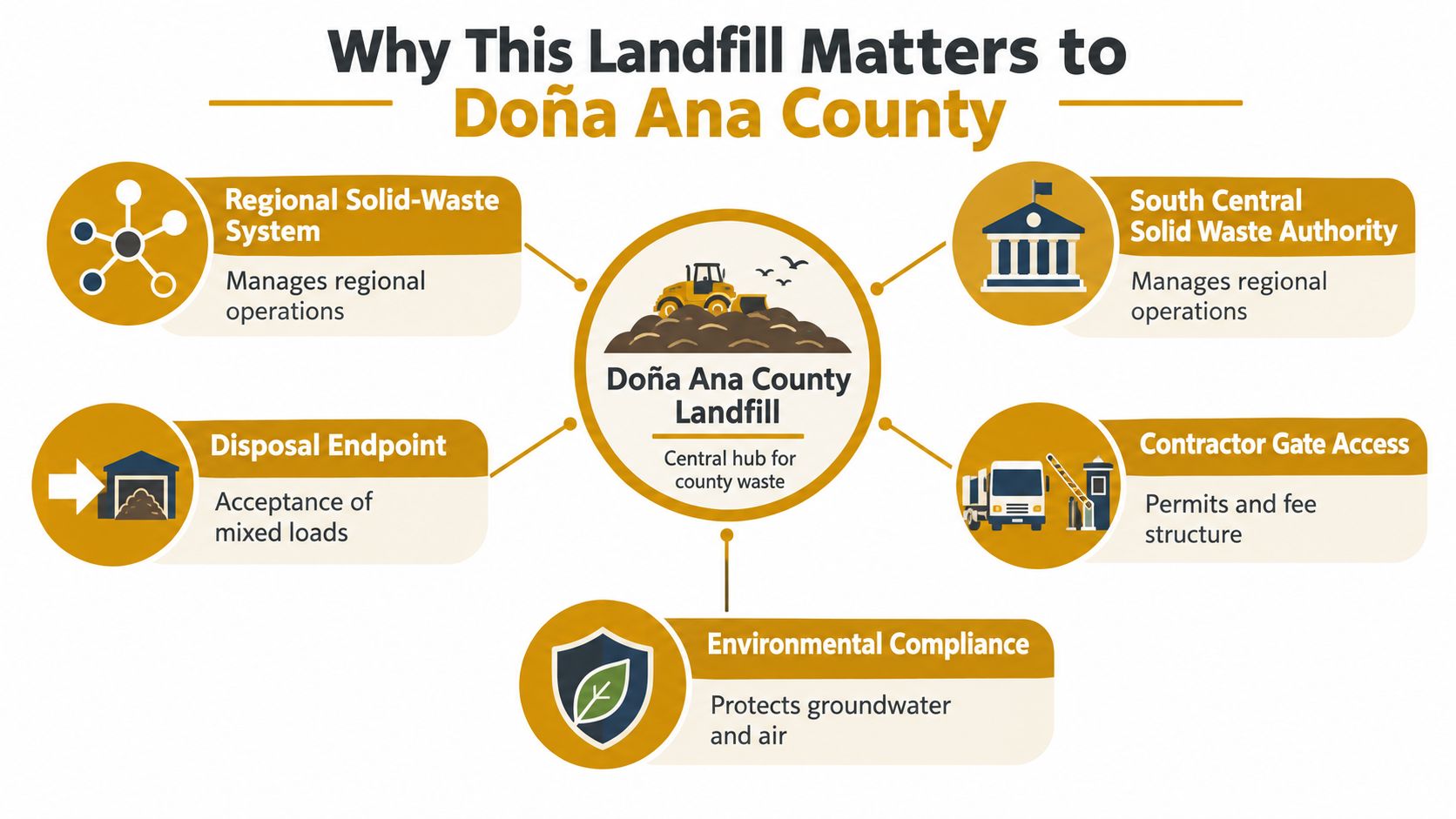
A first-time driver may see only a scale house and a tipping floor. Behind that gate is a regional system built to handle waste from homes, businesses, construction sites, and demolition work across Doña Ana County.
The Corralitos Regional Landfill emerged from a regional solid-waste agreement signed in 1990 between Doña Ana County and the City of Las Cruces. The South Central Solid Waste Authority, or SCSWA, formed in 1995 and began landfill operations in 1996, according to the North American Development Bank project history. The facility occupies a 640-acre site, and its East Phase began with Cell 1 in 1996. Cell 1 was nearing capacity by 2000, Cell 2A was completed after funding limited the initial expansion, and that section was approaching capacity by 2003.
The regional hub behind a single haul
The Corralitos Regional Landfill serves as the county's main public disposal site. Its reported operating capacity is about 1,000 tons per day, and independent reporting described roughly 200,000 tons of solid waste from Las Cruces and Doña Ana County landfilled there each year in 2017. A later SCSWA planning document projected 206,418 tons in fiscal year 2021, as reported by KRWG in its coverage of regional waste management.
That scale explains why the county uses a network rather than sending every household and small load directly to the landfill. Transfer stations and collection sites can shorten trips for lighter residential loads, while the regional landfill provides the disposal endpoint for larger volumes and material streams that smaller sites may not be equipped to handle.
Practical rule: Treat the scale house as a material-classification checkpoint, not a payment window. The driver needs to know what's in the truck before the attendant asks.
The New Mexico Environment Department's regulatory framework also matters. Landfill acceptance rules exist alongside requirements for gas collection, air emissions, safe operation, and environmental protection. A mixed load that includes liquids, hazardous materials, or undocumented asbestos isn't merely inconvenient. It may fall outside the facility's permitted operating conditions.
For a superintendent, the consequence is straightforward. Wrong classification can mean a rejected load, a surcharge, or a trip to a specialty facility. Sorting and documenting material at the shop is usually easier than arguing with the scale house after the truck has already traveled across town.
Location, Hours, and How to Reach the Site
Dispatch starts with confirming which site the driver is heading to. The regional landfill is not interchangeable with every SCSWA transfer station or collection center in the county, particularly when the load contains substantial construction and demolition debris.
Published public information identifies the Corralitos Landfill as operating from 7 a.m. to 5 p.m. on Memorial Day in 2026, while the City of Las Cruces also lists the South Central Solid Waste Transfer Station and Doña Ana County collection sites as open during that holiday schedule in its Memorial Day facility notice. That notice is a useful reminder that holiday access can differ by facility and date.
Confirm the route before loading the truck
Use the facility's current directions and dispatch mapping rather than relying on a driver's memory. The landfill serves the Las Cruces area and the regional highway network, but the correct approach depends on where the truck starts, the trailer configuration, and current road conditions.
Before departure, the crew lead should confirm:
- Facility selection: Verify whether the load belongs at the regional landfill, a transfer station, a recycling drop-off, or a hazardous-waste event.
- Operating schedule: Call ahead for the current commercial schedule, holiday changes, weather closures, and any temporary traffic instructions.
- Vehicle suitability: Check the route for restrictions that affect a loaded dump truck, trailer, or concrete container.
- Scale-house questions: Ask where the facility wants a questionable material directed before the truck leaves the jobsite.
Don't send a demolition truck to a neighborhood collection site just because it's closer. Smaller facilities may be convenient for household quantities, but they may not accept the same volume, load type, or construction debris that the regional landfill can process.
The practical phone numbers, gate hours, and current access instructions should come from the official SCSWA and county materials at the time of dispatch. Public schedules change, and an outdated directory entry is a poor substitute for a call before a commercial haul.
Accepted and Forbidden Materials
The fastest way through the gate is to separate the load into clear categories before the truck rolls. The landfill may handle ordinary municipal solid waste and construction debris, but that doesn't mean every item found during a cleanout belongs in the same container.
The county's public solid-waste information emphasizes trash drop-off, residential recycling, and clean green-waste access, while local rules address load security and weight or volume-based fees through Doña Ana County solid-waste information. For contractors, the distinction between accepted, conditionally accepted, and forbidden is more useful than a general statement that the landfill takes “waste.”
| Material Category | Accepted | Notes & Conditions |
|---|---|---|
| Municipal solid waste | Generally accepted | Keep liquids, hazardous chemicals, and prohibited materials out of the load. |
| Construction and demolition debris | Generally accepted | Mixed debris may be classified differently from clean, separated material. |
| Yard waste | Accepted through designated programs or areas | Keep green waste separate from ordinary trash where required. |
| Scrap metal | Often suitable for recycling or designated handling | Sort it out when practical instead of burying recoverable metal. |
| Appliances | Conditional | Refrigerant must be removed through an approved process before disposal. |
| Clean wood | Preferably separated | Painted, treated, or contaminated wood may receive different handling. |
| Inert fill and concrete | Conditional | Keep slurry and liquid washout out of an otherwise inert load. |
| Liquid paint and motor oil | Forbidden in ordinary landfill loads | Use an appropriate household hazardous-waste or specialty program. |
| Batteries, propane tanks, and hazardous chemicals | Forbidden | These can create fire, reaction, or environmental hazards. |
| Tires in commercial quantities | Not a routine landfill item | Confirm an approved tire outlet before dispatch. |
| Asbestos | Conditional and documented | Never bring asbestos without the required paperwork and handling controls. |
| Medical and electronic waste | Separate handling required | Use the applicable collection or recycling program. |
Sort clean streams before they become expensive
A truck containing lumber, drywall, metal studs, and broken concrete is a mixed construction load, not a clean concrete load. Co-mingling can move the material into a less favorable classification and make inspection more complicated.
The shop-sort rule is simple: separate anything that has a clear recycling, hazardous-waste, or specialty route before loading the truck. Pay for a blended load only when the labor, extra handling, and schedule impact of sorting exceed the disposal difference. Never use the landfill as a test site for questionable materials. Call first.
Fees, Surcharges, and How Loads Are Priced
The county's public guidance indicates that fees can be calculated by weight or volume, and that untarped or unsecured loads may trigger surcharges. That pricing structure makes a verbal estimate unreliable when the final load contains mixed materials, bulky debris, or items requiring special handling.
At the scale house, the attendant records the vehicle's entry weight, reviews the load description, and calculates the charge under the applicable category. After unloading, the truck is weighed again, and the difference becomes the disposal weight where weight-based billing applies. A light load may still face a minimum charge, while bulky material may be priced by volume when weighing it doesn't accurately represent the disposal space it consumes.
| Load Type | Pricing Method | Typical Surcharge |
|---|---|---|
| Ordinary household or municipal waste | Weight or applicable volume basis | May change with load category or minimum charge rules. |
| Construction and demolition debris | Weight or volume basis | Mixed or contaminated material can cost more than clean separated debris. |
| Bulky debris | Often assessed by volume or special category | Large pieces can consume more working space than their weight suggests. |
| Tires, refrigerant appliances, or mattresses | Special handling category where applicable | Confirm acceptance and current charges before loading. |
| Untarped or unsecured load | Base disposal charge plus applicable rule-based surcharge | Securement problems can add cost before unloading begins. |
| Clean separated material | Applicable stream pricing | Sorting may reduce handling complexity, but current rates must be confirmed. |
Why the ticket differs from the estimate
Contractors commonly estimate a truck by how full it looks. The scale house prices what arrives, not what the crew expected to haul. Wet material, dense concrete, soil, and compacted debris can weigh far more than a loose load of wood or cardboard occupying the same visual space.
The county's published rules are the source to check for current pricing mechanics, but they don't replace a load-specific call. Ask about minimums, volume assessments, special items, and covering requirements before quoting a cleanout or demolition job.
Budgeting advice: Don't quote disposal from truck size alone. Record the material mix, expected density, covering condition, and likely facility classification in the job estimate.
There isn't a dependable universal “cost per yard” rule without the current rate sheet and the exact material. Use a conservative internal allowance, then verify the facility's present charges before dispatch. The final ticket should be attached to the customer file, not left in the cab.
Drop-Off Procedure and Permit Requirements
A smooth landfill trip follows a predictable sequence. The driver arrives with the load secured, identifies the account or customer, explains the material, crosses the scale, follows the attendant's directions, unloads at the assigned area, and returns for the completed ticket.
The gate-to-tipping sequence
Arrive prepared. Keep the load covered and bring the customer, business, or account information required for the transaction. Commercial drivers should carry the company details and any hauling or waste documentation the authority requires.
Describe the load accurately. Say whether it's municipal waste, construction and demolition debris, clean inert material, green waste, or a mixed load. Don't call a truck “clean concrete” when it contains drywall, insulation, lumber, or washout residue.
Use the scale as instructed. The scale-house attendant records the vehicle and load information and directs the driver through the facility. If part of the load must remain onboard, ask how a partial unload or reweigh should be handled before moving away from the scale.
Follow traffic control. Drive to the active face or designated unloading area using the marked route and attendant instructions. The active face changes, so an old driver's shortcut isn't a reliable operating procedure.
Unload safely. Stay in the cab or designated safe area unless staff authorize otherwise. Don't climb into the debris, approach equipment, or allow anyone to scavenge.
Collect the ticket. The final weight, classification, charges, and account information belong in the project records. Keep the receipt with the load photos and customer invoice.
What gets turned away
Attendants can stop a load when it contains forbidden materials, an undocumented regulated waste, liquid waste, unsecured debris, or a material category the facility cannot accept under its permit. PPE requirements can also apply around the tipping floor, so the driver should follow posted rules and staff direction rather than improvising.
Commercial accounts should arrange recurring billing or account setup with SCSWA before sending repeated loads. A business license or solid-waste hauling permit may be requested depending on the account and local requirements, so confirm the documentation with the authority before the first trip. A driver who arrives without the correct account information can lose more time at the scale than the entire unload takes.
Concrete Washout Guidance for Contractors
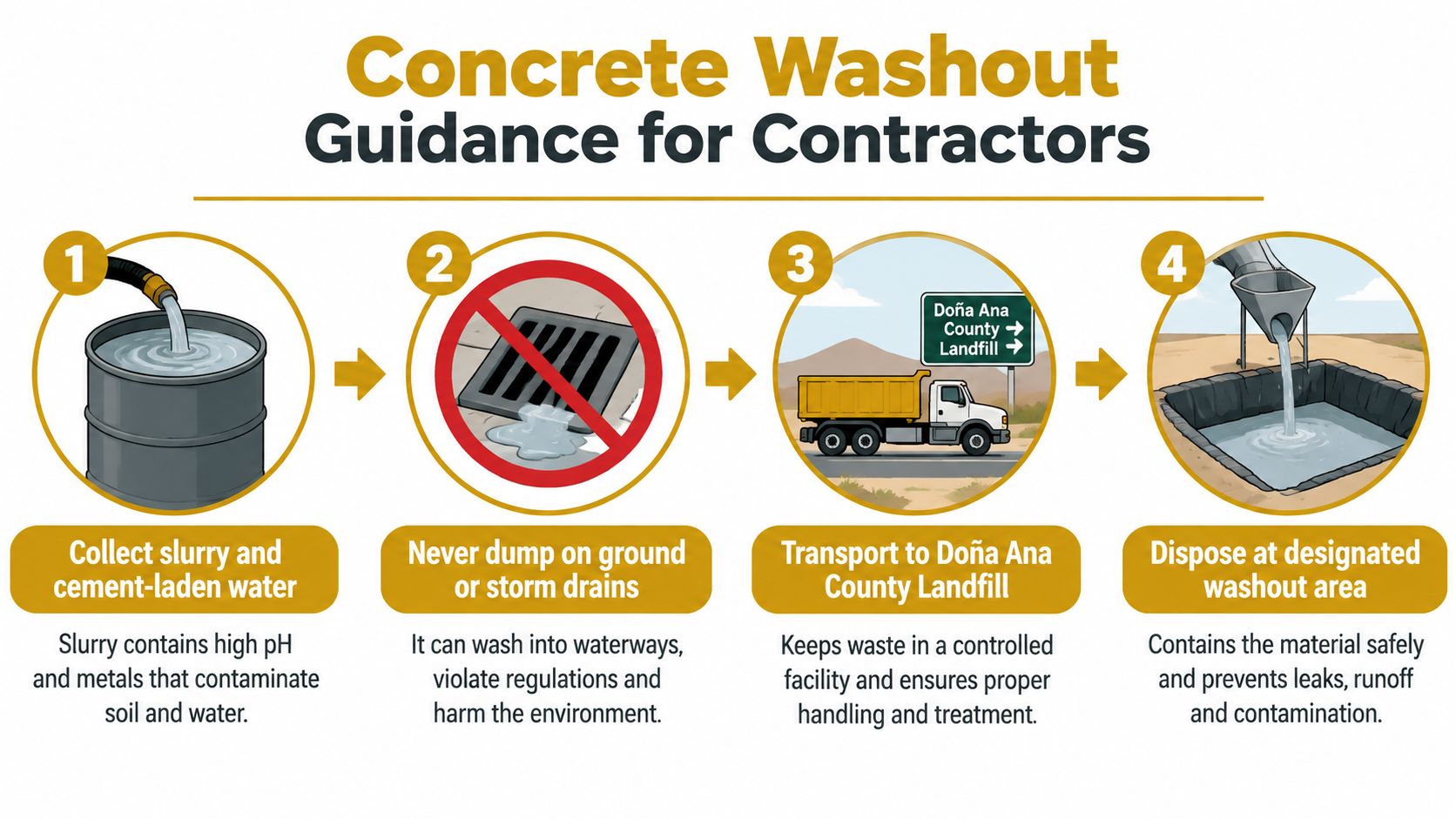
Concrete washout belongs in a controlled system from the moment the chute, pump, or mixer is cleaned. Cement-laden water and slurry are not ordinary liquid trash, and dumping them on soil or into a storm drain can create a compliance problem before anyone reaches the landfill.
The safer sequence is to contain the washout at the jobsite, allow material to harden where appropriate, and transport the resulting solid material through an approved disposal or recycling route. Never place liquid washout in a residential drop-off container or add it to a truckload of ordinary construction debris. A wet load can leak, contaminate other material, and lead to a rejected entry or special handling decision at the scale house.
Match containment to the pour
A small repair crew may use a lined container or reusable washout bag positioned beneath the chute. A pump truck or large placement crew needs a containment system with enough wall height, liquid capacity, and access for cleaning without overflow. Washout pits can work on larger sites when the superintendent controls location, liner integrity, access, and final removal.
Keep the setup away from storm drains, drainage swales, unprotected soil, and vehicle paths that could collapse the containment edge. Inspect it during the pour, not only after the concrete crew leaves. The person supervising the placement should know exactly where the washout goes and who is responsible for removing hardened residue.
Reborn Rentals offers concrete washout pans and containers for rent with delivery, giving contractors another containment option when the project needs a ready-to-deploy pan rather than a built pit. Its listed equipment includes a 72-foot by 72-foot by 24-inch option with approximately 18.25 tons and about 441 gallons of capacity, plus a 72-foot by 72-foot by 14-inch option with about 310 gallons, as shown in the company's rental information. Delivery, rough-terrain, and express-order charges should be confirmed in advance.
Document the control, not just the cleanup
A superintendent should retain the washout location, setup date, inspection notes, photos, pickup or removal record, and final disposal or recycling ticket. Those records show that the crew planned containment instead of treating the landfill as a place to dump liquid material.
The landfill's gas-control requirements illustrate why controlled disposal matters across the site. The Camino Real permit record requires surface methane to remain at or below 500 parts per million above background, and the gas collection and control system is designed for up to 3,000 standard cubic feet per minute of landfill gas, according to the New Mexico Environment Department permit statement. Concrete washout doesn't belong in that waste stream just because a truck is already headed to the landfill.
Alternatives to the Regional Landfill
The right disposal route depends on material, volume, distance, and compliance risk. A regional landfill is a sensible endpoint for an eligible mixed load, but it's often the wrong first choice for clean recyclable material or regulated waste.
Transfer stations in Anthony, Sunland Park, and Mesilla can reduce drive time for smaller, eligible loads. They're useful when the truck is carrying ordinary household waste or a manageable quantity that the site accepts. They're less suitable when the load contains substantial demolition debris, specialty items, or material that requires the regional landfill's handling capacity.
Route the material to its strongest outlet
Clean metal and cardboard should go to a recycling drop-off when the quantity and contamination level fit the program. Clean green waste belongs in the designated green-waste route rather than being buried with mixed trash. These choices can reduce disposal volume and keep recoverable material out of the landfill, but crews must verify accepted materials and operating hours before making a detour.
Household hazardous-waste events and specialty programs are the proper path for paints, solvents, batteries, and electronic waste that ordinary landfill loads can't accept. They may have narrower schedules, eligibility rules, or quantity limits, so holding prohibited material at the shop without a confirmed appointment can create its own problem.
Private C&D recyclers and concrete-crushing yards deserve consideration for large demolition projects. A clean concrete or asphalt stream may be more valuable as a processed aggregate feedstock than as landfill disposal, while a mixed tear-out load may still need the regional facility.
| Facility Type | Best Use Case | Limitations vs. Landfill | Hours vs. Landfill |
|---|---|---|---|
| Regional landfill | Eligible mixed loads and larger disposal trips | Longer haul and stricter load-classification consequences | Confirm current commercial schedule. |
| Transfer station | Smaller ordinary waste loads near the job | May exclude larger C&D or specialty material | Often narrower or different by location. |
| Recycling drop-off | Clean metal, cardboard, or green waste | Contamination and material limits | Check site-specific schedule. |
| Household hazardous-waste event | Paint, solvents, batteries, and e-waste | Event timing and acceptance rules | Usually more limited than routine landfill access. |
| C&D recycler or crushing yard | Clean, high-volume concrete and demolition streams | Requires sorting and may not accept mixed debris | Private schedules vary. |
The routing decision is practical. Bypass the landfill when a cleaner, compliant outlet handles the material better. Use the landfill as the primary endpoint for eligible mixed waste. Keep it as a backup only when the alternative can't accept the actual load.
Pre-Trip Checklist to Avoid Fines and Rejected Loads
Run this checklist before the truck leaves the jobsite. A new driver should be able to follow it without guessing what “mostly clean” or “probably acceptable” means.
Prepare the load
- Classify the material: Mark the load as mixed municipal waste, clean or mixed C&D, green waste, inert material, recyclable, or contaminated. If the classification is uncertain, stop loading and call the facility.
- Remove prohibited items: Pull out liquids, batteries, propane tanks, hazardous chemicals, medical waste, undocumented asbestos, electronic waste, and concrete washout slurry.
- Separate recoverable streams: Set aside clean metal, cardboard, green waste, and concrete when a suitable recycling or specialty outlet is available.
- Check appliance condition: Don't send an appliance with refrigerant still charged into a general disposal load. Confirm the required removal route.
Secure the truck
- Inspect the tarp: Cover the entire load before entering public roads. A loose corner or exposed debris can lead to a surcharge or an unsafe trip.
- Check tie-downs and gates: Shake the sides, inspect the tailgate, and confirm that bulky pieces can't roll or bounce out.
- Estimate weight responsibly: Compare the material type and truck configuration with legal vehicle and trailer limits. Dense concrete and soil can overload a truck before the bed looks full.
- Photograph the load: Take a quick pre-departure photo showing the cover and the material condition. It supports the job record if the customer disputes the disposal charge.
Confirm the transaction
- Verify account documents: Put the business information, hauling paperwork, customer authorization, and any required permit documentation in the cab.
- Call the facility: Confirm hours, holiday changes, current fees, questionable materials, and the correct destination for partial or special loads.
- Check the route: Review the path for restrictions, construction, and low clearances that could affect a loaded vehicle.
- Inspect again at the scale: Before pulling onto the scale, walk around the truck and look for leaks, exposed debris, loose tarp sections, or items that appeared during transit.
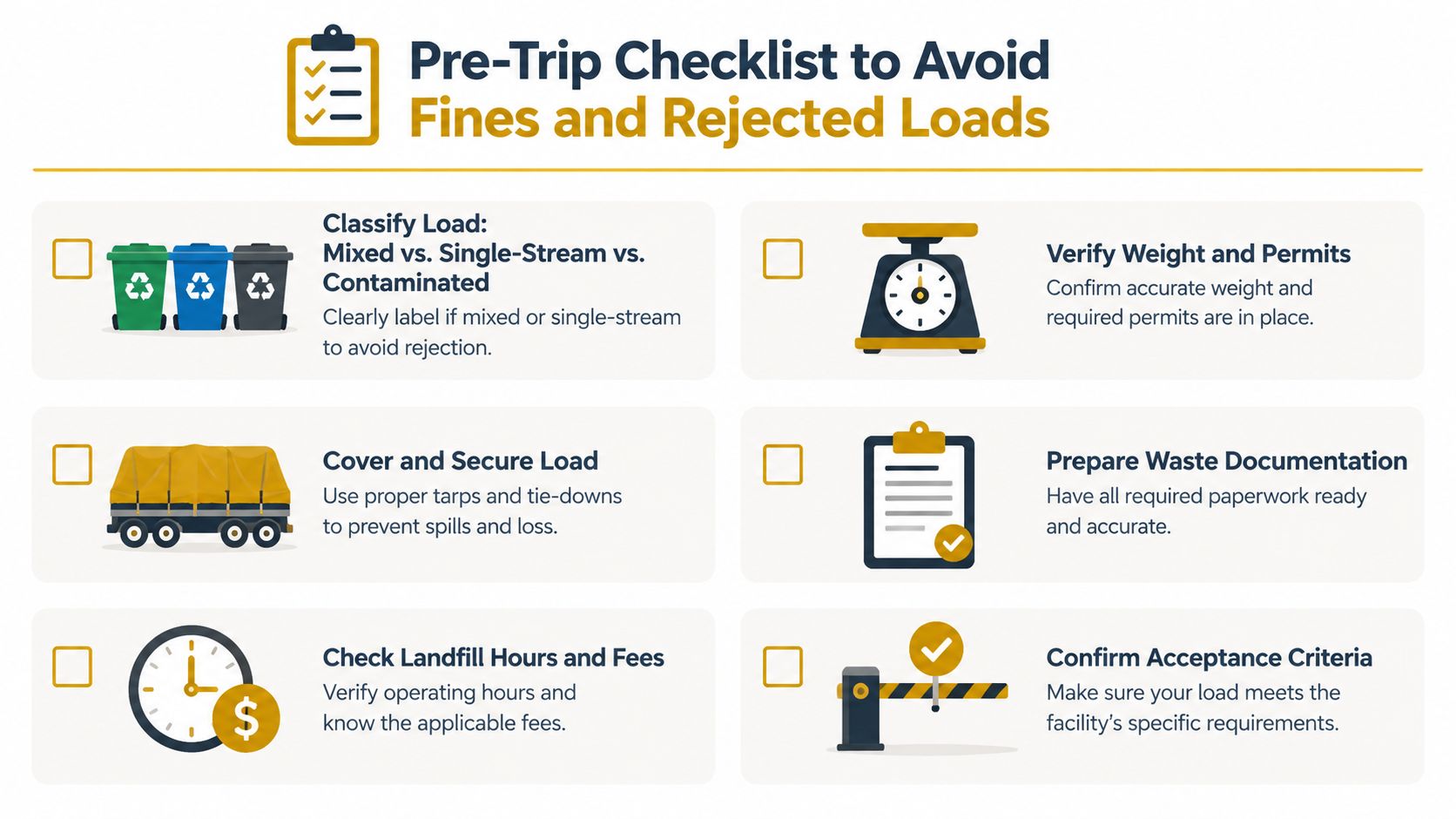
The final discipline is to keep the scale ticket, disposal classification, load photo, and customer paperwork together. The New Mexico Environment Department's air-permit review reports an estimated maximum emissions profile of 27.1 tons per year and states that the facility is expected to meet health-based standards for NOx, CO, VOC, SOx, PM10, PM2.5, and H2S, as described in the air-permit public notice. That regulated environment reinforces the same field lesson: accurate handling starts before the truck reaches the gate.
If your next pour needs a contained washout setup, review the available pans, capacities, delivery details, and rental dates at Reborn Rentals before concrete placement begins. A properly positioned containment pan can keep slurry off the ground, simplify cleanup, and give the superintendent a documented disposal path.