Table of Contents
- Key Takeaways
- How Do You Maintain Concrete Washout Compliance on Front Range Public Works?
- State Regulatory Framework: Defining BMPs and Illicit Discharge
- Watertight Metal Pans Versus Lined Earthen Washout Pits
- SWPPP Documentation Protocols and Swap Logs for CDOT Projects
- Pan Selection: Discharge Geometry Dictates Your Washout Plan
- Reborn Rental Front Range Service Logistics and Sizing
- Frequently Asked Questions
- Get Compliant Washout on Your Jobsite
Key Takeaways
- Under Colorado Department of Public Health and Environment (CDPHE) regulations, uncontained concrete slurry is classified as an illicit discharge due to extreme caustic alkalinity (pH 12 to 13) and suspended solids.
- A compliant BMP (Best Management Practice) must provide complete containment; lined earthen pits frequently fail state audits due to subgrade puncture, tears, and high hydraulic conductivity.
- Discharge method dictates equipment: pump truck hoppers require low-profile containers (14-inch rim), while high-yardage mixer truck chutes require higher-capacity containers (24-inch wall).
- CDOT stormwater inspectors require written inspection records, documented freeboard thresholds, and chain-of-custody tracking for all concrete waste hauled off-site.
- Self-contained watertight steel pans eliminate soil infiltration risks and streamline Stormwater Pollution Prevention Plan (SWPPP) log maintenance across multi-phase road pours.
How Do You Maintain Concrete Washout Compliance on Front Range Public Works?
Concrete washout management on Colorado Department of Transportation (CDOT) projects requires 100% containment of all chute rinse water, pump cleanout waste, and aggregate slurry. The state standard demands zero infiltration into native subgrade and zero discharge to surface water or municipal stormwater conveyance systems. To maintain concrete washout EPA compliance Colorado inspectors enforce, contractors must deploy an engineered, watertight containment structure on an impervious surface or stable base, monitor liquid levels to maintain adequate freeboard, log daily inspections, and haul hardened waste away under formal disposal manifests.
When ready-mix concrete cures, hydration locks water, aggregate, and hydraulic cement into a solid matrix. However, unhardened wash water carries high concentrations of dissolved calcium hydroxide, air-entraining admixture residues, and fines. This wastewater easily reaches a pH of 12 or higher. On public civil jobs across Denver, Aurora, and the greater Front Range, uncontained rinse water that reaches a storm drain, roadside ditch, or native soil is treated as an immediate Clean Water Act violation.
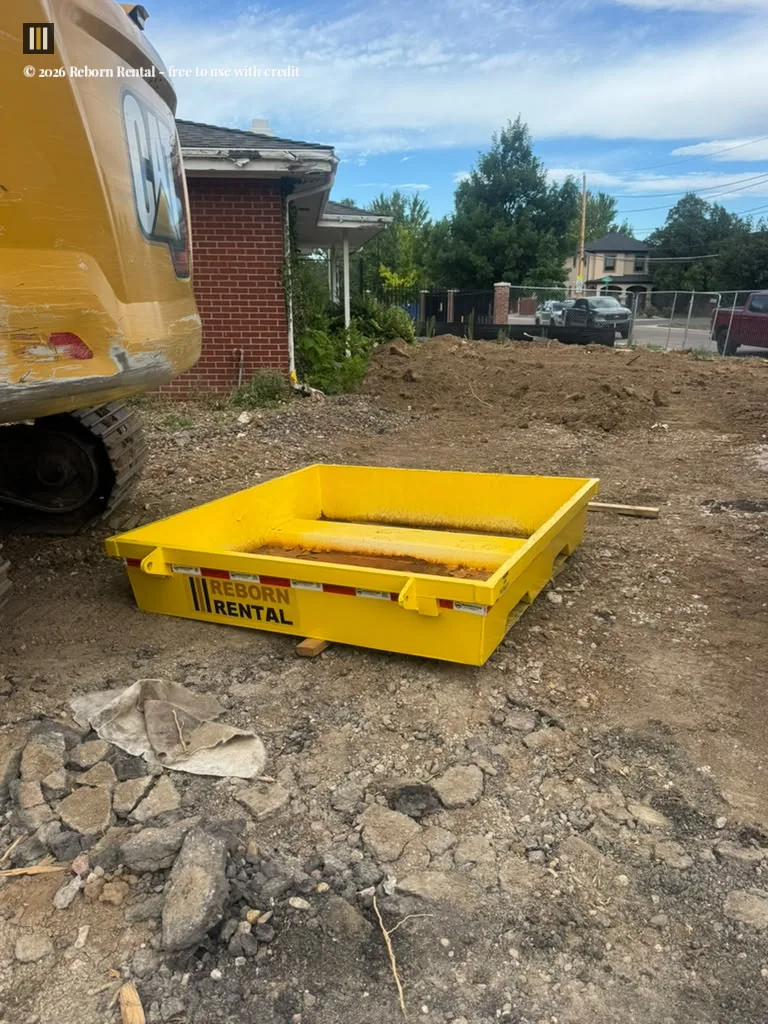
State Regulatory Framework: Defining BMPs and Illicit Discharge
Meeting CDOT and CDPHE standards starts with understanding the strict definitions embedded in the Colorado Discharge Permit System (CDPS) general permit for stormwater discharges associated with construction activities.
Defining Best Management Practices (BMPs)
A BMP (Best Management Practice) is a construction method, structure, or piece of equipment used to prevent or reduce pollutants from leaving a construction site. On a heavy highway project, BMPs operate as a multi-tier defense system. Structural perimeter controls like silt fence and inlet protection protect municipal stormwater systems from physical sediments. Meanwhile, internal containment controls, like specialized concrete washout containers, capture chemical and high-pH hazards at their source.
CDOT standard specifications require any washout BMP to be sized to accommodate all wash water generated by daily pours, allow evaporation or collection, and prevent leaks. The BMP cannot simply slow down water; it must prevent every gallon from escaping into the surrounding environment.
What Constitutes an Illicit Discharge?
An Illicit Discharge is any discharge into a municipal storm drain system that is not composed entirely of stormwater and is not separately authorized under an NPDES permit. When a pump operator cleans out a boom pump hopper onto the shoulder, or a mixer driver washes out chute chutes into a roadside ditch, that effluent constitutes an immediate illicit discharge. It carries caustic solids, chemical admixtures, and elevated dissolved ions directly into local watersheds like the South Platte River or Clear Creek.
Inspectors from CDPHE and local municipal separate storm sewer system (MS4) agencies have zero tolerance for concrete washout violations. Penalties can shut down a phase of a highway build, trigger mandatory civil stop-work orders, and generate state fines that exceed tens of thousands of dollars per day per violation.
Watertight Metal Pans Versus Lined Earthen Washout Pits
Historically, civil road contractors dug unengineered dirt pits and tossed down thin polyethylene plastic sheeting. On an active CDOT right-of-way, this approach consistently fails inspections.
The Mechanical Failure of Lined Pits
Excavating a pit creates an immediate risk for subsurface contamination. Even if a crew installs 10-mil or 12-mil poly liners, heavy aggregate dropping from a mixer chute or the aggressive discharge from an agitator (mixer truck) easily punctures the plastic. Once the liner is punctured, the liquid slurry exploits the hydraulic conductivity of the underlying soil, allowing alkaline fluid to infiltrate into subgrades, native gravels, or local groundwater.
Furthermore, earthen pits are vulnerable to seasonal Front Range storm events. Heavy spring snows or summer afternoon cloudbursts overfill unsealed pits, causing berm failures and washouts. Soil characteristics, including a high K-factor (soil erodibility factor), mean surrounding earthen berms wash out quickly once water overtops the rim.
The Engineered Containment Advantage
Self-contained, watertight steel containers eliminate subgrade risk entirely. Solid steel plate construction prevents punctures from dropped chutes or shoveled tools. When you place a steel pan on compacted base course, you introduce an impenetrable capillary break between the wash water and the native soil. Steel containment units offer several distinct operational advantages for road builders:
- Absolute Containment: Zero risk of tearing, seam failures, or subterranean infiltration.
- Portability on Tight Alignments: Highway widening projects often lack room for an excavated pit along active lanes. A steel pan sits directly in the staging area or shoulder.
- Crane and Telehandler Capability: Heavy structural lifting eyes allow equipment to reposition the pan as your paving train or bridge deck operations advance.
- Predictable Volume: Fixed wall heights provide exact volume tracking, making freeboard calculations straightforward for field engineers.
For civil outfits looking to streamline equipment across multiple locations, using a dependable concrete washout swap and disposal service eliminates the labor and environmental liabilities associated with decommissioning buried dirt pits.
SWPPP Documentation Protocols and Swap Logs for CDOT Projects
A compliant washout pan is only half the battle on state infrastructure; documentation makes up the other half. When a CDOT environmental inspector walks your jobsite, they review your SWPPP on-site map, visual inspection logs, and disposal documentation.
Maintaining Freeboard and Capacity Limits
State and federal BMP guidelines demand that washout facilities maintain adequate freeboard—typically a minimum of 4 inches of clear space below the top rim of the container—to prevent accidental overflows caused by precipitation. Operating a container beyond this limit violates BMP design parameters.
Project superintendents should establish a strict capacity trigger: once hardened slurry and wash water reach 75% of the pan’s internal depth, call for a swap immediately. Pours must stop discharging into that specific unit until it is replaced.
Establishing Swap Logs for Multi-Phase Infrastructure
On multi-phase paving and structural pours, concrete operations move fast. You might be placing a high-performance concrete (HPC) bridge deck in the morning and pouring standard C-DOT Class D curb and gutter in the afternoon. Tracking washout across these stages requires a standardized field log. Your SWPPP binder must include:
- Pan Identification and Location: Log the exact stationing (e.g., Sta. 104+50, Northbound Shoulder) where each pan resides. Update this daily if pans move along the alignment.
- Daily Visual Inspections: Document container integrity, check for any exterior damage, measure current liquid freeboard, and ensure surrounding inlet protection BMPs are clean and functioning.
- Washout Event Volume Estimates: Record the estimated quantity of chute and pump discharges associated with each pour lift.
- Swap and Disposal Receipts: Keep delivery tickets and haul-away manifests from your vendor on file. These records prove to state and local MS4 inspectors that washout slurry was removed from the site by a specialized transporter and not buried unlawfully on the public right-of-way.
Pan Selection: Discharge Geometry Dictates Your Washout Plan
You cannot specify a washout pan based on capacity alone. How your equipment empties into the pan determines whether the pan works in the field. Mixer trucks, trailer-mounted line pumps, and massive truck-mounted boom pumps feature entirely different discharge geometries and physical height clearances.
Before you rent concrete washout pans for a civil project, match your cleanout procedures directly to the pan dimensions.
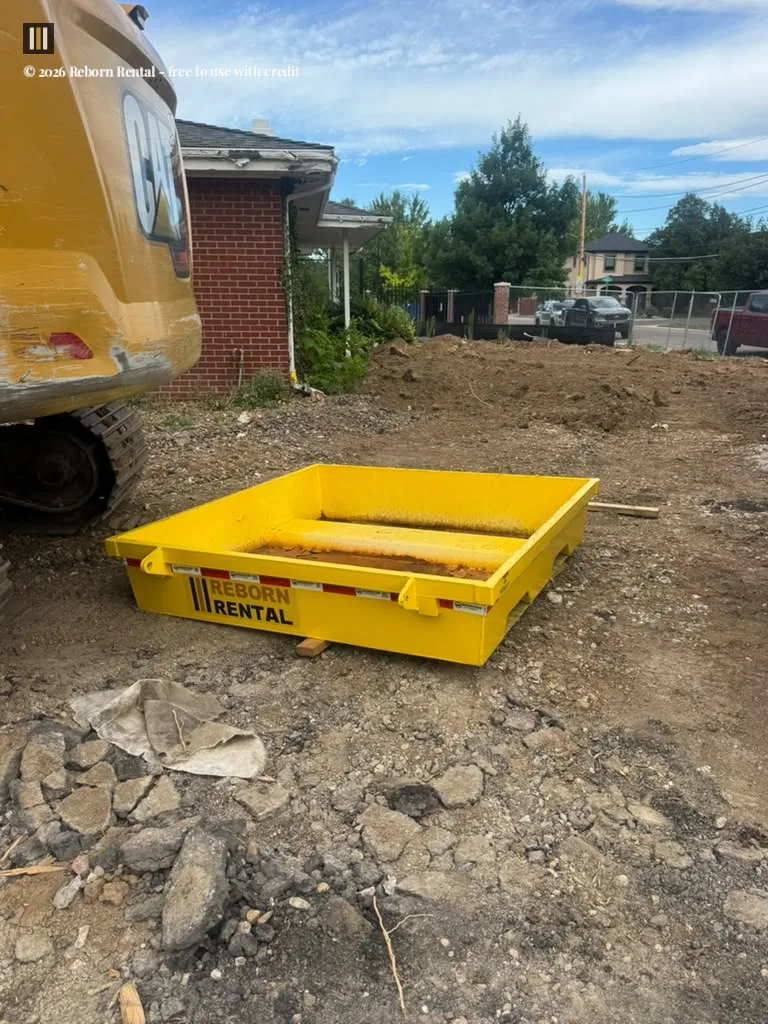
Discharge Method Comparison: 310-Gallon Versus 441-Gallon Pans
At Reborn Rental, we supply two standardized heavy-gauge steel washout pans engineered specifically for commercial and civil contractors along the Colorado Front Range:
1. The 310-Gallon Small Pan (Low-Profile)
- Dimensions: 72 inches wide by 72 inches long by 14 inches high (6 ft x 6 ft x 14 in).
- Capacity: 310 liquid gallons.
- Discharge Method: Rear-hopper discharge. Designed specifically for boom pumps, line pump hoppers, and restricted vehicle access.
- Jobsite Applications: Bridge decks, elevated pours, highway sound walls, and urban median construction where overhead clearance or machine geometry prevents using a tall bin. The low 14-inch sidewall allows pump operators to drop their cleanout hopper directly over the pan rim without building timber ramps or digging access pits.
- Rental Pricing: $26 per day, $140 per week, or $532 per 4-week cycle.
- Specifications: View detailed drawings on the 310-gallon Small washout pan specifications page.
2. The 441-Gallon Large Pan (High-Capacity)
- Dimensions: 72 inches wide by 72 inches long by 24 inches high (6 ft x 6 ft x 24 in).
- Capacity: 441 liquid gallons.
- Discharge Method: Standard chute discharge from transit mixer trucks, batch plant trucks, and bulk washout stations.
- Jobsite Applications: Continuous slipform paving, major flatwork runs, large bridge deck pours, and multi-truck pours where multiple ready-mix trucks line up to wash out chutes successively. The 24-inch wall height gives you 42% more internal volume, allowing more truck chutes to rinse out before reaching the required freeboard threshold.
- Rental Pricing: $29 per day, $175 per week, or $588 per 4-week cycle.
- Specifications: Review structural details on the 441-gallon Large washout pan specifications page.
Equipment Fit Assessment
If you are placing foundation caissons or substructure retaining walls using a large boom pump, the cleanout water and aggregate slug discharged from the lower hopper gate require a wide, low target. The 310-gallon pan at 14 inches high fits cleanly under the pump’s discharge hopper. This prevents slurry from splashing onto surrounding subgrades or base course materials.
Conversely, on mainlane concrete paving where dozens of mixer trucks cycle through each shift, height clearance is not an issue because truck chutes operate higher off the ground. In that scenario, choose the 441-gallon pan. Its 24-inch walls handle higher rinse volumes and reduce the frequency of swap trips across your project schedule.
Reborn Rental Front Range Service Logistics and Sizing
Civil road projects run on tight schedules. A full washout pan cannot sit idle and delay a planned concrete pour. Reborn Rental operates a straightforward drop, use, and swap service across the Front Range corridor.
Transparent Swap and Haul Rates
We keep transportation pricing simple and predictable for estimators and project managers:
- Inside the C-470 Loop: Flat swap-and-haul rate of $300 per pan.
- Beyond the C-470 Loop: $8.99 per mile per swap (calculated from the loop boundary).
- Long-Haul (Over 200 Miles): Quoted on an individual project basis via email.
- Contract Terms: No long-term contract lock-ins required. Pay for the days and swaps you actually use.
- Billing & Fees: Transparent pricing with no surprises. For a full breakdown of service rates, see our published schedule of fees and surcharges.
Operational Hours and Delivery Territory
We operate out of Lakewood, Colorado, servicing the entire Front Range urban corridor—including Denver, Colorado Springs, Fort Collins, Greeley, Loveland, Longmont, Boulder, Broomfield, Arvada, Westminster, Thornton, Commerce City, Aurora, Centennial, Littleton, Englewood, Golden, Wheat Ridge, Highlands Ranch, Parker, and Castle Rock.
Our standard operational hours for swaps, drop-offs, and field logistics are Monday through Friday, 9:00 AM to 6:00 PM Mountain Time. If your crew needs to pick up or drop off containers outside of standard hours, self-service yard access is available with advance notice for a $35 after-hours fee. For estimators building bids or project engineers needing emergency swaps on night pours, our quote line at (720) 734-9337 is answered 24/7.
Frequently Asked Questions
What constitutes an illicit discharge of concrete washout under Colorado stormwater rules?
Under CDPHE and municipal MS4 stormwater regulations, any release of untreated concrete wash water, slurry, or aggregate residue onto uncontained ground, into roadside ditches, or into storm sewer networks is an illicit discharge. Concrete wash water contains caustic chemical admixtures and high levels of dissolved calcium hydroxide, elevating pH levels to 12 or 13, which is toxic to aquatic life and violates state water quality standards.
How does a sealed metal pan meet CDPHE BMP standards on public works?
A sealed metal pan meets CDPHE standards by delivering total containment. Unlike plastic-lined pits, which are prone to tears and subgrade infiltration, heavy-gauge steel washout pans provide a leak-proof, non-porous structure. They maintain a reliable physical barrier that prevents any alkaline effluent from migrating into the soil, roadside ditches, or local groundwater tables.
How far do you deliver from Denver?
We deliver throughout Colorado. We charge a flat $300 swap rate inside the C-470 loop. Beyond C-470, delivery and swap service is billed at $8.99 per mile. For long-haul projects located more than 200 miles out, we provide custom freight quotes upon request.
What is your cancellation policy?
Reservations can be canceled for free up to 5 business days before your scheduled drop date. Cancellations made after that window are billed at 50% of the reservation total, excluding the delivery fee.
Can I self-pick-up or self-drop-off on a weekend or outside working hours?
Yes. You can access our yard for self-pickup or drop-off outside our standard operating hours (Monday through Friday, 9:00 AM to 6:00 PM Mountain) with advance notice for a $35 after-hours fee.
How can I track my delivery?
Contact our support team with your specific Order ID, and our dispatchers will provide a live driver location and updated arrival estimate for your jobsite.
What payment methods do you accept?
We accept all major credit cards, Klarna, Apple Pay, Google Pay, and ACH transfers. We do not accept cash payments.
Do you offer discounts for bulk orders?
Yes. For large infrastructure projects requiring more than 20 units or project durations running 6 months or longer, contact our sales desk directly for custom contract pricing.
Get Compliant Washout on Your Jobsite
Managing environmental risk on civil infrastructure takes the right equipment and solid documentation. Don’t risk an EPA or CDPHE violation by dropping concrete slurry into a torn pit. Whether you’re running tight pump truck cleanouts on bridge decks or managing continuous mixer chutes along a highway widening project, we have the watertight containers you need to keep your site clean and fully compliant.
Not sure which pan fits your setup? Call us at (720) 734-9337 — we’ll talk it through and quote you on the spot.
Transcript
By the end of this, you will know how to keep your concrete washout fully compliant with Colorado Department of Transportation and public health rules, and how to pick the right steel pan for your pour.
State Regulations and Containment Let us start with what state inspectors look for on Front Range public works. Under state regulations, uncontained slurry is an illicit discharge. Wash water reaches a pH of twelve to thirteen, and inspectors enforce zero infiltration into native soil and zero runoff into storm drains. Lined dirt pits fail audits because falling aggregate punctures the plastic, and heavy rain overtops earthen berms. Engineered steel pans eliminate subgrade leaks entirely.
Matching Pans to Equipment Discharge That covers the rules. Now consider how your equipment discharges. Boom pump hoppers sit low, requiring a low-profile target. A three-hundred-and-ten-gallon pan with a fourteen-inch rim fits right under the hopper gate to stop splashes. For ready-mix trucks on continuous paving runs, truck chutes sit higher. A four-hundred-and-forty-one-gallon pan with twenty-four-inch walls gives you forty-two per cent more volume, handling multiple chute rinses before hitting your four-inch freeboard limit.
SWPPP Documentation and Swap Logistics That brings us to jobsite paperwork and swap logistics. Your stormwater binder needs daily inspection records, station locations, and disposal receipts proving waste was hauled away legally. When waste reaches seventy-five per cent of pan depth, call for a swap. Reborn Rental provides swap-and-haul service across the Front Range corridor, with flat pricing inside the C-four-seventy loop. You can read the complete article at rebornrental dot com.