Key Takeaways
- The 310-gallon pan measures 72×72×14 inches, permitting concrete pump hoppers to discharge directly into the container without custom timber ramps, site excavations, or spotter-heavy backing maneuvers.
- Standard rear-hopper discharge gates on typical concrete pumps clear grade by 18 to 26 inches; a 24-inch wall height on larger pans leaves zero margin for sloshing or requires building elevated ramps.
- A heavy steel washout pan functions as a watertight BMP (Best Management Practice) that prevents an Illicit Discharge of caustic wastewater (pH 12 to 13) into soils or stormwater facilities.
- Reborn Rental delivers dedicated washout pans across the Denver metro area and Colorado Front Range with swap-and-haul service at a flat $300 inside the C-470 loop and $8.99 per mile beyond it.
- Rental rates for the low-profile 310-gallon pan stand at $26 per day, $140 per week, or $532 per 4-week cycle with no long-term contract.
Table of Contents
- Discharge Clearances: Matching Pump Geometry to Washout Hardware
- Direct Low-Profile Dumping vs. Earthen Pits and Timber Ramps
- Boom Pump vs. Line Pump Cleanout Demands
- Head-to-Head Washout Method Comparison
- Why Local Front Range Service Beats National Brokers
- When High-Wall Pans or Custom Pits Make Sense
- Front Range Pricing and Rental Terms
- Frequently Asked Questions
Discharge Clearances: Matching Pump Geometry to Washout Hardware
Choosing containment for end-of-pour washout starts with your discharge method and gate height. Every pump operator knows the physical bottleneck at cleanout: the pump hopper discharge flap sits low to the dirt. If your containment walls are taller than the gate, you face bad options. You can either round up scrap 4x4s and plywood to cobble together ramps, blast slurry across an extended chute, or excavate a ditch that damages the subgrade.
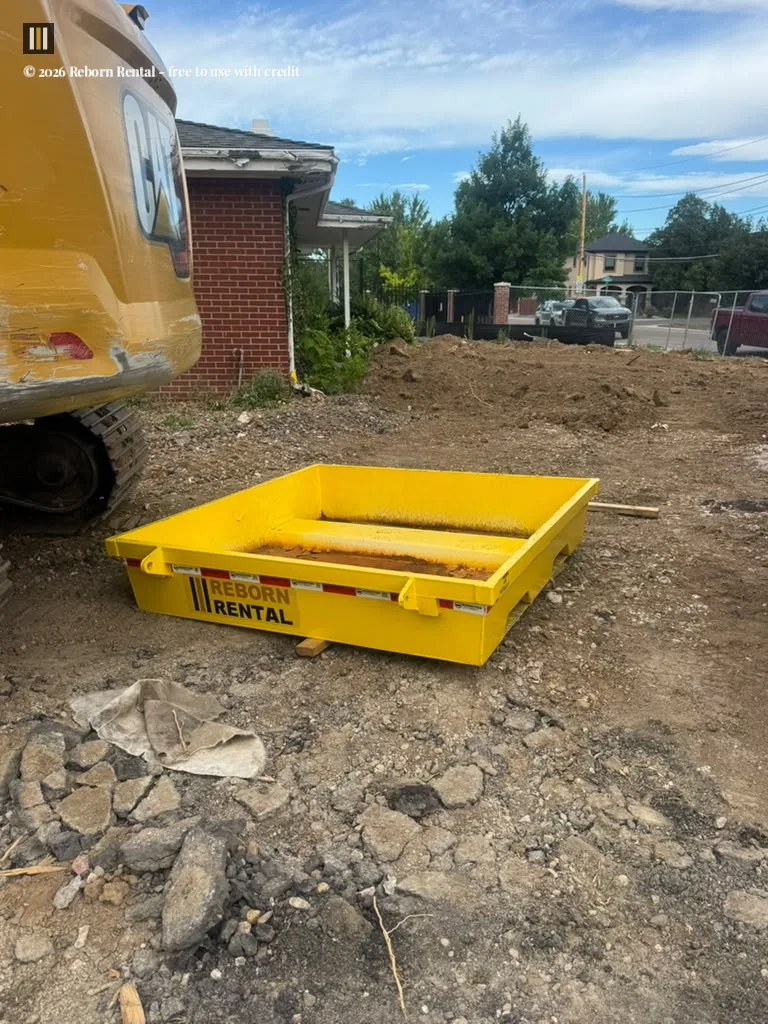
We provide two watertight steel container options across Colorado: the 310-gallon Small washout pan and the 441-gallon Large washout pan. The 310-gallon unit measures 72 inches wide by 72 inches long by 14 inches high. That 14-inch wall profile is specifically calibrated for direct dumping from low-slung machinery. The 441-gallon unit features identical horizontal dimensions of 72 by 72 inches but stands 24 inches tall, offering higher volume for high-yardage commercial placements.
When a pump cleanout is required in tight quarters, that 10-inch height difference determines whether you wash out in twenty minutes or spend an hour staging cribbing. A ready-mix truck discharge chute can pivot and drop waste into a 24-inch container with inches to spare. A pump hopper, however, dumps straight down from its rear discharge gate. With typical rear-dump clearances resting between 18 and 24 inches from finished or temporary grade, a 14-inch sidewall leaves 4 to 10 inches of positive clearance. The slurry drops straight in. Nothing catches on the rim, and there is no need to dig tires into the subgrade.
Direct Low-Profile Dumping vs. Earthen Pits and Timber Ramps
Specialty pumping crews run into three common field setups on Front Range jobsites: digging an unlined or poly-lined earthen pit, building wood ramps up to a standard high-wall pan, or dropping a dedicated 14-inch low-profile steel container flat on the ground. Evaluating these three methods comes down to site setup time, equipment safety, and environmental risk.
The Problem with Dug Pits
Excavating a pit requires a backhoe or mini-excavator on site, operator time, and poly sheeting. On tight urban infill sites in Denver or hillside foundations along the hogback, there is physically nowhere to dig without cutting through access lanes, undermining a trench, or encroaching on an Impervious Surface. Even when an excavation is dug and lined with plastic, pumps backing near the pit edge risk shoulder cave-ins under heavy axle loads. When the pour is done, an earthen pit cannot simply be backfilled; unhardened concrete waste and caustic water must be pumped or broken out before final grade inspection.
The Risk of Timber Ramps
When general contractors place a tall steel pan or 24-inch bin on site, pump crews often build cribbing ramps from scrap lumber. A loaded pump truck or heavy chassis backing onto wet, concrete-slick wood cribbing is a severe safety hazard. Ramps shift, tires slip, and structural timber snaps under axle weight. If the operator misjudges the backing angle by six inches, the hopper can strike the steel rim, damaging the discharge assembly or bending the containment lip.
The Direct Low-Profile Pan Solution
A 72×72×14-inch pan sits flat on bare dirt, compacted gravel, or asphalt without anchoring or earthwork. The driver backs the pump until the hopper lip overhangs the pan sidewall. Because the pan stands only 14 inches high, the operator drops the cleanout door, pulls the sponge or cleanout ball through the line, and dumps directly into the pan. Water, remaining aggregates, and cement paste discharge directly into watertight steel. There is zero site modification and zero slope for the vehicle to climb.
Boom Pump vs. Line Pump Cleanout Demands
A Boom Pump uses an articulating hydraulic boom to place structural concrete at high elevations, over foundations, or across large commercial decks. When the pour wraps, clearing an entire 32- to 56-meter boom pipeline generates significant slurry volume. Operators pump a sponge ball or rubber blowout plug through hundreds of feet of five-inch delivery line using water or compressed air. The surge discharged from the pipe tip and hopper requires a wide target with structural sidewalls capable of absorbing slurry velocity without buckling.
A Line Pump typically runs four-inch or two-inch flexible hose off a trailer or small chassis for interior flatwork, shotcrete, underpinning, or backyard pours. While line volume per linear foot is lower than a large boom system, line pumps run in tighter residential spaces. They are wedged into alleys, utility corridors, and compact driveways. On these jobsites, space is at a premium. An operator cannot fit a 20-foot footprint for ramps and tall containers. The 6×6-foot footprint of a 310-gallon low-profile pan slides into tight job footprints, letting the line pump operator clean out lines, hoppers, and small tools without blocking site egress.
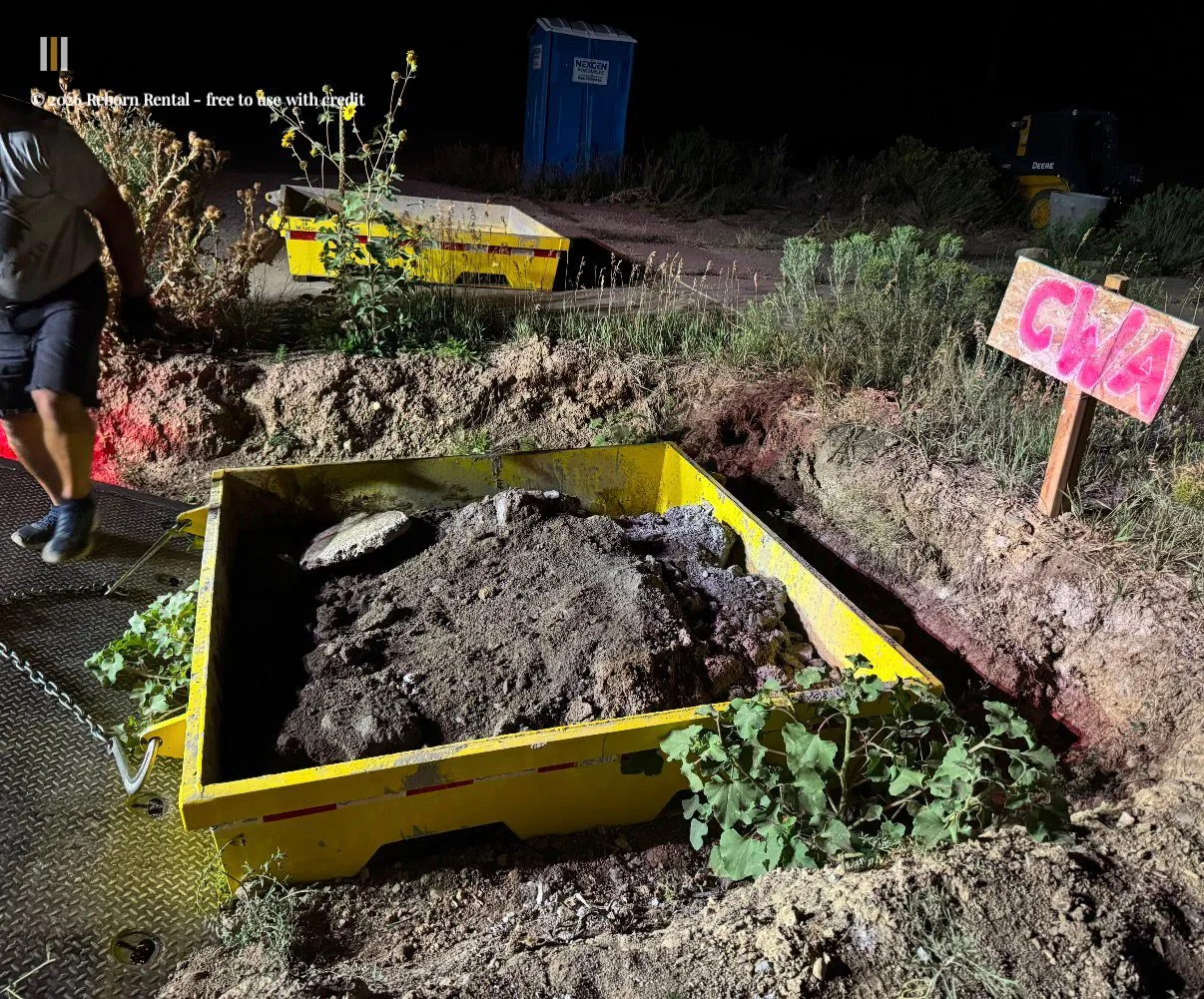
Allowing washout water to escape containment into gutters, subgrades, or municipal storm sewers constitutes an Illicit Discharge under Colorado Department of Public Health and Environment (CDPHE) water quality regulations. Highly alkaline concrete rinse water (pH exceeding 12) damages regional waterways and leads to immediate stop-work orders. A certified, watertight steel container acts as a stationary BMP (Best Management Practice) that meets municipal stormwater plans without guesswork.
Head-to-Head Washout Method Comparison
The following table compares low-profile steel pans against high-wall containers and traditional dug earthen pits across the operational variables that matter to pump operators and superintendents.
| Operational Metric | Reborn Rental 310-Gallon Low Pan (72×72×14) | Standard 24″ High-Wall Pan (72×72×24) | Site-Dug Earthen Pit (Poly-Lined) |
|---|---|---|---|
| Hopper Clearance | Direct dump; clears low 18″–24″ gates easily | Requires ramps or chutes for rear-hopper dump | Direct dump, but vehicle faces edge collapse risk |
| Site Footprint Needed | 6×6 ft pan footprint only; tight placement | 6×6 ft pan plus 10–15 ft ramp extension | Varies; typically 10×10 ft minimum plus berms |
| Setup & Teardown Labor | Zero; pre-assembled, placed off flatbed crane | High; requires building, verifying, and pulling ramps | Extensive; requires excavator, poly, anchors, backfill |
| Risk of Runoff / Spill | Watertight solid steel shell; no leak risk | Watertight solid steel; risk of hopper rim strike | High; poly tears from rocks or aggregate shovels |
| Capacity | 310 gallons (~1.5 cu yds concrete equivalent) | 441 gallons (~2.2 cu yds concrete equivalent) | Variable; often oversized to maintain freeboard |
| Relocation Flexibility | Fork pockets and crane lift eyes; easily moved | Fork pockets and crane lift eyes; easily moved | Immobile; must be dug out, backfilled, and redug |
| Denver Swap Pricing | $300 flat inside C-470 loop ($8.99/mi beyond) | $300 flat inside C-470 loop ($8.99/mi beyond) | Heavy machinery labor plus off-site hauler fees |
Why Local Front Range Service Beats National Brokers
National equipment brokers list concrete washout pans on online aggregate sites, but they do not operate their own delivery yards in the Denver metro area. When your pour timeline accelerates, or your 310-gallon pan fills up after a series of heavy commercial pours, waiting three to five days for an out-of-state logistics team to schedule a third-party hauler shuts down your pumping operations.
Reborn Rental manages equipment yards directly along the Front Range. When you call, you speak directly with our team. We know local delivery realities, whether your job sits on a high-density urban site in Denver, an industrial pad in Commerce City, or an infrastructure expansion in Fort Collins or Colorado Springs. Our drivers deliver, place, and pick up pans using our own flatbeds and knuckle-boom cranes.
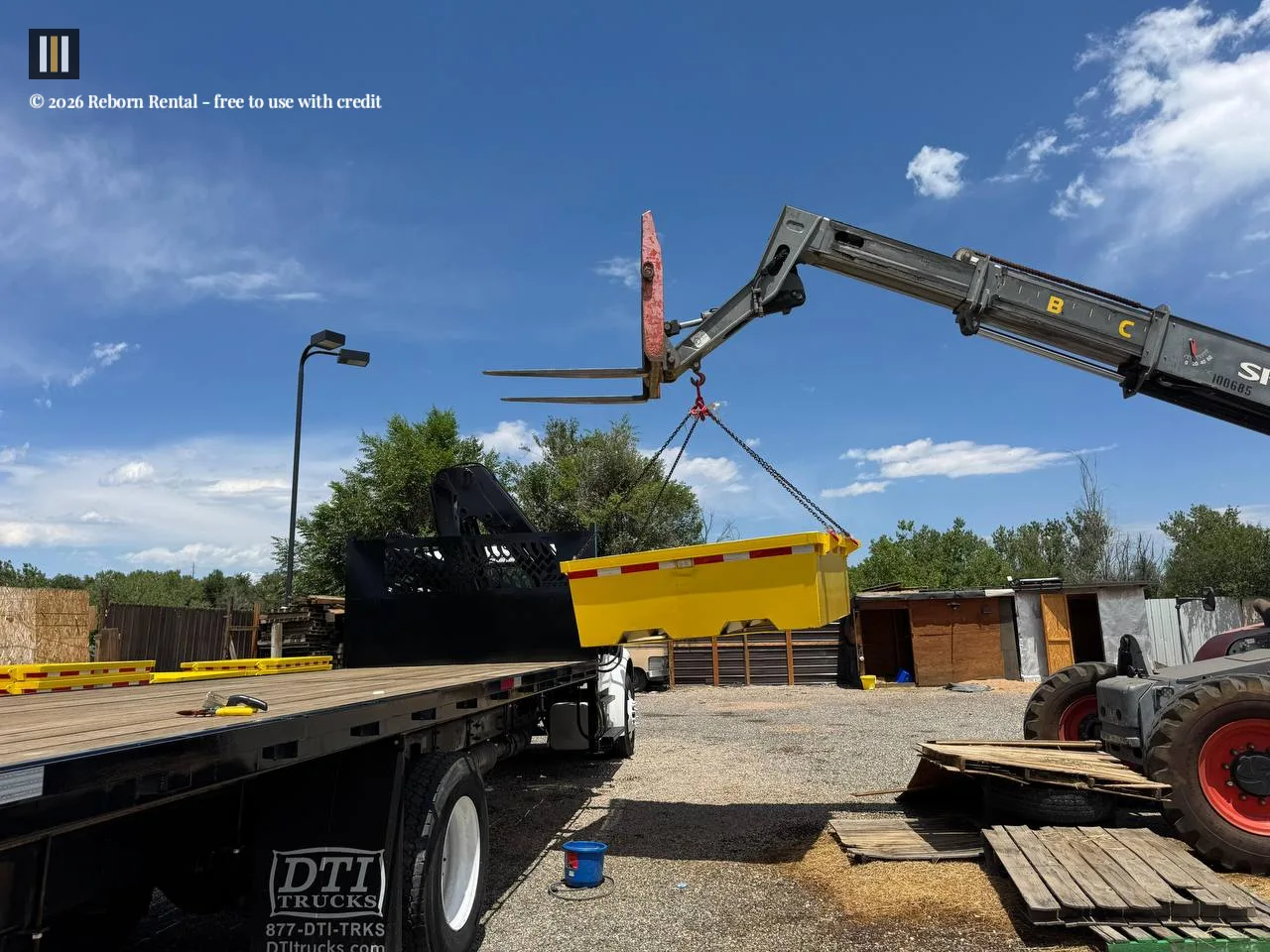
We offer transparent swap-on-demand scheduling. When your container reaches capacity, call for a concrete washout swap and disposal service. We bring an empty pan, drop it on your designated staging mark, lift the full pan onto our truck, and haul it away. No subcontracted dispatchers, no ambiguous delivery windows, and no long-term contractual lock-in.
When High-Wall Pans or Custom Pits Make Sense
While the 310-gallon low-profile pan is the definitive choice for pump hoppers and tight access, it is not the universal answer for every single concrete operation. Honest job planning means selecting the right tool for your specific pour workflow:
- High-Yardage Ready-Mix Washes: If your project involves dozens of mixer truck chutes and no direct pump hopper dumping, the 441-gallon Large washout pan is more economical. Ready-mix chutes pivot high enough to clear its 24-inch wall with ease, providing 42% more capacity (441 gallons vs. 310 gallons) and extending the time required between swaps.
- Long-Term Heavy Civil Infrastructure: On remote highway corridors outside regional haul zones where hundreds of yards are placed weekly, an engineered, concrete-lined permanent retention vault may make financial sense over multi-month timeframes, provided heavy excavation equipment remains permanently on site to manage solids.
- Line Pumps with Extended Troughs: If a crew carries custom aluminum chute extensions or pump troughs that elevate the discharge stream higher than 26 inches, using the deeper 441-gallon container prevents liquid backsplash during aggressive pressure blowouts.
For standard boom pumps, trailer line pumps, and jobs with tight boundaries, the 310-gallon low pan remains the most practical containment option available.
Front Range Pricing and Rental Terms
We do not bury surcharges in complex rental agreements. Our rates are straightforward and published openly so estimators and project managers can calculate concrete wash costs down to the dollar.
Pan Rental Rates
- 310-Gallon Small Washout Pan (14″ Low-Profile): $26 per day | $140 per week | $532 per 4-week billing cycle
- 441-Gallon Large Washout Pan (24″ High-Capacity): $29 per day | $175 per week | $588 per 4-week billing cycle
All rentals run on a no-contract basis. Rent the pan for two days for a quick footing pour or keep it on site for six months during a multi-phase structural build.
Swap-and-Haul Logistics Pricing
Every pan drop, swap, or final waste removal carries clear transit rates based on the C-470 highway loop encircling the Denver metropolitan area:
- Inside the C-470 Loop: Flat $300 per pan swap.
- Beyond the C-470 Loop: $300 flat base plus $8.99 per mile from the perimeter.
- Long-Haul (Over 200 Miles): Quoted on demand via custom logistics estimate.
Our standard operational hours for deliveries, pickups, and swaps run Monday through Friday from 9:00 AM to 6:00 PM Mountain Time. If your crew requires an after-hours or weekend yard drop-off or pickup, self-service access can be arranged with advance notice for a flat $35 after-hours fee. We accept all major credit cards, Klarna, Apple Pay, Google Pay, and ACH transfers (no cash accepted). If you manage a continuous schedule across multiple jobs, you can set up an MSA or dedicated account to streamline dispatch across your entire fleet.
Frequently Asked Questions
Can a pump truck dump directly into a 14-inch washout pan without a ramp?
Yes. The rear-hopper discharge door on commercial boom pumps and line pumps typically sits 18 to 26 inches above grade. A 14-inch sidewall provides positive vertical clearance, allowing the operator to back straight up and dump directly into the container without ramps, cribbing, or site grading.
Why is the 310-gallon pan preferred over a 441-gallon pan for tight pump setups?
The 441-gallon pan stands 24 inches high. That extra 10 inches frequently blocks the rear-hopper cleanout door from opening, forcing crews to construct wood ramps or elevate the rear axle. The 310-gallon pan gives you the clearance needed for zero-clearance hopper dumps while fitting inside the same 6×6-foot footprint.
How far do you deliver from Denver?
We deliver throughout Colorado. We charge a flat $300 delivery fee inside the C-470 loop, and $8.99 per mile beyond C-470. For extended distances over 200 miles, email us for a custom long-haul quote.
Can I self-pick-up or self-drop-off on a weekend or outside working hours?
Yes, with advance notice. We charge a $35 after-hours fee for pickups or drop-offs arranged outside our normal yard operating hours of Monday through Friday, 9:00 AM to 6:00 PM Mountain Time.
What payment methods do you accept?
We accept all major credit cards, Klarna, Apple Pay, Google Pay, and ACH. We do not accept cash payments.
What is your cancellation policy?
Cancellations are completely free up to 5 business days before your scheduled reservation. Cancellations made within 5 business days incur a fee of 50% of the reservation cost (excluding delivery fees).
Ready to Switch?
Stop wasting billable crew hours building timber ramps or digging unapproved pits that risk environmental fines. Reborn Rental delivers heavy-duty low-profile pans built specifically for clean hopper discharge across the Front Range. Give our desk a call at (720) 734-9337 to get a live quote — no contract, swap on demand.