You know the point in a job when the trades are moving, inspections are lined up, and then the site starts getting buried in debris. Demo piles creep into access paths. Scrap lumber ends up where material deliveries need to land. A crew wastes half an hour every day walking junk to whatever corner is still open. That's when a waste problem turns into a schedule problem.
On a well-run site, disposal isn't an afterthought. It's part of production. Roll-off dumpster rentals keep traffic lanes open, reduce handling, and make the site look like someone's in charge. They also keep you from paying for the same mess twice, once in labor and again in cleanup, reloads, or rejected material.
Most contractors already know they need a dumpster. The expensive mistakes happen in the details. Wrong size. Wrong placement. Wrong material in the box. And one mistake shows up constantly on concrete jobs: treating washout like regular debris and assuming the roll-off will take it.
Keeping Your Job Site Clean and Profitable
A messy site usually starts small. One pile of drywall offcuts near the saw station. A stack of torn shingles behind the trailer. Packaging from fixtures sitting where the electrician wants to stage material. By the end of the week, labor is stepping around waste instead of working through the sequence.
That's why experienced supers treat disposal as a control point, not a cleanup item. The dumpster isn't just for hauling junk away. It sets the rhythm for the site. Crews know where debris goes, the laborer isn't chasing random piles, and pickup can happen without shutting down half the operation.
Waste control is schedule control
The companies that use professional waste handling at scale aren't doing it for appearances. The broader market shows the same thing. The global roll-off container rental market is projected to grow from $7.2 billion in 2025 to $10.1 billion by 2035, and construction accounts for 40% of demand, according to Fact.MR's dumpster and roll-off container rental market analysis. That growth reflects a simple reality on active jobs: hauling and disposal have become core operating functions.
A dumpster in the right spot saves motion. A dumpster in the wrong spot creates it. If your framing crew has to drag debris across the full site, the box is too far away. If the delivery truck can't swap the container without moving equipment, the box is in the wrong place. If the laborer has to sort wet material, hazardous material, and general construction debris out of one mixed pile, the waste plan was never really a plan.
Practical rule: If debris is piling up outside the dumpster before the container is half full, the issue usually isn't capacity first. It's process.
What a clean site actually does for you
A clean site changes how the job runs day to day:
- Crews move faster: Less walking, less double-handling, fewer blocked work areas.
- Safety stays manageable: Clear paths cut down trip hazards and make equipment movement easier.
- Inspections go smoother: Orderly staging and waste control signal that the site is under control.
- Clients notice: Owners may not know framing details, but they know when a site looks disciplined.
The opposite is just as real. When trash spreads, labor gets redirected into cleanup bursts, tools get buried, and materials get damaged. Nobody budgets enough time for that because it doesn't show up clearly until the job is already slipping.
The professional difference
Good contractors don't wait until the site is overwhelmed. They line up the container before demolition starts, confirm what's allowed in it, and decide early whether the job needs a separate solution for material that a standard roll-off can't legally or practically take. Concrete washout is the one that catches people because the mess looks temporary until it becomes a disposal problem.
Choosing the Right Dumpster Size and Weight Limit
Most dumpster mistakes happen before the container even arrives. People focus on cubic yards and ignore weight, or they order big “just to be safe” and pay for empty air. The right call comes from matching the container to the waste stream, not guessing based on gut feel.
Start with volume, then check weight
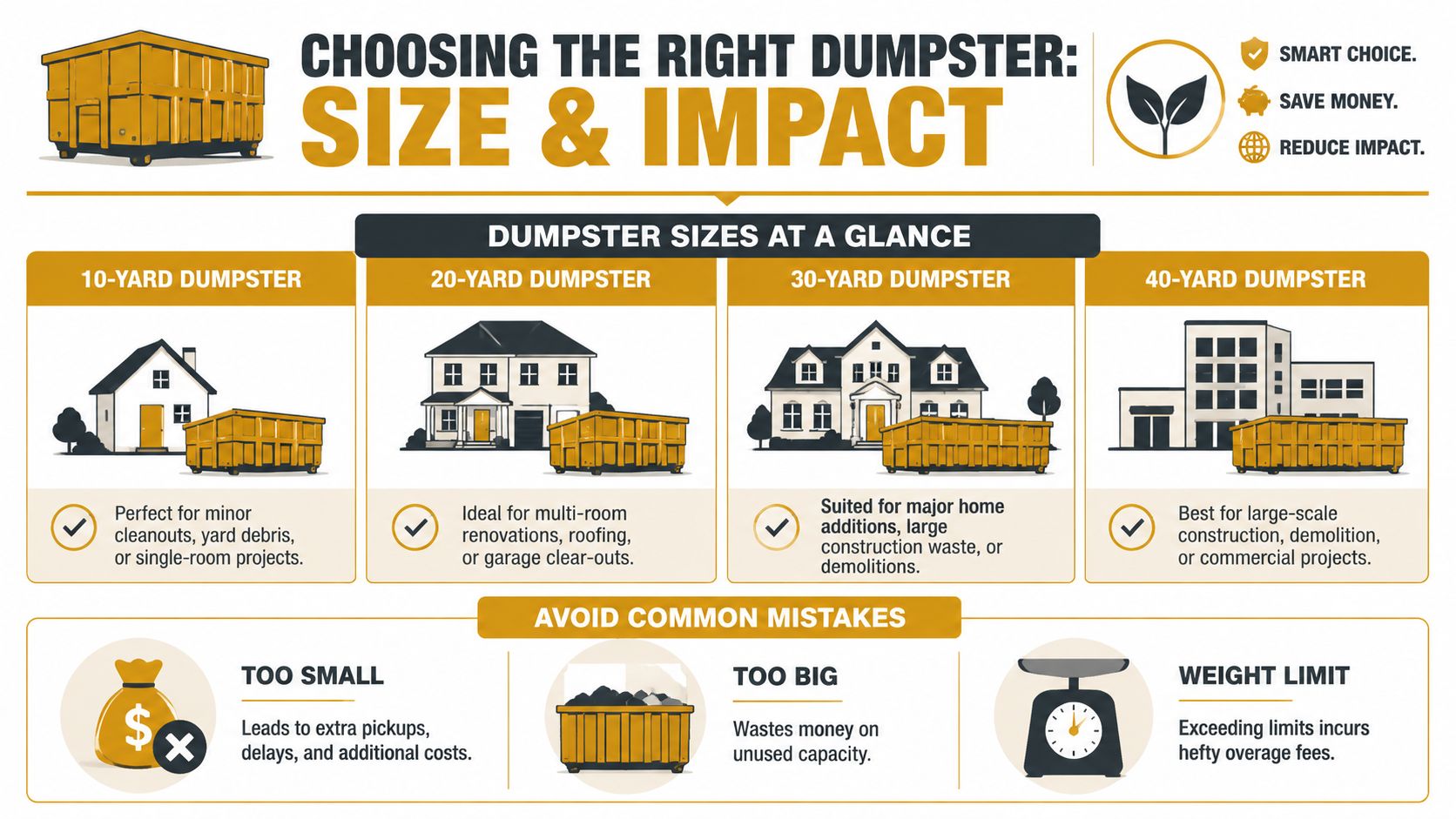
Contractors often size by project type first, which is fine as a starting point. Small cleanouts and single-room work usually fit the smaller end. Full renovations, roofing, additions, and demolition push you into larger boxes. But volume only answers half the question.
The other half is what the material weighs. A container can look only partly full and still be overloaded. That's why overage charges hit so many jobs. A 2025 industry survey found that 41% of contractors incur weight overage fees, typically ranging from $50 to $150 per ton, largely because they underestimate dense debris such as concrete, listed at 150 lbs/cu ft, according to J.J. Mackay Disposal's roll-off dumpster rental guide.
Dense debris fools people. Wood, packaging, and drywall fill space fast. Concrete, masonry, and dirt hit the weight limit first.
A practical size guide
Use this table as a field reference. Dimensions and included tonnage vary by hauler, but the decision logic holds.
| Size (Yards) | Typical Dimensions (L x W x H) | Weight Limit (Tons) | Common Contractor Use Cases |
|---|---|---|---|
| 10 | Approx. 12 x 8 x 4 | Lower limit than larger containers | Small bathroom remodels, minor cleanouts, limited demo, yard debris |
| 20 | Approx. 22 x 8 x 4.5 | Mid-range limit | Multi-room renovations, roofing, garage clear-outs, flooring and drywall debris |
| 30 | Approx. 22 x 8 x 6 | Higher limit than 20-yard units | Additions, major remodels, bulky construction waste, larger demo jobs |
| 40 | Approx. 22 x 8 x 8 | Often the largest standard allowance for mixed debris | Commercial construction, large demolition, major cleanouts with high volume but not extremely dense material |
What works on real jobs
The decision gets easier if you sort projects by waste profile:
Light but bulky debris
Packaging, insulation, framing scrap, and light demo waste usually justify more cubic capacity. You're trying to avoid airspace waste and extra pulls.Mixed renovation debris
Many crews commonly encounter this type of waste. Drywall, wood, cabinets, flooring, trim, and some fixtures. A mid-size container often fits the workflow, but only if the heavy material is limited.Heavy debris
Concrete, brick, dirt, roofing tear-off, and wet material change everything. Even if the volume looks modest, ask the hauler about a heavy-material option or clean-load rules before ordering.
The common sizing errors
A few patterns show up over and over:
- Ordering too small for demolition: The crew starts stacking waste outside the box, then you pay for another haul and lose time.
- Ordering too big for dense debris: You won't use the volume, and the container may still hit weight restrictions early.
- Mixing heavy material into general debris: That's how a normal renovation box turns into an expensive invoice.
- Ignoring loading method: If labor has to throw material over high walls all day, production slows and the top of the box gets bridged badly.
A good dumpster rental call starts with two questions: what material is going in, and who is loading it. If you answer those accurately, the right size is usually obvious.
Managing Site Prep Placement and Permits
Where you place the dumpster affects labor, property damage risk, truck access, and whether pickup happens cleanly or turns into a scramble.
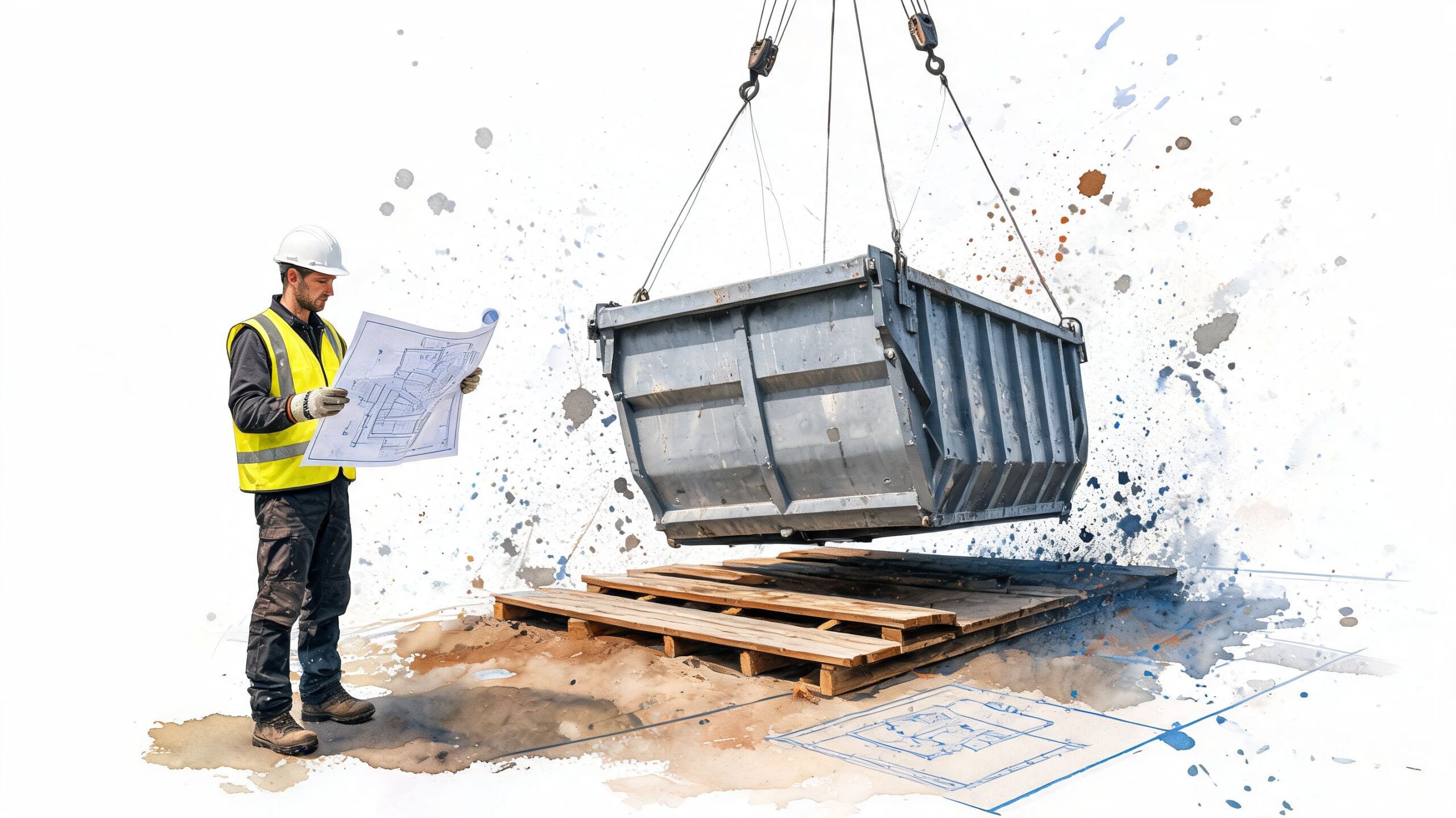
A roll-off needs more than a flat patch of ground. The truck has to approach, set the rails, roll the container off, and return later for pickup without fighting parked vehicles, soft soil, overhead obstructions, or tight turns. If you place it based only on where the debris is generated, you can create access problems for everyone else on the site.
Placement that helps instead of hurts
The best location usually balances three things: short walking distance for the crew, clean truck access, and protection for the surface below. On residential jobs, that often means a driveway edge or a stable side yard access point. On commercial work, it usually means a staging zone that won't interfere with deliveries, pumps, or lifts.
Before delivery, I'd want these checked:
- Surface condition: Use plywood or boards when you need to protect a driveway or softer surface.
- Truck path: Keep cars, pallets, and equipment out of the approach and pickup path.
- Overhead clearance: Watch power lines, branches, scaffolding, and temporary service.
- Door swing and loading room: Leave enough room to open walk-in doors if the container has them, and enough room for wheelbarrows or skid access if that's how the job loads out.
If the dumpster is easy to drop off but hard to swap, it's in the wrong place.
Permit decisions are local, but the pattern is predictable
Most jobs on private property don't trigger much permit trouble. The issues start when the container lands on a public street, sidewalk area, shared access lane, or another location controlled by the municipality or property manager. That's when you need to confirm local rules before the truck rolls.
A simple way to handle it:
- Private placement: Usually easier, but still check HOA rules, property management conditions, and utility conflicts.
- Street placement: More likely to require a permit, traffic controls, or visibility rules.
- Tight urban sites: Confirm delivery windows and whether the container can stay in place overnight.
- Multi-tenant properties: Get written approval so nobody claims the container blocked access after the fact.
Site prep prevents avoidable damage
A dumpster company can deliver exactly where instructed and you can still create a problem if the location wasn't thought through. I've seen good driveways scarred because nobody put down protection. I've seen containers set where the crew loved them for two days, then the pickup got delayed because another trade boxed the truck out.
That's why the pre-delivery walk matters. Stand where the truck will stand. Follow the path mentally. Think about delivery day and pickup day, not just loading day.
Understanding Prohibited Materials and Disposal Rules
A roll-off isn't a free-for-all. That assumption causes rejected loads, contamination fees, extra sorting, and arguments at pickup. The safest approach is simple: if the material is liquid, hazardous, pressurized, or unusually heavy, don't assume the dumpster can take it.

One reason this issue matters so much is volume. Nationally, 20-yard dumpsters account for about 40% of rentals, according to Intel Market Research's dumpster rental service market overview. They're popular because they fit a wide range of projects. But that same utility gets people in trouble when they start treating the container as a catch-all for every waste stream on site.
Why certain materials get rejected
Landfills, transfer stations, and haulers aren't being difficult for the sake of it. Different materials create different disposal risks.
- Liquids: Liquids leak, shift during transport, and can trigger environmental issues fast.
- Hazardous materials: Paints, solvents, chemicals, and similar waste need specialized handling.
- Batteries and electronics: These often fall under separate recycling or hazardous disposal rules.
- Tires and appliances: Many disposal facilities handle these through dedicated channels, not mixed debris loads.
- Heavy inert materials: Concrete, dirt, and masonry can exceed weight allowances or require a clean-load container instead of mixed construction debris service.
Mixed loads versus clean loads
If your project is producing mostly general construction debris, a mixed roll-off may be fine. If you're removing one dominant material stream, ask whether a clean-load option makes more sense. Keeping materials separated on site can reduce friction at pickup and may simplify disposal.
That only works if the crew knows the rules before loading starts. A sorted site stays sorted when the laborer, foreman, and subcontractors all hear the same instructions. It falls apart when everyone assumes “the dumpster guy will deal with it.”
Field note: Prohibited material problems usually start with convenience. Someone wants one quick place to toss everything, and the site pays for that shortcut later.
A simple on-site control method
You don't need an elaborate waste management program to stay out of trouble. You need clear boundaries.
Use this method:
- Post accepted material guidance: Put it near the dumpster, not buried in an email.
- Separate specialty waste early: Don't create a mixed pile and hope to sort it later.
- Call before tossing questionable material: That one phone call is cheaper than a rejected load.
- Train the last trade on site: Problems often come from whoever's cleaning up late in the day with no supervision.
Most disposal mistakes aren't caused by bad intent. They come from assumptions. Standard roll-off dumpster rentals are flexible, but they still have rules. The job runs better when everyone knows them before the first load goes in.
The Critical Exception Concrete Washout
Concrete washout is where contractors get burned because the waste looks familiar but behaves completely differently. A standard roll-off can handle many kinds of construction debris. Wet concrete washout slurry is not one of them.
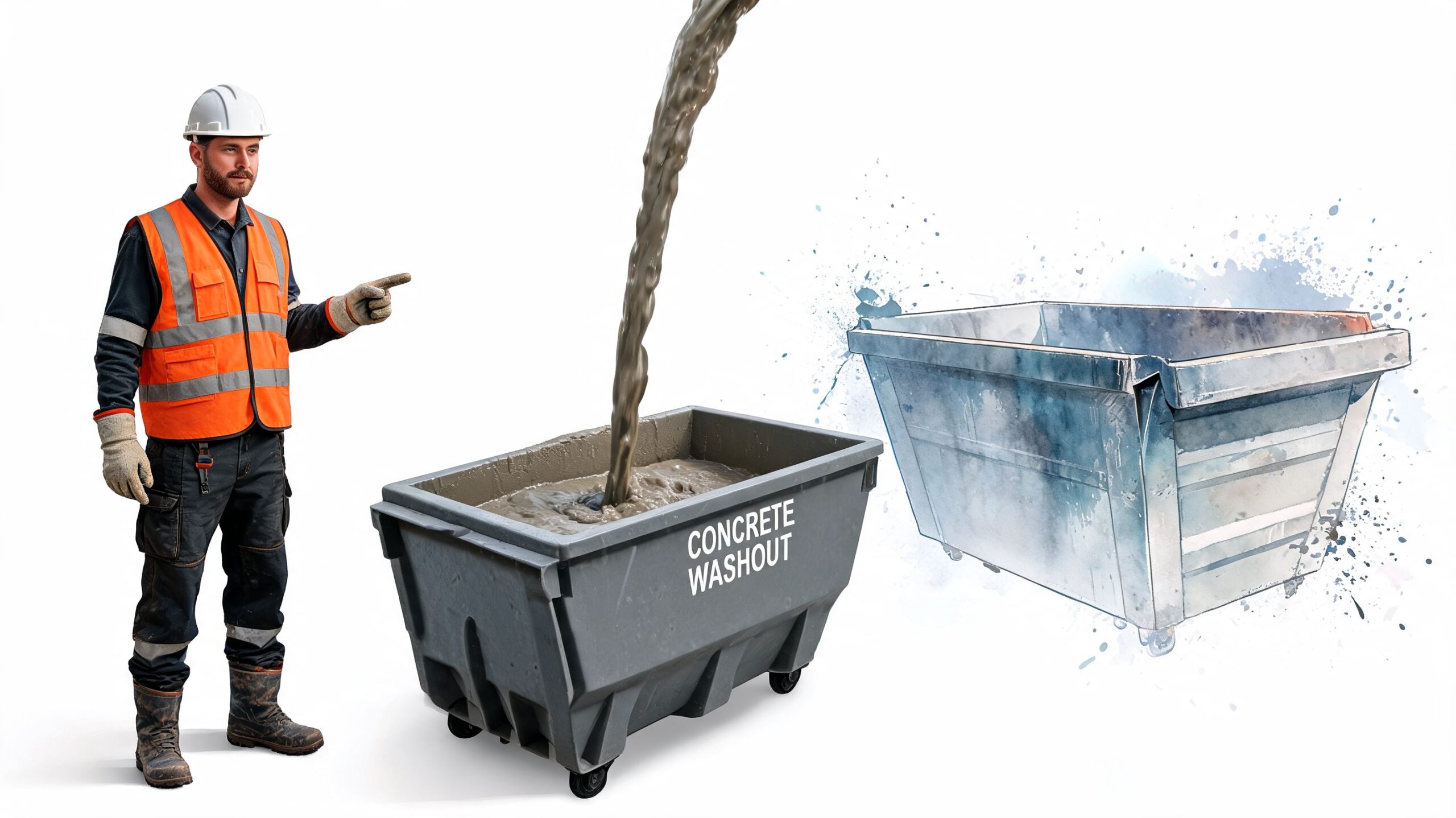
The issue isn't just cleanliness. It's containment. Washout contains liquid, suspended solids, and highly alkaline residue. If that material leaks onto the ground, into drainage paths, or during transport, you've created an environmental compliance problem, not just a messy truckload.
Why roll-offs and washout don't mix
A roll-off is built for solid waste handling. It is not a purpose-built containment system for slurry. Even if some hardened concrete chunks are acceptable under certain clean-load conditions, that doesn't mean fresh washout water, chute residue, or pump cleanup can go into the same box.
The trouble starts in a few common situations:
- A crew rinses tools or chutes directly into a dumpster with mixed debris.
- A pump washout ends up in a box that was only supposed to hold dry material.
- A partially hardened load still carries enough liquid to leak or get rejected.
- Nobody plans a separate washout area, so the nearest container becomes the default answer.
The compliance risk is real
This isn't a technicality. A 2025 EPA report noted more than 15,000 annual citations for improper concrete washout containment, with average fines of $12,500 per violation, as referenced in Schiebel Waste's discussion of roll-off dumpster restrictions. That's the kind of mistake that turns a routine pour into a very expensive conversation with the owner, the municipality, or the environmental consultant.
The bigger problem is how often this specific issue gets glossed over. Many general dumpster discussions mention “no liquids” and leave it there. On concrete work, that's not enough direction for the field.
Wet washout needs its own plan before the truck, pump, or finish crew arrives. If you solve it after the pour starts, you're already late.
What a proper washout setup changes
A dedicated washout container gives the crew one clear answer. Chute rinse, tool cleanup, and slurry all go into the designated containment area. You avoid contaminating the roll-off, and you avoid creating a runoff issue on the ground.
That matters on more than big civil jobs. Small commercial flatwork, residential pours, retrofits, and renovation work all create washout. The site may be smaller, but the disposal rule doesn't get smaller with it.
A separate washout solution works because it matches the waste stream:
- It contains liquid and solids together
- It supports cleaner SWPPP compliance practices
- It removes guesswork for pump and concrete crews
- It keeps the roll-off available for actual dry debris
When to plan separate containment
If your project involves ready-mix trucks, line pumps, trailer pumps, finishing tools, grout residue, or any activity that creates wet cementitious rinse-out, plan separate washout from day one. Don't rely on field improvisation.
This is one of those areas where the “cheap” move usually becomes the costly one. A standard dumpster is not a backup washout pan. Treating it like one creates rejection risk, fee risk, and compliance risk all at once.
Breaking Down Rental Costs and Ways to Save
Most contractors don't mind paying for a dumpster. They mind paying for surprises. Those usually show up as overage, extra haul charges, contaminated loads, waiting time, or extended rental days that nobody tracked closely.
Pricing isn't random. Haulers build rates around real operating costs, equipment utilization, hauling logistics, disposal charges, labor, and local demand. According to CurbWaste's analysis of roll-off dumpster rental analytics tools, hybrid cost-plus and value-based pricing can improve a rental company's profitability by 15% to 25%. For contractors, the practical takeaway is straightforward: your bill changes based on how difficult and costly you make the job for the provider.
What you're usually paying for
Even when the invoice looks simple, several cost drivers are sitting underneath it:
| Cost component | What affects it most | Contractor move that helps |
|---|---|---|
| Base rental | Container size, rental term, local demand | Order the right size and schedule the container only when the site is ready |
| Disposal and weight | Material type, landfill charges, load density | Keep heavy material separate and estimate debris honestly |
| Hauling logistics | Distance, access difficulty, truck time | Give clean placement instructions and keep access open |
| Additional fees | Prohibited items, delays, extended use, rejected loads | Follow material rules and schedule pickup before the job drifts |
The savings usually come from planning, not haggling
Some of the best cost control is boring. It's confirming what goes in the box, making sure the site is accessible, and pulling the container as soon as the waste-generating phase ends. Contractors who treat the dumpster like a parking spot for job-site indecision tend to pay more.
A few habits work consistently:
- Match the container to the waste stream: Don't use one mixed box when the job really has separate heavy and light debris categories.
- Load evenly and deliberately: Bad loading wastes space and can make pickup harder.
- Avoid idle rental time: If trim-out has started and the demolition waste is gone, reassess whether the container still needs to sit there.
- Protect against prohibited loads: One bad toss by a subcontractor can wipe out whatever savings you thought you got on the base rate.
The cheapest rental is usually the one that leaves on time, with the right material in it, at the expected weight.
Ask better questions before delivery
Contractors save money when they stop asking only “What's the rate?” and start asking operational questions.
Try these instead:
What material assumptions are built into this quote?
This tells you whether the price expects mixed debris, clean concrete, roofing, or something else.What causes the most common extra charges?
Good providers will tell you quickly. Listen closely.How should heavy material be handled on this job?
This is where you avoid weight trouble before it starts.What site conditions create delivery or pickup complications?
If rough terrain, blocked access, or difficult placement costs more, you want that known upfront.
The cheapest option can be the most expensive one
Low headline pricing often leaves out the part that matters: how the load will be handled when the container is full. A contractor should care less about the first quoted number and more about the total likely cost once material type, schedule, access, and compliance are accounted for.
That's especially true if your project also involves concrete work. Saving on a roll-off quote doesn't help if you contaminate the load, trigger a rejected pickup, or need emergency cleanup because washout was never separated from the start.
If your project includes concrete work, treat washout containment as its own line item, not an afterthought. Reborn Rentals gives contractors a straightforward way to book dedicated washout containment with clear daily pricing, practical equipment options, and delivery coordination that fits active jobsites. If you want to keep the roll-off for dry debris and keep slurry where it belongs, they're built for exactly that problem.